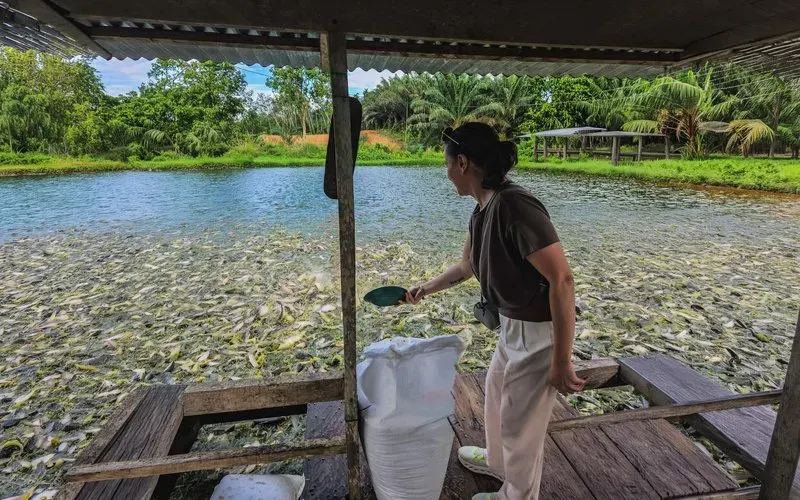
The Philippines is exploring a more diversified aquafeed ingredient base as El Niño, global supply disruptions, and import dependence increase pressure on conventional feed sources, according to Ateneo de Manila University associate professor Janice A. Ragaza.
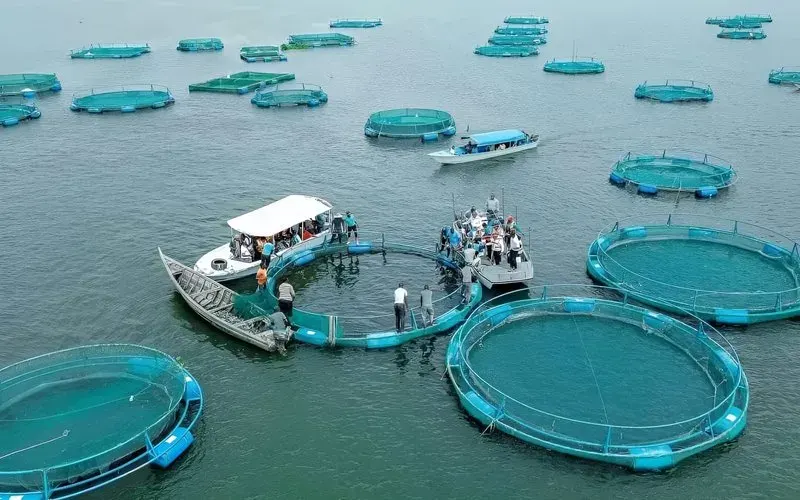
Tanzania's aquaculture output grew from 44,735 tonnes in 2020/21 to 234,525 tonnes in 2025/26, according to Ministry of Livestock and Fisheries data, as cage numbers, hatchery capacity and commercial feed use all expanded sharply. The country's director of aquaculture outlines priorities including feed manufacturing, cold-chain investment and sustainability governance ahead of the World Aquaculture Tanzania 2026 conference in Dar es Salaam.
A European Commission study completed in June 2026 estimates that feed demand for ten key farmed species in the EU grew from under 900,000 tonnes in 2013 to almost 1.1 million tonnes in 2023, while identifying plant ingredients, cost, regulation and supply-chain exposure as central challenges for the sector's future.
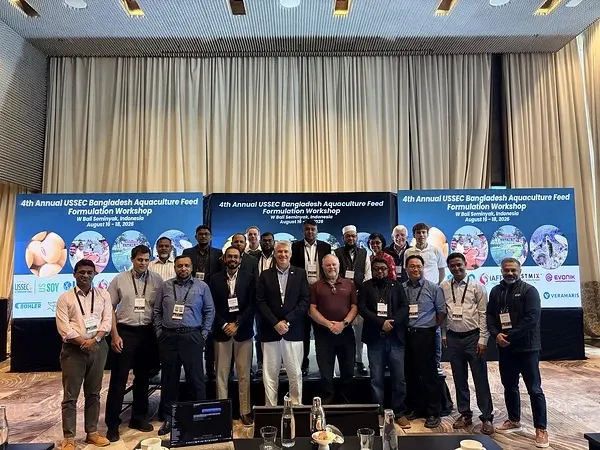
The U.S. Soybean Export Council convened two aquaculture feed formulation workshops in Bali in August 2026, bringing together commercial formulators and nutritionists from Bangladesh and eight Southeast Asian markets to build practical feed design skills around reliable ingredients including U.S. soy.
The South American rendering industry convened in Mendoza, Argentina, for the Reunion of the Americas (REAM) on 8–10 September 2026. Discussions centred on tightening fishmeal supply, surging export demand for Brazilian animal protein meals, shifting trade conditions for low-carbon feedstocks, and the growing interconnection of regional rendered-product markets.
A report by the UK-based Changing Markets Foundation, prepared with researchers from the University of British Columbia, warns that up to 46% of the world's wild fish catch could be redirected to aquaculture feed by 2040 if farming of predatory species such as salmon and shrimp continues to expand. The findings were released in Rome ahead of a meeting of the FAO Committee on Fisheries. The FAO has pushed back on some of the study's framing, clarifying its actual 2030 growth targets and questioning whether marine ingredient volumes would necessarily rise.
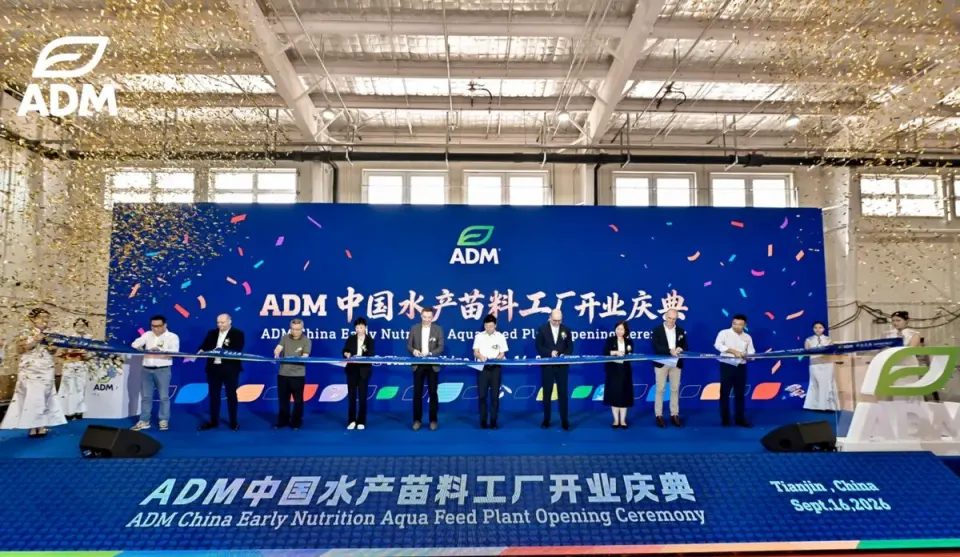
ADM has inaugurated a new early-nutrition aquafeed facility in Tianjin, China — its second globally dedicated to hatchery and nursery feeds after its long-established Belgium plant. With an annual design capacity of approximately 5,000 tons, the site will serve customers in China and across the Asia-Pacific region, targeting fish and shrimp during early growth stages.
Indonesian agri-food group PT JAPFA has held exploratory talks with Cambodia's Ministry of Agriculture over potential investments in aquaculture, animal feed production, and related value-chain activities, reflecting a broader push to deepen ASEAN economic ties and regional food security.
Japanese feed manufacturer Chubu Shiryo Co., Ltd. has announced plans to set up a wholly owned subsidiary in Haikou, Hainan, to manufacture and sell compound aquafeeds for the Chinese market. The new entity, Chubu Shiryo (Hainan) Co., Ltd., is expected to be established in October 2026 with registered capital of CNY 60 million.
A new Portuguese initiative, the Food4Thought project, is working with secondary-school and university students to counter misinformation about farmed fish and insects as food sources, using a three-stage educational approach backed by scientific evidence.
Cumulative global fishmeal production fell 49% year-on-year in the first seven months of 2026, with fish oil output down 30%, driven by shortfalls in South America and weaker catches in Africa and Northern Europe. IFFO says Asian producers may partially offset the decline in Q4, but demand headwinds in China's aquaculture and pig sectors are weighing on recovery prospects.
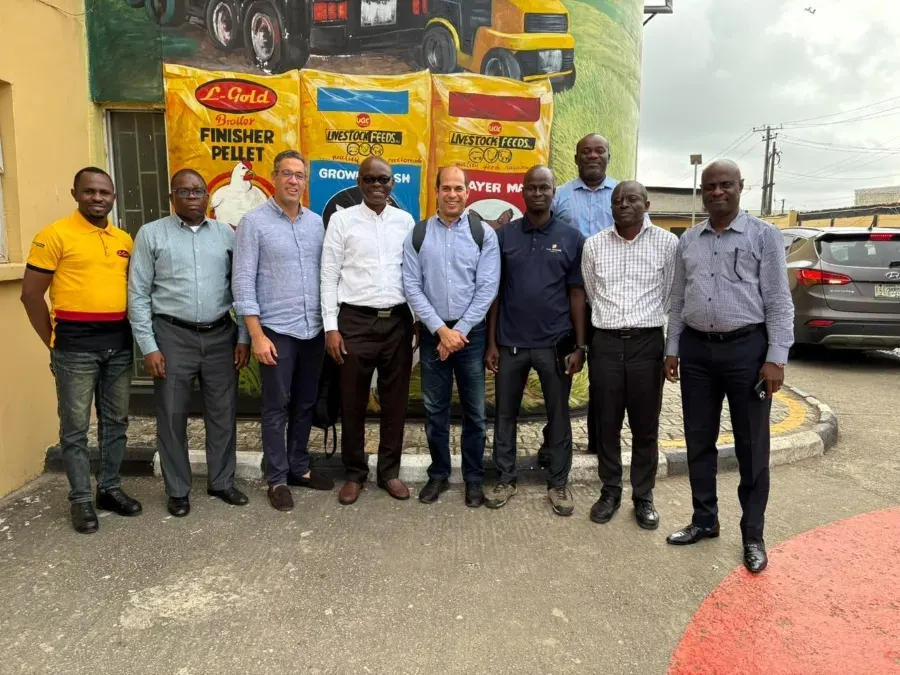
The U.S. Grains & BioProducts Council visited Nigerian feed industry stakeholders in September 2026 to promote least-cost formulation using U.S. corn, sorghum and co-products, including DDGS and corn gluten meal, ahead of an anticipated medium-term capacity increase of up to 1.5 million metric tons.