Up to 46% of Global Wild Fish Catch Could Be Directed to Aquaculture Feed by 2040, Report Warns
A report by the UK-based Changing Markets Foundation, prepared with researchers from the University of British Columbia, warns that up to 46% of the world's wild fish catch could be redirected to aquaculture feed by 2040 if farming of predatory species such as salmon and shrimp continues to expand. The findings were released in Rome ahead of a meeting of the FAO Committee on Fisheries. The FAO has pushed back on some of the study's framing, clarifying its actual 2030 growth targets and questioning whether marine ingredient volumes would necessarily rise.

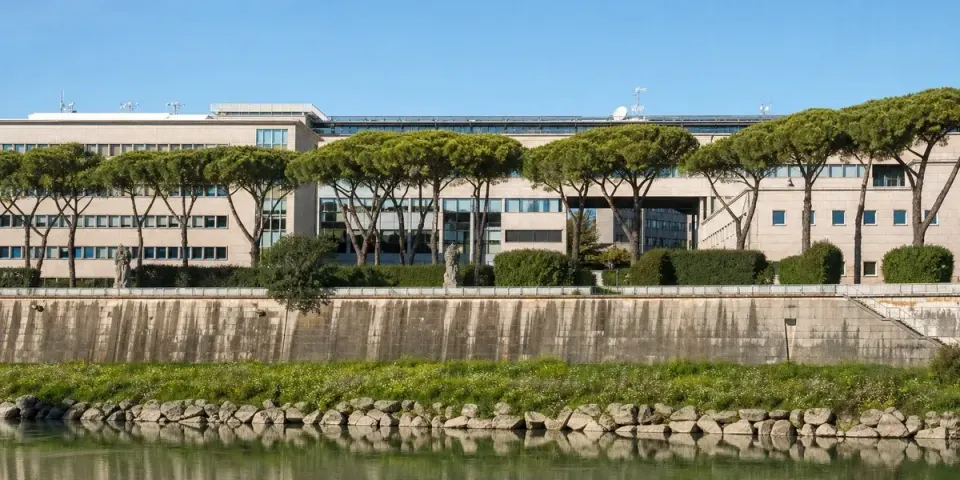
As much as 46% of the global wild fish catch could be channelled into aquaculture feed production by 2040, according to a new report released in Rome ahead of a meeting of the Food and Agriculture Organization of the United Nations (FAO) Committee on Fisheries. The finding represents a significant escalation from current levels and has drawn a measured response from the FAO itself.
The report was produced by the UK non-governmental organisation Changing Markets Foundation in collaboration with researchers from the University of British Columbia. It was covered by environmental news outlet Mongabay.
Three Scenarios, Three Outcomes
The study maps three possible development pathways for the aquaculture sector to 2040. Currently, according to the report, approximately 20% of wild fish caught worldwide is processed into fishmeal and fish oil, with about two-thirds of those products used in fish farm feed.
Under a low-impact scenario — one in which aquaculture growth centres on species that require little or no fish-based feed, such as carp or molluscs — the report projects that 13–17% of the global catch could go to feed. A middle scenario, reflecting current industry trends with a larger share of shrimp, salmon, gilthead seabream and European seabass, would push that figure to 29–38%. In a third, market-oriented scenario, in which the industry shifts further toward predatory species, demand for wild fish for feed could reach 34–46% of the entire global catch.
FAO Context and Pushback
The report assessed the potential consequences of a benchmark — cited in the FAO's 2023 roadmap — of increasing sustainable global aquaculture by at least 75% by 2040 compared with 2020 levels. However, FAO Assistant Director-General and Director of the Fisheries and Aquaculture Division Manuel Barange clarified that this figure is not an organisational target. According to the UA.News report, Barange said that "this figure is not an organizational target or proposal, but merely a discussion of possible options." He noted that the FAO's actual target, set out in its 2022 Blue Transformation roadmap, calls for sustainable aquaculture to grow by 35% by 2030 compared with 2020 levels.
Barange also pointed to recent industry momentum, noting that the sector had already grown by 17% between 2020 and 2024. He suggested that marine ingredient volumes used in feed would not necessarily increase as the 2030 target is pursued, citing more efficient and alternative feed ingredients, though the FAO has not formally assessed how meeting that target would affect marine ingredient demand.
Why It Matters
The projections carry significant implications for global feed manufacturing and wild-capture fisheries management. If the high-end scenario materialises, the pressure on forage fish stocks used in fishmeal and fish oil production would intensify substantially. The contrast between the three scenarios underscores the degree to which species-mix decisions within the aquaculture sector could determine the future demand for wild fish as a feed ingredient.
Prepared with AI assistance and reviewed by the editorial team.