EU Aquafeed Demand Reaches Nearly 1.1 Million Tonnes as European Commission Study Maps Ingredient Dependencies and Innovation Barriers
A European Commission study completed in June 2026 estimates that feed demand for ten key farmed species in the EU grew from under 900,000 tonnes in 2013 to almost 1.1 million tonnes in 2023, while identifying plant ingredients, cost, regulation and supply-chain exposure as central challenges for the sector's future.

A comprehensive European Commission study completed in June 2026 has provided the most detailed assessment to date of the EU aquafeed sector, covering feed demand, raw material use, regulation, sustainability, traceability and supply-chain security. The findings, prepared for the European Climate, Infrastructure and Environment Executive Agency (CINEA), show a sector that has grown substantially over the past decade but remains dependent on imported ingredients and faces structural barriers to scaling alternative protein and oil sources.
Feed Demand Growth
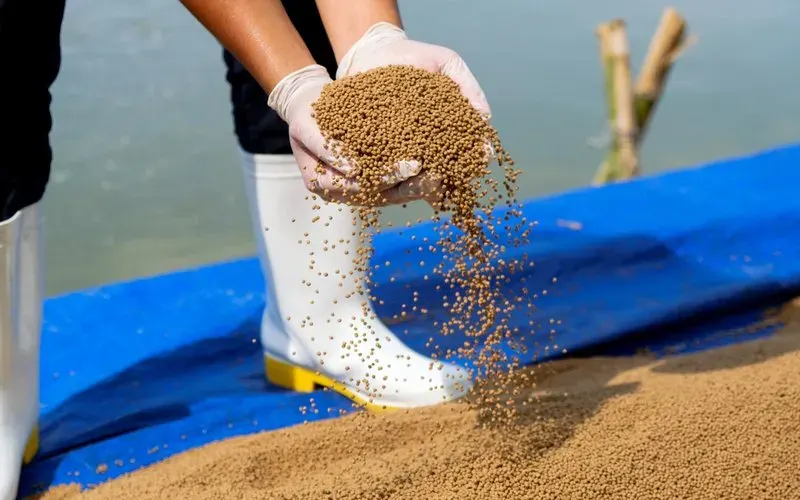
The study — formally titled Study on Feed for Aquaculture – Aquafeed — estimates that feed demand for ten key species investigated in the EU increased from less than 900,000 tonnes in 2013 to almost 1.1 million tonnes in 2023. Pelleted feed demand alone rose from 567,058 tonnes to 666,893 tonnes over the same period. The report also places EU production within a broader European market that, including EU and non-EU countries, produced around 4.8 million tonnes of aquafeed in 2024, equivalent to 9.1% of global production.
Rather than relying solely on reported feed production, which the authors note is limited at EU level, the study modelled feed requirements by combining production data with feed conversion ratios (FCR), using the equation production × economic FCR. The authors acknowledge uncertainties in this approach, including the use of FCR values that may originate from controlled experimental conditions rather than commercial farms.
Species Breakdown
Among pelleted feeds, gilthead seabream accounted for 31.8% of EU pelleted feed demand in 2023, followed by rainbow trout at 28.9% and European seabass at 26%. Shrimp and sole represented only 0.02% and 0.54%, respectively.
Species trajectories diverged over the decade. The study estimates that European seabass feed demand increased by 35% and gilthead seabream by 13.6%. Meagre recorded the strongest relative expansion, with estimated feed demand increasing ninefold to 25,045 tonnes in 2023. Atlantic bluefin tuna stands apart because it is largely fed whole fish rather than compound diets; its estimated feed requirement increased from around 180,000 tonnes in 2013 to almost 500,000 tonnes in 2023, reflecting its particularly high FCR. Rainbow trout was identified as the species with the highest feed expenditure among those assessed, with annual feed demand averaging around 288,000 tonnes.
Ingredient Composition and Supply Vulnerabilities
The study translated feed volumes into ingredient requirements using feed composition data published by major manufacturers, including Cargill, Skretting, BioMar and Irida. For pelleted feeds in 2023, vegetable proteins and starch raw materials represented approximately 312,000 tonnes, or 47% of total material demand. Marine proteins accounted for an estimated 121,700 tonnes and terrestrial animal proteins for 99,900 tonnes. Overall, materials of plant origin represented 55.3% of estimated material demand for pelleted feeds, compared with 27% for marine materials. Fish and algal oils accounted for approximately 58,800 tonnes and vegetable oils for 57,000 tonnes.
The report estimates EU fishmeal self-sufficiency at 76%, while fish oil imports exceed exports. The shift toward plant ingredients has reduced reliance on finite marine resources, the study states, but dependence on imported soy and fish oil leaves the industry exposed to geopolitical disruption and climate variability.
Alternative Ingredients: Cost and Scale Barriers
Insects, microbial proteins and algae are among the alternatives assessed. The study identifies cost, scalability and regulatory compliance as major barriers to broader adoption. An analysis included in the report estimates that replacing 30% of fishmeal with poultry by-product meal could reduce the blended ingredient cost from EUR 1.47/kg for fishmeal to EUR 1.244/kg. A 40% inclusion of Tenebrio molitor meal resulted in an estimated blended cost of EUR 2.42/kg, while black soldier fly meal and single-cell protein both produced an estimated blended cost of EUR 1.57/kg under the assumptions used.
The study concludes that there is no single replacement pathway, with nutritional performance, price, availability, environmental impacts and regulation all influencing whether an ingredient can move from technical feasibility to commercial-scale use.
Sustainability and Greenhouse Gas Emissions
The report states that much of aquafeed's greenhouse gas footprint originates upstream rather than at the feed mill, with Scope 3 emissions associated particularly with raw materials accounting for the majority of feed-related emissions. The environmental profile depends strongly on ingredient origin, land-use assumptions and the methodology used to allocate impacts. The report notes that marine ingredients can have comparatively low greenhouse gas emissions but raise questions about marine biodiversity and the use of wild resources, while plant ingredients can reduce pressure on marine stocks while introducing land-use, deforestation and freshwater considerations.
Regulation and Standards
The study describes EU feed standards as stricter than those in many non-EU jurisdictions. Stakeholders reported that overlapping legislation can increase compliance costs and create barriers to introducing new feed materials. The EU Deforestation Regulation was highlighted by surveyed stakeholders for its traceability requirements, while animal by-product and TSE legislation were identified as constraints on some animal-derived ingredients. The study identified 22 certification schemes and ecolabels relevant to aquafeed supply chains and concludes that greater harmonisation could reduce duplication while maintaining transparency.
Outlook
Aquafeed can represent more than 50% of production costs in fed aquaculture, the report notes, making feed efficiency and raw material price stability particularly important. The study concludes that further progress will require improved feed efficiency, greater use of by-products and circular raw materials, commercially scalable alternative proteins and oils, and regulation capable of maintaining high safety and traceability standards without unnecessarily constraining innovation. According to the authors, achieving that transition will require coordinated action across industry, research and policy.
Prepared with AI assistance and reviewed by the editorial team.