USGBC Sends Technical Mission to Nigerian Feed Millers as Sector Eyes 1.5 Million Tonne Expansion
The U.S. Grains & BioProducts Council visited Nigerian feed industry stakeholders in September 2026 to promote least-cost formulation using U.S. corn, sorghum and co-products, including DDGS and corn gluten meal, ahead of an anticipated medium-term capacity increase of up to 1.5 million metric tons.

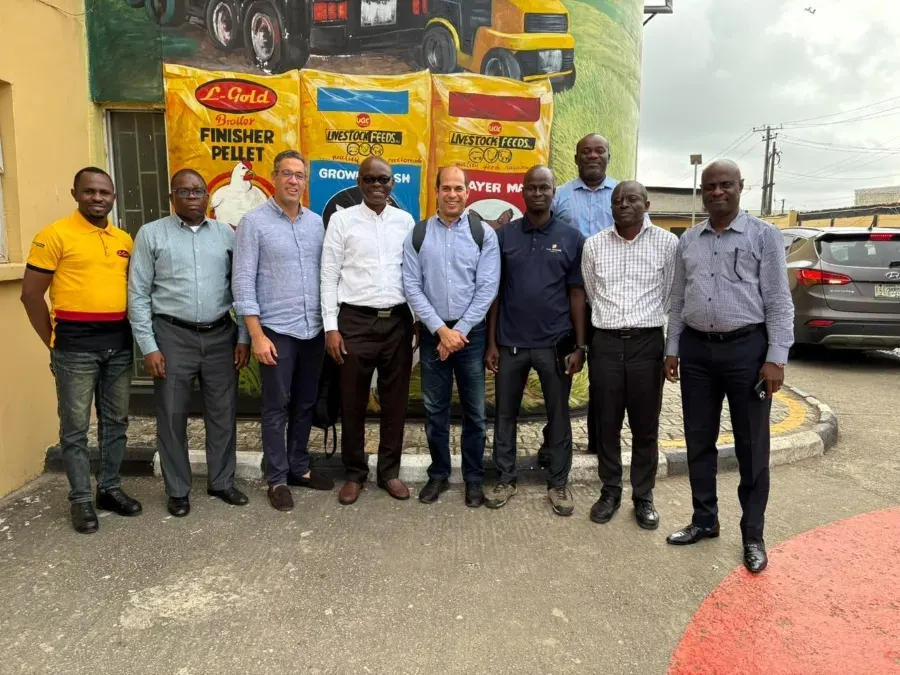
Staff and consultants from the U.S. Grains & BioProducts Council (USGBC) traveled to Nigeria earlier this month to meet feed manufacturers, conduct technical training sessions and explore trade opportunities for U.S. corn, sorghum and their co-products, the Council said on 17 September 2026.
The mission was carried out by USGBC's regional office for Europe, the Middle East and Africa (EMEA) and combined site visits, individualized technical training and meetings with major feed manufacturers and potential end-users. Co-products promoted during the visit included corn gluten meal (CGM) and what the Council describes as new generation distiller's dried grains with solubles (DDGS).
According to the Council, Nigeria's commercial feed industry is entering a period of significant expansion, with an estimated 1 to 1.5 million metric tons of additional feed production anticipated in the medium term. The Council said this growth creates fresh demand for feed ingredients and an opportunity to position U.S. corn and co-products within Nigeria's poultry and aquaculture sectors.
A key element of the visit was a series of customised technical sessions in which Council experts worked directly with feed formulators and production teams to demonstrate least-cost formulation and evaluate opportunities to incorporate U.S. DDGS and CGM into poultry and aquaculture diets. Formulation software and locally available ingredient prices were used during the sessions.
Mohamed Salah Bouthour, USGBC deputy regional director for Africa, said the sessions demonstrated the nutritional and potential economic value of U.S. corn co-products while addressing the specific needs of individual feed operations. He added that positioning U.S. growers as the preferred input supplier for Nigerian livestock producers represents "an exceptional opportunity for U.S. feed grain exports in the future."
The mission also advanced work on U.S. sorghum demand development. The Council said preparations continued for a poultry feeding trial planned for 2027 that will compare U.S. sorghum with local sorghum and evaluate its performance under Nigerian production conditions. The trial is intended to generate local technical data to support future commercial adoption of U.S. sorghum in Nigerian feed formulations.
In addition, the Council held discussions with Nigeria's food and beverage sector to assess the technical suitability of U.S. sorghum for brewing applications, an approach the Council said could help diversify demand beyond animal feed.
Bouthour said the Council would continue providing technical support and training to the Nigerian feed industry while connecting potential Nigerian buyers with U.S. suppliers, describing Nigeria as one of West Africa's expanding feed markets.
Prepared with AI assistance and reviewed by the editorial team.