US weekly export sales for corn, soybeans, and wheat for the week ended September 17 all came in below or at the low end of trade expectations, with Pro Farmer citing a stronger US dollar and elevated prices as potential demand headwinds. Meanwhile, the US-China trade truce was extended by two months, and USDA reported a daily soybean sale to China.
China's 2026/27 soybean output is projected at roughly 20.95 million tons, marginally above last year, but the market is increasingly split between high-protein, food-grade beans commanding firm premiums and ordinary, lower-protein supplies facing harvest-period price pressure. Wet and cool weather in key northeastern provinces around late September is complicating fieldwork and drying logistics, adding quality and timing risk to an otherwise stable volume outlook.
Vietnam has emerged as the top destination for Argentine soybean meal exports, overtaking Malaysia and Indonesia, while Argentina's soybean value chain generated US$21.44 billion in export revenue in 2025, with Vietnam ranking third overall among Argentina's soybean markets behind China and India.
The second day of the Compound Livestock Feed Manufacturers Association (CLFMA) of India's 67th National Symposium in Mumbai brought together policymakers, industry leaders, scientists and farmers to address feed security, artificial intelligence, veterinary capacity and government-industry collaboration in India's animal-agriculture sector.
U.S. grain futures on September 25, 2026 finished near session highs after early selling pressure gave way to a recovery driven by a weaker dollar and trade-deal optimism. December corn edged up fractionally, November soybeans posted weekly gains on news of a U.S.-China trade subset agreement, while wheat futures ended the week lower amid a sustained price downtrend. Persistent Midwest rains are delaying harvest and tightening soybean supplies at processors.
U.S. Trade Representative Jamieson Greer said on 25 September 2026 that a bilateral Board of Trade agreement with China would protect selected agricultural exports from future tariff retaliation, with full details expected on 28 September. The trade truce has also been extended through January 2027, but an unresolved Section 301 overcapacity investigation could complicate the arrangement.
US on-highway diesel hit an all-time record of $6.53 per gallon in the week of 21 September 2026, coinciding with the harvest season. The Trump administration is weighing a range of targeted measures — including dyed-diesel distribution, state tax relief and voluntary refiner concessions — after setting aside a 90-day export ban that energy officials and industry warned would backfire. USDA projects 2026 farm fuel and oil spending at $21.6 billion, up 28.8% from 2025.
A strengthening El Niño event, combined with fertilizer shortages, geopolitical tensions, and elevated energy costs, could push global food and feed commodity prices up by 14–16%, according to procurement consultancy Beroe. Key feed ingredients including corn, vegetable oils, and sugar face varying levels of supply and price risk, with the full market impact potentially not materialising until 2028.
Grain and oilseed futures closed mostly lower on 22 September 2026, according to ADM Investor Services analyst Mark Soderberg. Corn drifted back toward session lows while managed money extended a long position that ADMIS described as a potential record high. Soybeans finished mixed, soybean meal protein value reached a seven-month high, and wheat futures fell sharply amid ongoing Black Sea conflict and softening global supply signals.
Corn futures pulled back toward technical support on September 23, 2026, erasing Monday's gains, while a USDA daily export sale to Mexico, a high-stakes Xi-Trump summit in Washington, a proposed U.S. diesel export ban, and a projected 70% surge in global biofuel output by 2030 combined to create a complex backdrop for feed-grain and oilseed markets.
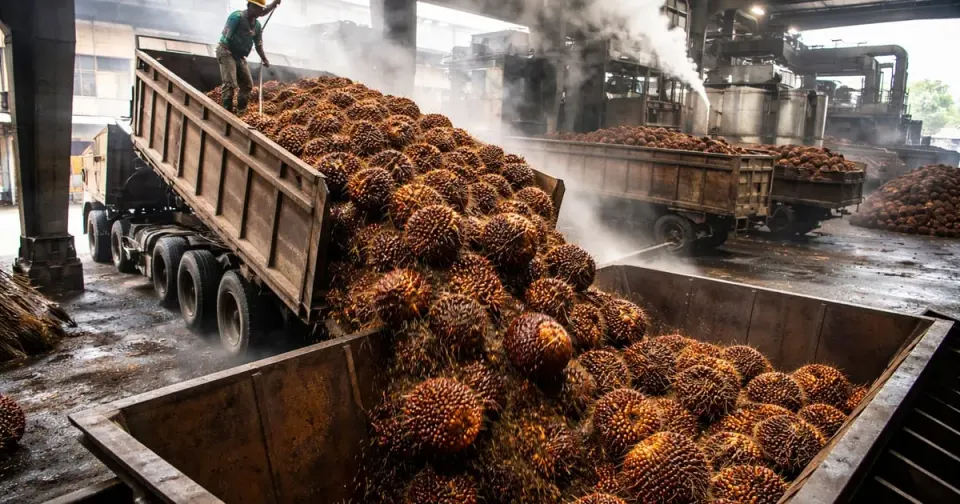
Malaysian palm oil futures fell for a fourth consecutive session on 23 September 2026, with the December Bursa Malaysia contract dropping to MYR 4,768/tonne, as rising inventories, sluggish exports and soft rival markets reinforced a bearish near-term outlook.
Ukraine's Cabinet of Ministers Resolution No. 675 introduces mandatory producer-register verification for rapeseed exporters from 1 July 2026 and soybean exporters from 1 September 2026, replacing chamber-of-commerce certificates as the basis for export-duty exemptions. The change raises working-capital and administrative costs for traders and is already contributing to a modest convergence of Ukrainian rapeseed prices toward EU benchmarks.