Malaysian Palm Oil Futures Slide for Fourth Session as Stocks Near 3 Million Tonnes and Exports Weaken
Malaysian palm oil futures fell for a fourth consecutive session on 23 September 2026, with the December Bursa Malaysia contract dropping to MYR 4,768/tonne, as rising inventories, sluggish exports and soft rival markets reinforced a bearish near-term outlook.

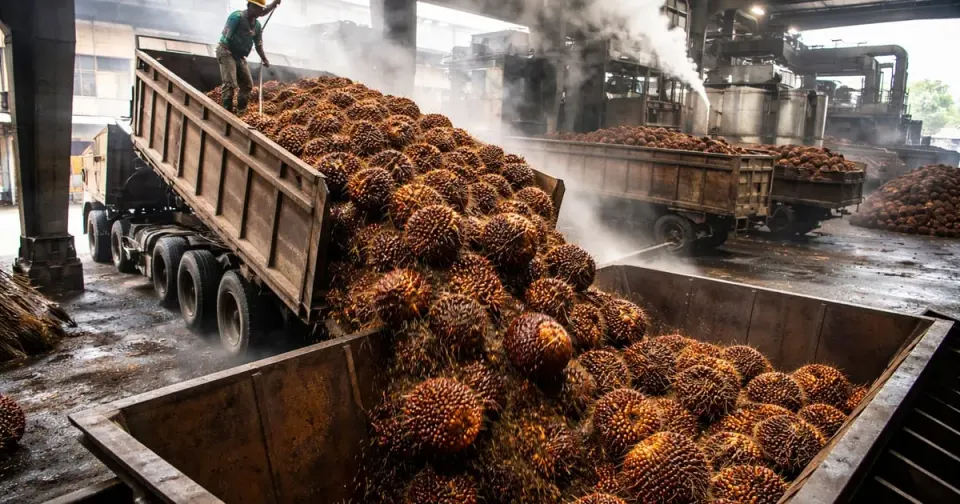
Malaysian palm oil futures extended their losing streak on 23 September 2026, with the December Bursa Malaysia Derivatives (BMD) contract declining to MYR 4,768/tonne — its fourth straight daily fall — as a combination of building stockpiles, weakening exports and softness across global vegetable oil and crude oil markets weighed on sentiment, according to CMB News.
Prices and Market Context
The December BMD contract shed 0.87% on the session, according to CMB News, leaving futures near the lower end of their recent trading range. Weakness was not confined to palm oil: Dalian soybean oil slipped 0.27%, Dalian palm oil fell 1.43%, and Chicago soybean oil declined 0.63% on the same day, reinforcing the broad downside pressure across the vegetable oil complex.
Supply Builds, Demand Falters
The central bearish driver, CMB News reported, is the expectation that end-September Malaysian palm oil inventories will reach or slightly exceed 3 million tonnes, underpinned by double-digit production growth — particularly in the state of Sabah — during a seasonally strong period. The ongoing rainy season in Malaysia and Indonesia is described as supporting fresh fruit bunch yields and oil extraction rates.
On the demand side, Malaysian exports during 1–20 September are estimated to have fallen between 12.8% and 24.7% month-on-month, pointing to weak offtake from key buyers. EU palm oil imports in the 2026/27 season are reported 26% lower year-on-year at 560,000 tonnes as of 20 September, a decline attributed to regulatory and sustainability-driven demand shifts, according to the report.
External Pressures
CMB News noted that softer crude oil prices are eroding palm oil's appeal as a biodiesel feedstock, narrowing blending margins. Rival vegetable oils on Dalian and Chicago exchanges remain soft, providing little cross-market support. The report also pointed to indications of recovering soy and sunflower oil production in regions such as Brazil as further limiting palm oil's ability to price aggressively higher.
Near-Term Outlook
CMB News described the near-term sentiment as "cautiously bearish," with rallies expected to be shallow and short-lived unless supportive headlines emerge on demand, biodiesel policy or competing oil supplies. The report characterised medium-term weather risks — including potential drier phases later in the season — as not yet materially tightening near-term balances.
Prepared with AI assistance and reviewed by the editorial team.