Corn and Soybeans Recover From Session Lows as Rain Delays Harvest; Wheat Slides
U.S. grain futures on September 25, 2026 finished near session highs after early selling pressure gave way to a recovery driven by a weaker dollar and trade-deal optimism. December corn edged up fractionally, November soybeans posted weekly gains on news of a U.S.-China trade subset agreement, while wheat futures ended the week lower amid a sustained price downtrend. Persistent Midwest rains are delaying harvest and tightening soybean supplies at processors.

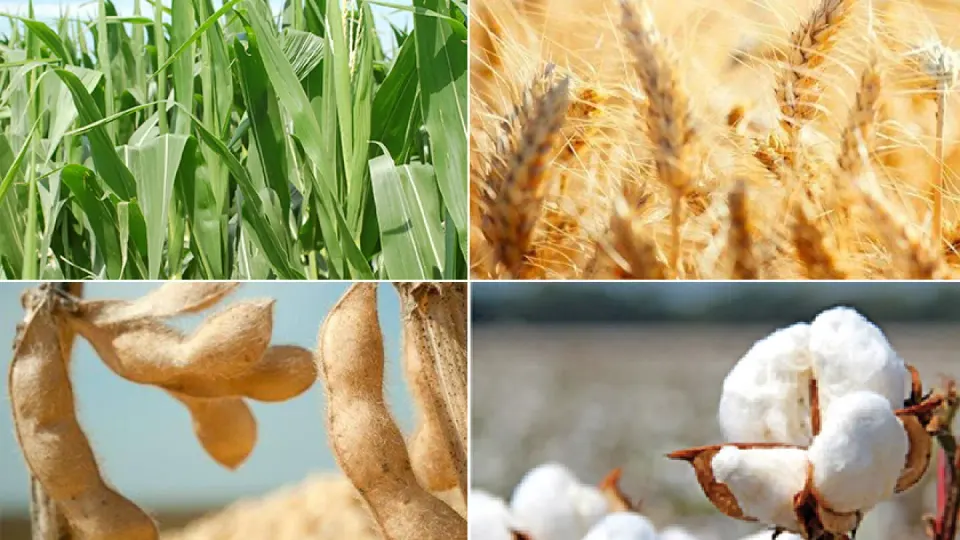
U.S. grain and oilseed futures recovered from early-session lows on September 25, 2026, with corn, soybeans, and soybean meal all closing near their daily highs after heavy early selling pressure, according to Pro Farmer's Crops Analysis.
Corn
December corn finished the session up modestly, with Pro Farmer reporting that the contract "rose 3/4 cent to $5.28 1/4, near the session high after hitting a four-week low early on," and was "up 3/4 cent" for the week. Pro Farmer attributed part of the recovery to currency markets, noting that "a lower U.S. dollar index today did aid the corn market bulls."
Harvest is progressing unevenly across the country. According to Pro Farmer, "harvest continues mostly unimpeded in the southern U.S., while many Midwestern farmers are sidelined by rain." Looking ahead, Pro Farmer noted that "harvesting and commercial hedge pressure will continue in the coming weeks, which will add to selling pressure in corn futures," with the "stronger U.S. dollar on the foreign exchange market" also cited as a headwind.
Traders are focused on the upcoming USDA quarterly Grain Stocks report, with Pro Farmer identifying "feed and residual" as "the key category to watch for potential changes" once official 2025-26 ending stocks are published.
World Weather Inc., as cited by Pro Farmer, warned that "crop areas west of the Mississippi River will see a wet weather into Oct. 3 that will slow fieldwork with multiple rounds of heavy rain from eastern Nebraska and eastern Kansas into Iowa and northern Missouri," with "some local flooding" considered likely in Iowa. Conditions east of the Mississippi were described as improving.
Soybeans
November soybeans "rose 1 1/2 cents to $13.19, near the daily high and for the week up 15 1/2 cents," according to Pro Farmer. December soybean meal "fell $1.40 to $371.00, nearer the daily high and for the week up $12.40," while December soybean oil "rose 29 points to 67.84 cents" but remained down 38 points on the week.
A key catalyst for the soybean recovery was a statement from U.S. Trade Representative Jamieson Greer. Pro Farmer reported that Greer "said on CNBC this morning the U.S. and China have reached agreements covering a 'subset' of non-sensitive goods that could be traded on more favorable terms," though he "did not specify which products are covered, how tariffs could change or when the terms would take effect." Pro Farmer also noted that "the Trump administration will release more details Monday."
On the supply side, Pro Farmer reported that "soybean processors in the western Midwest are offering hefty premiums for immediate deliveries as persistent rains delay early harvest, tightening supplies and forcing some plants to scale back production."
In trade policy, Pro Farmer noted that "a key two-month extension of the trade truce with the U.S. was announced, which pushed the deadline to January 10, past the traditional primary soybean export window." Soy oil faced additional pressure, with Pro Farmer reporting it was weighed on by "crude oil prices dropping as negotiations on conflicts in the Black Sea and Strait of Hormuz looked a bit more promising."
Wheat
Wheat futures declined across all classes on the week. Pro Farmer reported that December SRW wheat "fell 3 3/4 cents to $7.03 1/4, nearer the daily high after hitting a five-week low early on, and for the week down 11 cents," while December HRW wheat "lost 5 cents to $7.62, nearer the daily high, hit a six-week low early on, and for the week down 21 3/4 cents." December spring wheat "fell 6 3/4 cents to $7.13 1/2" and was "for the week down 27 3/4 cents."
Pro Farmer described the technical backdrop as unfavorable, noting that "the winter wheat futures markets saw more profit-taking pressure and weak long liquidation as price downtrends are in place on the daily bar charts."
On the geopolitical front, Pro Farmer reported that "Turkish President Tayyip Erdogan said Turkey had stepped up efforts to reestablish the Black Sea grain corridor," and that Erdogan said "he had discussed the issue again with Ukrainian President Volodymyr Zelensky and received a positive response." In Ukraine, grain stocks as of September 1 "totaled 24.6 MMT," which was "up 10 MMT from the same date a year ago," citing analyst APK-Inform.
Pro Farmer's 90-day outlook flagged that "global wheat supplies, weather concerns and the Super El Nino, as well as ongoing grain-shipping constraints out of the Black Sea region, will remain focal points for the wheat markets in the coming few months."
Cotton
December cotton futures "fell 60 points to 82.71 cents" on the session but were "up 156 points" for the week, according to Pro Farmer. The Adjusted World Price for cotton was reported at "66.09 cents per pound, effective Sept. 25, down from 68.92 cents the prior week, and the lowest so far for the 2026/27 marketing year."
Pro Farmer noted that "soft mill buying and cheaper competing origins may continue to pressure cotton futures in the coming months," while the near-term technical posture for cotton was described as remaining bearish.
Prepared with AI assistance and reviewed by the editorial team.