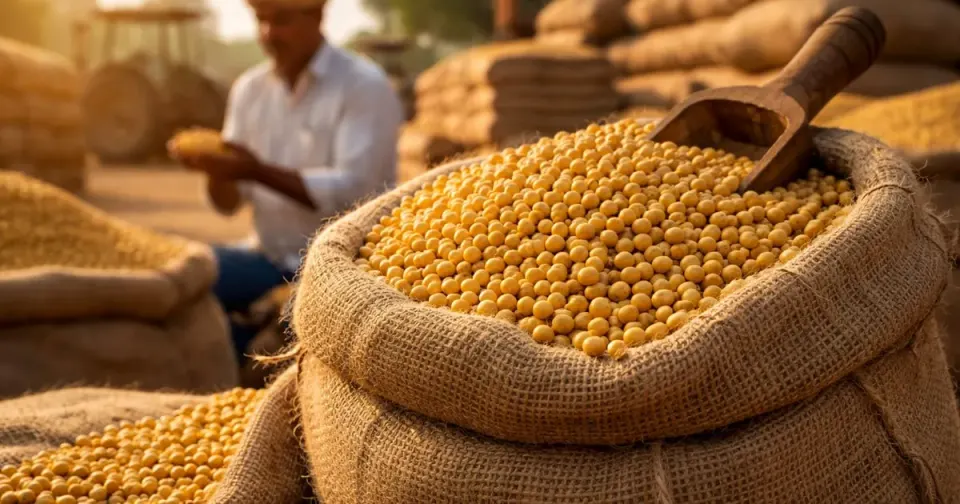
CBOT soybean futures held firm on 21 September 2026, with the November 2026 contract trading around 1,310 US-cent/bu, supported by record-pace U.S. export sales and continued Chinese buying, even as managed-money funds began reducing historically elevated net long positions and crude oil weakness capped gains in soybean oil.
Freshpet's share price has dropped approximately 18% over the past month to around US$61, even as the fresh pet food manufacturer reports improving margins and continued digital sales growth. Analyst price targets remain well above the current trading level, while the company's five-year shareholder return remains deeply negative.
Grain futures rose overnight on 21 September 2026 as China's state-owned firms purchased at least 260,000 tonnes of U.S. soybeans days before a presidential summit in Washington, while U.S. and Chinese officials began preparatory trade talks in New York. Soybean meal, corn and wheat futures all gained, though progress on China's broader $17 billion annual farm-goods commitment remains limited.
Palm oil prices face near-term downward pressure after Malaysia reported higher August inventories and weaker exports, while speculation mounts that India could reduce import duties on edible oils, adding further headwinds to global palm prices.
India's 2026 southwest monsoon has fallen roughly 15% below normal, reducing kharif maize sowings by around 2.2% and raising domestic supply concerns. Meanwhile, Ukrainian and EU corn prices have eased, keeping global feed grain markets broadly soft despite the weather-driven uncertainty in South Asia.
An unprecedented drought in Austria has sharply reduced 2026 autumn crop yields, with potatoes down 50–70%, soybeans more than 50%, and grain maize nearly 30% versus the five-year average. The shortfalls are tightening feed ingredient and raw material availability for domestic processors and neighbouring EU markets, pushing up procurement costs for livestock producers and feed formulators.
Soybean prices are holding broadly steady, supported by strong Asian crushing margins and firm Chinese feed demand, even as Ukrainian FOB values ease and CBOT futures consolidate ahead of the US harvest. Wilmar International's H1 2026 results point to a meaningful uplift in crushing volumes and processing profits, while Brazilian planting begins under El Niño-influenced conditions.
Indian soybean prices are consolidating at elevated levels in September 2026, supported by weaker domestic crop output, patchy monsoon conditions in key growing states, and trade estimates pointing to record imports approaching 1 million tonnes for the current oil year. FOB New Delhi prices for sortex-clean soybeans remain stable at 0.87 EUR/kg, well above global benchmarks, while mandi prices fluctuate around the mid-₹6,000/quintal range.
Argentina's bumper 2025/26 corn harvest of roughly 71.7 million tonnes is driving record export volumes to North Africa, displacing Ukrainian and EU supplies constrained by Black Sea disruptions and drought. Morocco, Egypt, and Algeria have all sharply increased purchases from Argentina in the first seven months of 2026, while Brazil's expanding ethanol sector is further tightening global export availability.
Cumulative global fishmeal production fell 49% year-on-year in the first seven months of 2026, with fish oil output down 30%, driven by shortfalls in South America and weaker catches in Africa and Northern Europe. IFFO says Asian producers may partially offset the decline in Q4, but demand headwinds in China's aquaculture and pig sectors are weighing on recovery prospects.
Feed-grade triticale prices in north-west Germany remained stable at 0.225 EUR/kg EXW Drentwede as of 17 September 2026, supported by firm EU feed grain sentiment, steady livestock demand, and tight coarse grain availability, according to CMB News.
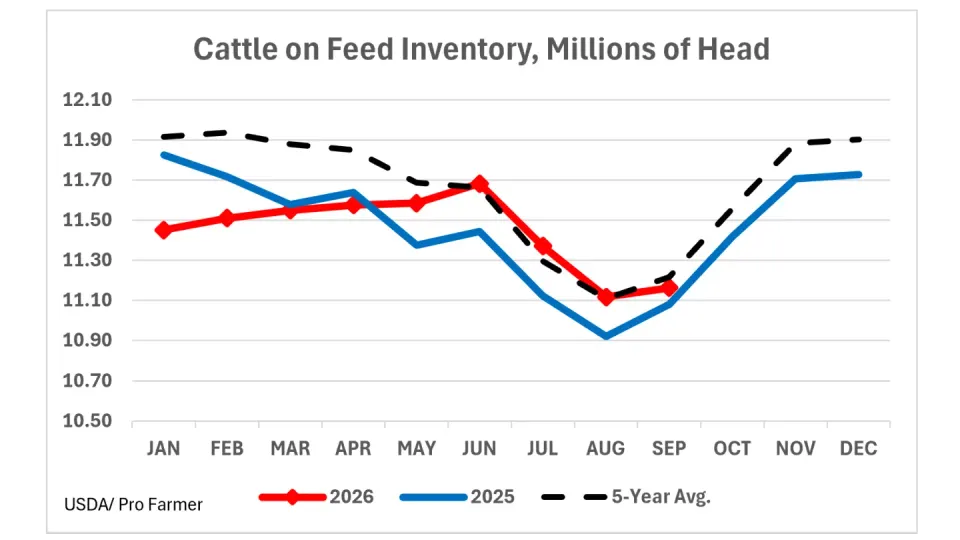
USDA's September 2026 Cattle on Feed report shows total inventory rose just 1% year-over-year to 11.163 million head, while August placements fell 9% to a record low of 1.617 million head — the smallest figure for that month since data collection began in 1996. Both results came in below analyst expectations, adding pressure to cattle futures markets already dealing with weak boxed beef demand.