US Cattle on Feed Inventory Edges Up 1% as August Placements Hit Record Low
USDA's September 2026 Cattle on Feed report shows total inventory rose just 1% year-over-year to 11.163 million head, while August placements fell 9% to a record low of 1.617 million head — the smallest figure for that month since data collection began in 1996. Both results came in below analyst expectations, adding pressure to cattle futures markets already dealing with weak boxed beef demand.

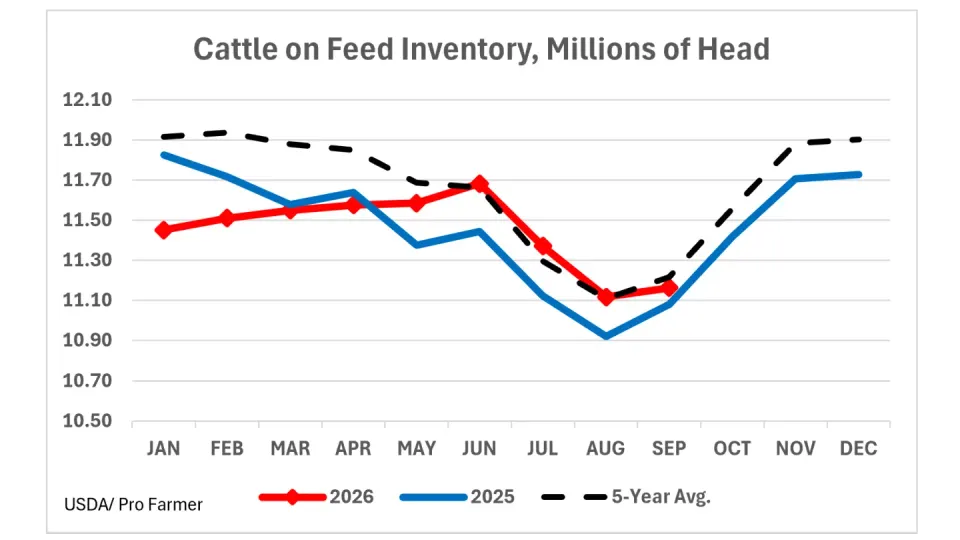
The United States Department of Agriculture (USDA) released its monthly Cattle on Feed report on Friday, September 19, 2026, showing a modest 1% year-over-year increase in total inventory while August placements fell to an all-time low for that month, according to data reported by Pro Farmer.
USDA said cattle and calves on feed for the slaughter market in feedlots with a capacity of 1,000 or more head totalled 11.163 million head as of September 1, 2026 — a 1% gain from a year earlier but slightly below the average analyst estimate of a 1.7% rise compiled by Reuters.
Placements during August declined sharply, falling 9% from year-ago levels to 1.617 million head — the lowest figure on record for the month. According to Pro Farmer, the next lowest placement total for August on record was 1.632 million head, set in 2015. Analysts polled by Reuters had expected placements to be down only 3.3% year-over-year, making the result a significant downside surprise for the second consecutive month. Net placements were reported at 1.57 million head.
By weight class, USDA reported August placements as follows: under 600 pounds, 320,000 head; 600–699 pounds, 240,000 head; 700–799 pounds, 355,000 head; 800–899 pounds, 387,000 head; 900–999 pounds, 230,000 head; and 1,000 pounds and greater, 85,000 head.
August marketings of fed cattle totalled 1.519 million head, down 3% from a year ago and also a record low for August. Analysts had expected marketings to be down 4.0%. Other disappearances totalled 52,000 head, 2% above 2025 levels, with Pro Farmer attributing the figure in part to high temperatures that continued to affect the Plains into late summer.
Cattle markets had rebounded from 10-month lows reached in early September, but faced renewed pressure during the week from weak boxed beef prices. Ahead of the report, October live cattle futures ended $0.275 higher on the day at $215.925, while November feeder cattle lost $0.65 to close at $318.00, according to Pro Farmer.
The continuing decline in placements reflects a broader industry trend of producers holding cattle longer to offset tighter overall inventory levels, a pattern that analysts surveyed by Reuters had expected to continue heading into the report.
Prepared with AI assistance and reviewed by the editorial team.