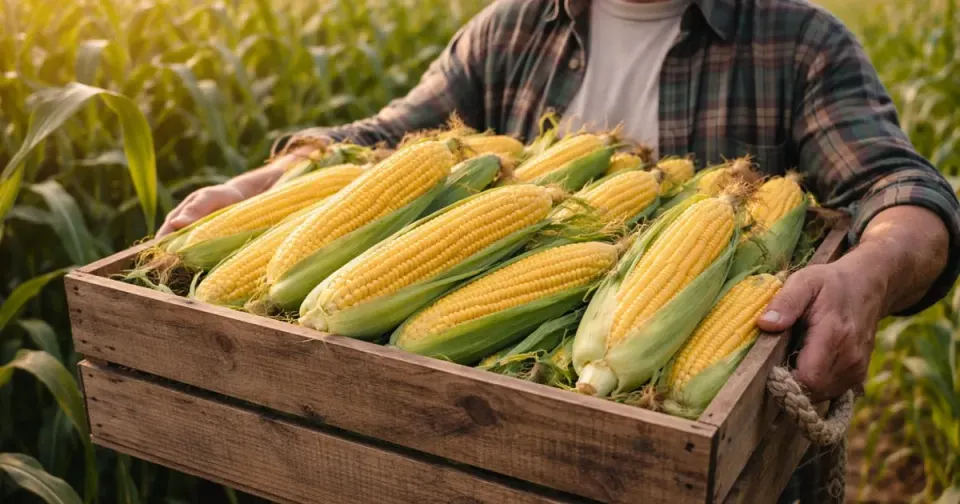
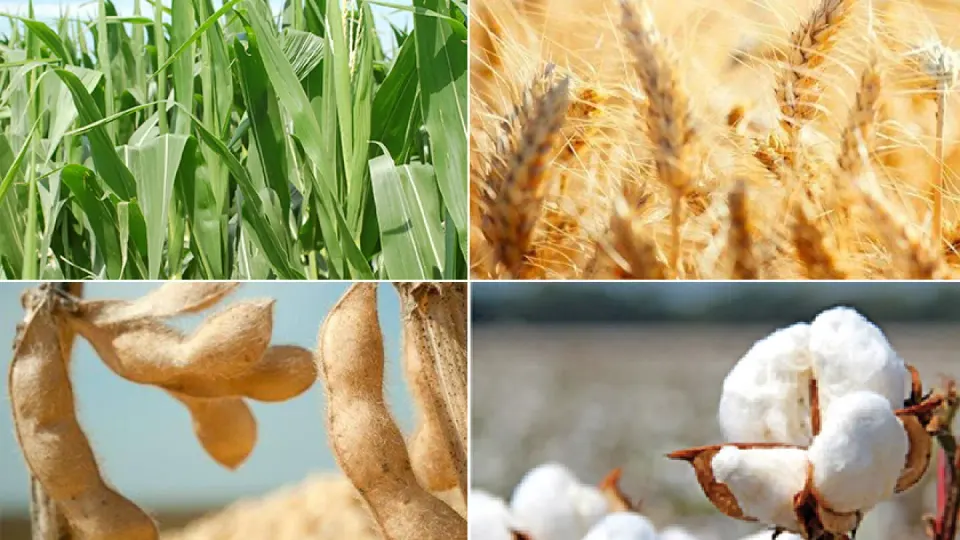
US corn and wheat futures recovered from multi-week lows on October 1, 2026, while soybeans fell across the complex. Key market drivers included a record-high US winter wheat acre abandonment rate, a sharp cut to Russia's wheat export forecast, surging US soybean export commitments led by China, and record combined biodiesel and renewable diesel production in July.
China has published a 1,619-tariff-line list of U.S. products eligible for consideration for lower tariffs, covering corn, wheat, cotton, beef, pork, dairy and ethanol, but notably omitting commercial (non-seed) soybeans and distillers dried grains with solubles (DDGS). Actual tariff reductions remain pending domestic legal processes in each country, and the widely cited "30-for-30" figures represent a 2024 trade valuation benchmark rather than a purchasing or savings commitment.
Ukrainian wheat prices remain depressed but stable as Black Sea export logistics keep volumes well below capacity, while German feed wheat trades sideways at elevated levels. The discount of Ukrainian origins to Western European benchmarks is expected to persist into early October 2026.
Agricultural commodity futures posted sharply divergent results in the week ending 25 September 2026, with November soybeans gaining 15½ cents to $13.19 per bushel and November feeder cattle surging nearly $14, while wheat contracts fell as much as 27¾ cents. China trade developments, harvest-season supply pressure, and commodity-specific fundamentals drove the split outcomes, according to a weekly market analysis published by Ag Bull on 26 September 2026.
US weekly export sales for corn, soybeans, and wheat for the week ended September 17 all came in below or at the low end of trade expectations, with Pro Farmer citing a stronger US dollar and elevated prices as potential demand headwinds. Meanwhile, the US-China trade truce was extended by two months, and USDA reported a daily soybean sale to China.
The U.S. Grains & BioProducts Council participated in the APEC High-Level Public-Private Dialogue on Food Security in Dalian, China, alongside nearly 150 representatives from across the Asia-Pacific region, with a focus on U.S. sorghum trade, bilateral agricultural relations, and regional supply chain resilience.
Ukrainian corn FOB and FCA prices at Odesa edged lower on 24 September 2026 as active Black Sea export flows kept seller competition intense, while French FOB corn firmed and German EXW values held broadly steady. CMB News expects mostly stable to mildly softer indications across Brazil, Germany and Ukraine over the next three days.
The Philippine Department of Agriculture is reviewing broader use of millet in animal feed rations to reduce the country's dependence on corn as a very strong El Niño, projected to persist into the first half of 2027, raises the risk of drought-related supply shocks. While corn remains the dominant feed grain, any large-scale millet adoption could gradually temper growth in Philippine corn import demand, a development international exporters are beginning to monitor.
U.S. grain futures on September 25, 2026 finished near session highs after early selling pressure gave way to a recovery driven by a weaker dollar and trade-deal optimism. December corn edged up fractionally, November soybeans posted weekly gains on news of a U.S.-China trade subset agreement, while wheat futures ended the week lower amid a sustained price downtrend. Persistent Midwest rains are delaying harvest and tightening soybean supplies at processors.
Immigration enforcement operations in Kansas, Oklahoma and Texas have cut federally inspected cattle slaughter by more than 31,000 head versus the prior week through Thursday, September 25, 2026, with the Kansas Livestock Association, Oklahoma Cattlemen's Association and Texas Cattle Feeders Association warning of millions of dollars in lost revenue and delays to fed cattle deliveries. The disruption is affecting feedyards, processing plants, feed and grain businesses and transport operations across a region that accounts for roughly 22% of the nation's grain-fed beef supply.
US on-highway diesel hit an all-time record of $6.53 per gallon in the week of 21 September 2026, coinciding with the harvest season. The Trump administration is weighing a range of targeted measures — including dyed-diesel distribution, state tax relief and voluntary refiner concessions — after setting aside a 90-day export ban that energy officials and industry warned would backfire. USDA projects 2026 farm fuel and oil spending at $21.6 billion, up 28.8% from 2025.
Corn, soybean, and wheat futures faced sharp selling pressure on 25 September 2026, with all three grain markets breaking down technically amid disappointing outcomes from the Trump-Xi summit, a potential Iran-U.S. deal that pressured crude oil, and rising U.S. Treasury yields. USDA's Hogs & Pigs report added a bearish tone to cattle markets while offering a modestly supportive signal for lean hog futures.