Loading…
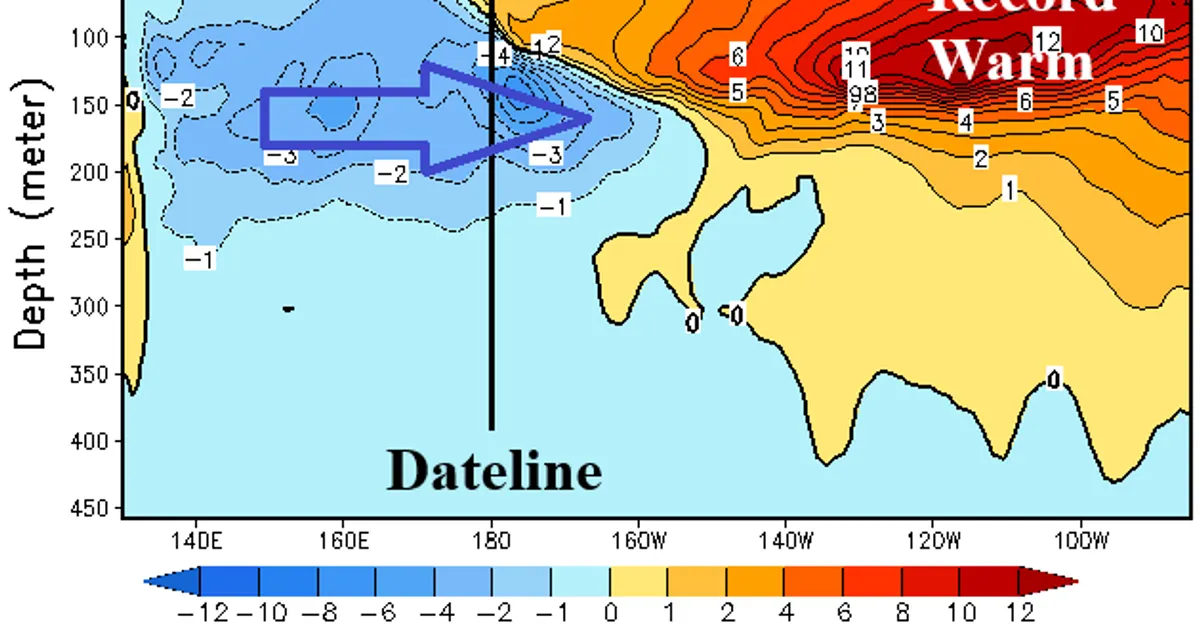
A Climate Impact Company outlook says the 2026–27 Super El Niño may have peaked in November 2026 and could weaken rapidly in early 2027, potentially transitioning to La Niña by mid-2027. The assessment points to eastward-moving cooler subsurface Pacific waters, while warm subsurface water could still sustain El Niño through the boreal winter.
The forecast signals a possible shift in weather risks for crop-growing regions as the ENSO phase changes, but it does not specify a definite production impact. Any price effects remain uncertain and depend on how the transition affects growing-season conditions.
 climateimpactcompany.comScott YuknisNov 10, 2026
After 2,467 past weather events, Corn moved a median +0.1% over 5 sessions (51% higher; middle half -1.5% to +1.7%), and +0.6% over 20.
After 1,964 past weather events, Soybeans moved a median +0.1% over 5 sessions (51% higher; middle half -1.7% to +1.8%), and +0.3% over 20.
After 1,773 past weather events, Wheat (SRW) moved a median +0.1% over 5 sessions (52% higher; middle half -1.5% to +2.1%), and +0.2% over 20.
After 361 past weather events, Palm Oil moved a median +0.0% over 5 sessions (51% higher; middle half -1.3% to +1.3%), and -0.2% over 20.
Moves of each commodity's benchmark from the last close before the event. Historical reads pool past events of the same kind; they describe what happened, not what will. Not investment advice.
