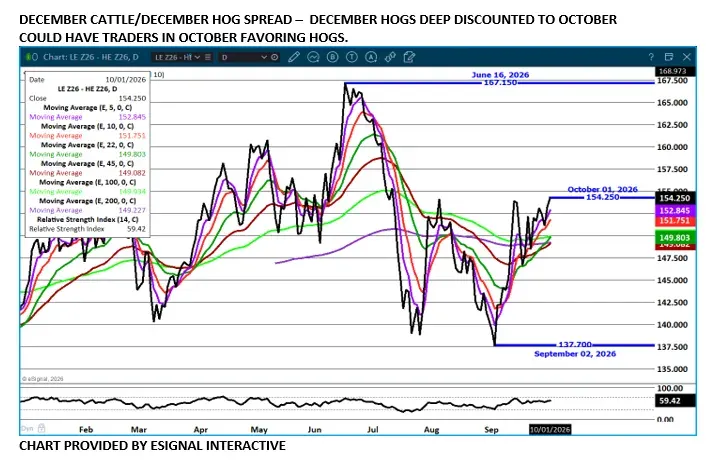
ADM Investor Services analyst Chris Lehner reported softer cash cattle prices in the week to 2 October 2026, citing rising grocery costs, high fuel prices, and widespread consumer financial stress as headwinds for beef demand. Lean hog futures hit new contract lows on the same day, with cheap chicken seen as competing against pork.
The U.S. Grains & BioProducts Council hosted three half-day seminars across Türkiye to address poultry and ruminant feed producer concerns over mycotoxins, antibiotic residues, and DDGS handling and storage, drawing 55 participants from 26 companies.
Heavy rainfall across the U.S. central and southern Plains is stalling winter wheat planting and interrupting corn and soybean harvest, while in Brazil, above-normal heat in key northern growing states is threatening early soybean planting. China's decision to cut tariffs on several U.S. agricultural commodities but leave soybeans under an additional 10% duty drove sharp losses in soybean futures on Monday.
U.S. grain futures rose in overnight trade on 30 September 2026 as markets positioned ahead of USDA's quarterly Grain Stocks report, a daily soybean export sale of 105,000 MT was reported, and the U.S. dollar index weakened. Analysts expect corn stocks to come in modestly below USDA's September WASDE figure, with attention focused on the Feed & Residual category.
Agricultural commodity futures posted sharply divergent results in the week ending 25 September 2026, with November soybeans gaining 15½ cents to $13.19 per bushel and November feeder cattle surging nearly $14, while wheat contracts fell as much as 27¾ cents. China trade developments, harvest-season supply pressure, and commodity-specific fundamentals drove the split outcomes, according to a weekly market analysis published by Ag Bull on 26 September 2026.
Immigration enforcement operations in Kansas, Oklahoma and Texas have cut federally inspected cattle slaughter by more than 31,000 head versus the prior week through Thursday, September 25, 2026, with the Kansas Livestock Association, Oklahoma Cattlemen's Association and Texas Cattle Feeders Association warning of millions of dollars in lost revenue and delays to fed cattle deliveries. The disruption is affecting feedyards, processing plants, feed and grain businesses and transport operations across a region that accounts for roughly 22% of the nation's grain-fed beef supply.
Corn, soybean, and wheat futures faced sharp selling pressure on 25 September 2026, with all three grain markets breaking down technically amid disappointing outcomes from the Trump-Xi summit, a potential Iran-U.S. deal that pressured crude oil, and rising U.S. Treasury yields. USDA's Hogs & Pigs report added a bearish tone to cattle markets while offering a modestly supportive signal for lean hog futures.
Corn futures pulled back toward technical support on September 23, 2026, erasing Monday's gains, while a USDA daily export sale to Mexico, a high-stakes Xi-Trump summit in Washington, a proposed U.S. diesel export ban, and a projected 70% surge in global biofuel output by 2030 combined to create a complex backdrop for feed-grain and oilseed markets.
Forecast rainfall across the central and southern Plains is expected to improve seedbed conditions for 2027 hard red winter wheat planting, while the Corn Belt faces a divided harvest picture: drier conditions offer eastern growers a harvest window, but renewed moisture across Nebraska, Iowa and Minnesota threatens further delays in the west.
Grain futures rose overnight on 21 September 2026 as China's state-owned firms purchased at least 260,000 tonnes of U.S. soybeans days before a presidential summit in Washington, while U.S. and Chinese officials began preparatory trade talks in New York. Soybean meal, corn and wheat futures all gained, though progress on China's broader $17 billion annual farm-goods commitment remains limited.
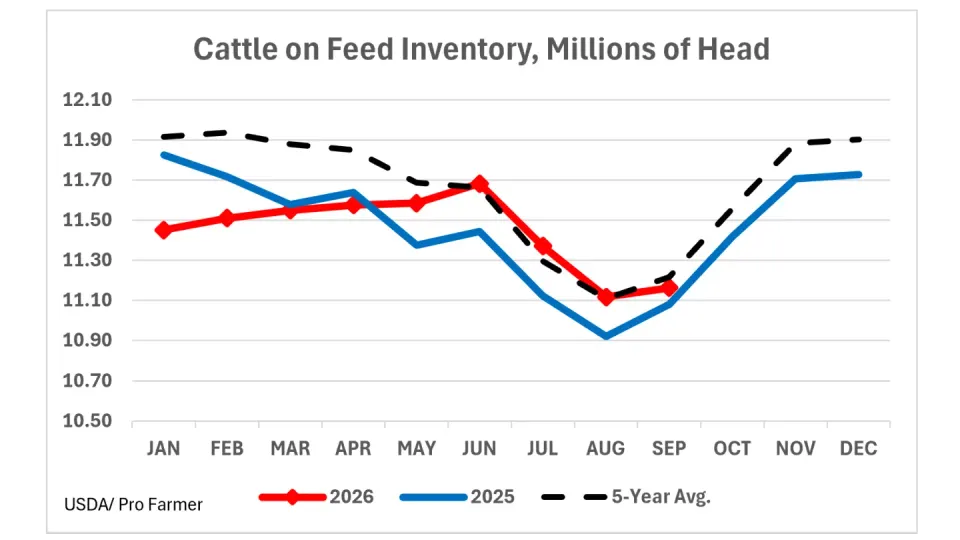
USDA's September 2026 Cattle on Feed report shows total inventory rose just 1% year-over-year to 11.163 million head, while August placements fell 9% to a record low of 1.617 million head — the smallest figure for that month since data collection began in 1996. Both results came in below analyst expectations, adding pressure to cattle futures markets already dealing with weak boxed beef demand.
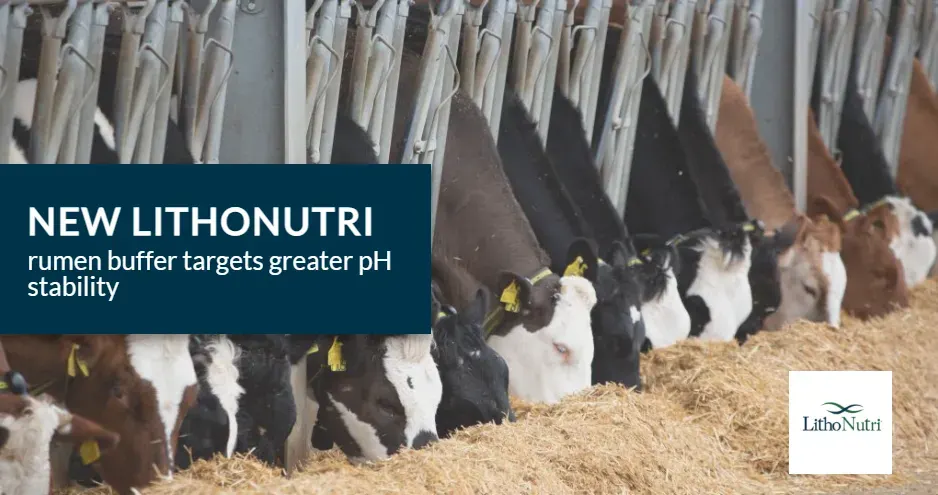
Scotmin Nutrition, part of the Fevara plc portfolio, has launched LithoNutri, a natural marine-derived rumen buffer produced from calcified red marine algae, targeting improved rumen pH stability and reduced risk of sub-acute rumen acidosis in UK dairy and beef cattle.