US soymeal, corn, soybeans and winter wheat all fell during the week ending October 3, 2026, as harvest pressure, larger corn inventories and improved soymeal availability outweighed supply concerns, according to CommodityScope's weekly physical markets report.
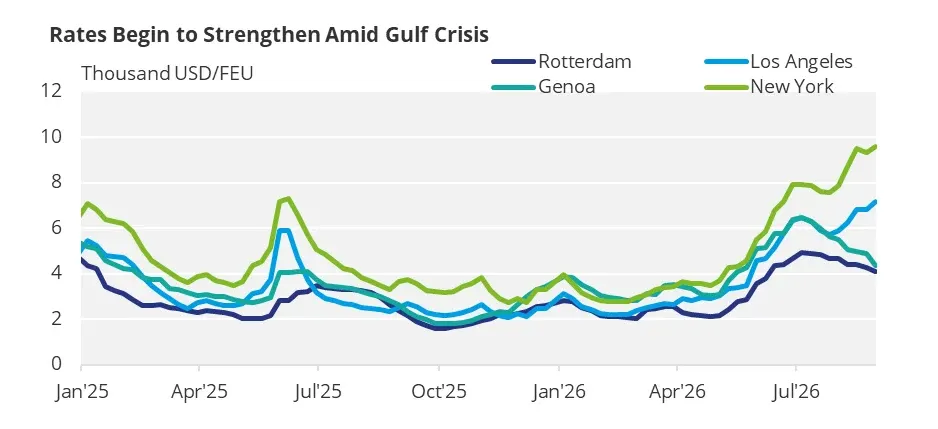
Persistent port congestion, container imbalances and route disruptions are keeping ocean freight costs elevated for agricultural shippers even as some trade lanes through the Red Sea and Suez Canal show signs of partial normalization, according to CMB News.
Sunflower oil prices fell for a third consecutive month in September 2026, according to FAO data, as ample Black Sea supply weighs on the market. However, damaged Ukrainian port infrastructure, elevated maritime risk premia, and constrained Russian export routes are cushioning the downturn and keeping volatility high.
China's soybean import demand is expected to ease in the coming months as private crushers face negative crush margins and weak feed demand linked to shrinking hog herds. Soybeans were excluded from tariff relief announced after the Xi-Trump summit, keeping US cargoes uncompetitive with South American supplies. Domestic inventories at Chinese crushing plants have reached a 15-year high.
A sharply larger 2026 Ukrainian sunflower crop, combined with war-damaged crushing capacity and elevated logistics costs, is pushing domestic seed purchase prices and sunflower oil values lower as the harvest accelerates into early October.
Grain and oilseed futures closed mostly lower on 22 September 2026, according to ADM Investor Services analyst Mark Soderberg. Corn drifted back toward session lows while managed money extended a long position that ADMIS described as a potential record high. Soybeans finished mixed, soybean meal protein value reached a seven-month high, and wheat futures fell sharply amid ongoing Black Sea conflict and softening global supply signals.
Argentina's 2026/27 wheat output is forecast to fall sharply from the previous season's record, while war-related disruptions continue to constrain Black Sea exports. Together, the two developments are tightening global high-quality wheat availability and pushing Chicago futures to a multi-year high, raising import costs for buyers in North Africa, the Middle East and Asia.
Pakistan's Trading Corporation of Pakistan (TCP) has tendered for 750,000 tonnes of 2026-crop milling wheat on CFR Karachi/Gwadar terms at around USD 320–325 per tonne, but the high landed cost of imports — compounded by freight, port charges, and currency weakness — is expected to support rather than ease domestic wheat prices. Global benchmark prices from Ukraine, the EU, and the US have softened modestly in September, but analysts note Pakistan's firmness is driven by internal cost and currency dynamics rather than global supply tightness.
Ongoing shipping disruptions in the Black Sea and Red Sea are compelling wheat importers across Asia, the Middle East, and North Africa to source from more expensive origins such as the United States, Baltic states, Romania, Argentina, India, and Australia. Higher war-risk insurance premiums and freight costs are keeping physical wheat prices structurally elevated even as futures benchmarks have eased slightly from late-August highs, according to CMB News.
German feed rye EXW prices have firmed modestly in northern regions, while Ukrainian rye offered FOB Odesa has ticked up slightly, as ample EU grain supply and persistent Black Sea risk premia shape a cautious but balanced rye market heading into late September 2026.
A rapidly intensifying El Niño is tightening water levels at the Panama Canal and prompting precautionary draft restrictions, according to an analysis by agribusiness consultant Alê Delara published by CZ App on 17 September 2026. The weather event could raise US Gulf-to-Asia shipping costs, eroding US soybean and corn competitiveness and redirecting Asian demand toward Brazil — but the same climate risks that could lift Brazilian export premiums also threaten its domestic harvest and push up farm input costs.
The USDA's September WASDE trimmed 2026/27 US corn ending stocks and slashed production forecasts, while soybean ending stocks edged lower on stronger export demand. Wheat balances were broadly stable. Meanwhile, Saudi Arabia's shutdown of its East-West pipeline and record-high diesel cracks are adding freight and energy cost pressure that feed manufacturers and ingredient traders will need to monitor closely.