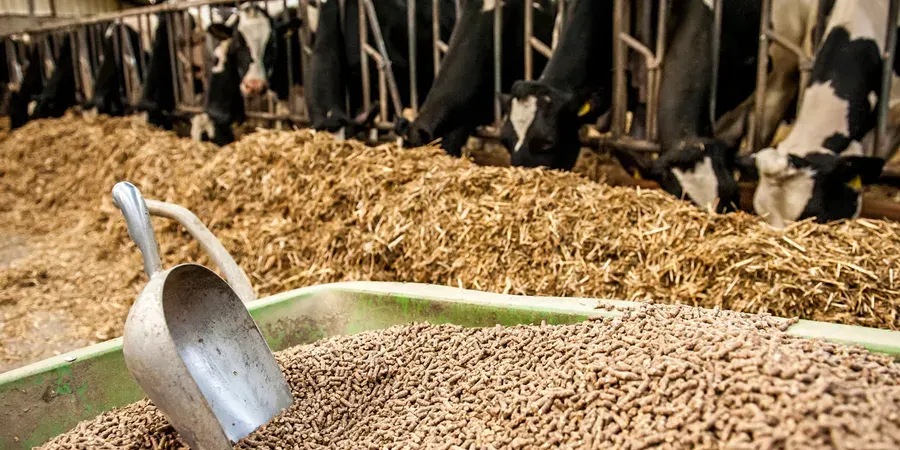
China's East Hope Group is converting a grain elevator in Kazakhskoye village, Akmola region, into a 100,000-tonne feed production facility at a cost of US$6 million, with launch planned for October 2026.
Deoxynivalenol (DON), commonly known as vomitoxin, is emerging as a significant problem in the 2026 corn harvest, prompting grain handlers including Dayton Cargill to test every load. The heat-stable mycotoxin concentrates in distillers dried grains and poses regulatory and financial risks for the animal feed industry.
Ukrainian wheat prices remain depressed but stable as Black Sea export logistics keep volumes well below capacity, while German feed wheat trades sideways at elevated levels. The discount of Ukrainian origins to Western European benchmarks is expected to persist into early October 2026.
US weekly export sales for corn, soybeans, and wheat for the week ended September 17 all came in below or at the low end of trade expectations, with Pro Farmer citing a stronger US dollar and elevated prices as potential demand headwinds. Meanwhile, the US-China trade truce was extended by two months, and USDA reported a daily soybean sale to China.
US on-highway diesel hit an all-time record of $6.53 per gallon in the week of 21 September 2026, coinciding with the harvest season. The Trump administration is weighing a range of targeted measures — including dyed-diesel distribution, state tax relief and voluntary refiner concessions — after setting aside a 90-day export ban that energy officials and industry warned would backfire. USDA projects 2026 farm fuel and oil spending at $21.6 billion, up 28.8% from 2025.
The U.S. Grains & BioProducts Council escorted a 19-member South Korean feed and food corn buyer delegation on a multi-state tour of the U.S. corn export chain in September 2026, covering farms, ethanol facilities, grain handling sites and Pacific Northwest export terminals, as U.S. corn holds more than 80% of South Korea's import market so far this year.
A strengthening El Niño event, combined with fertilizer shortages, geopolitical tensions, and elevated energy costs, could push global food and feed commodity prices up by 14–16%, according to procurement consultancy Beroe. Key feed ingredients including corn, vegetable oils, and sugar face varying levels of supply and price risk, with the full market impact potentially not materialising until 2028.
Chicago corn futures rose on 21 September 2026, driven by trader positioning ahead of US–China talks that could unlock new Chinese grain purchases and by persistent Black Sea supply uncertainties. Gains were broad-based but moderate, with the market still awaiting concrete outcomes from the summit.
German feed corn prices remain steady at 0.295 EUR/kg EXW Drentwede amid a drought-reduced domestic harvest, while Ukrainian export corn at Odesa has softened to 0.157–0.159 EUR/kg on CPT and FOB terms, widening the spread between the two origins and keeping EU feed buyers well supplied from Black Sea sources despite ongoing logistics risks.
Pakistan's Trading Corporation of Pakistan (TCP) has tendered for 750,000 tonnes of 2026-crop milling wheat on CFR Karachi/Gwadar terms at around USD 320–325 per tonne, but the high landed cost of imports — compounded by freight, port charges, and currency weakness — is expected to support rather than ease domestic wheat prices. Global benchmark prices from Ukraine, the EU, and the US have softened modestly in September, but analysts note Pakistan's firmness is driven by internal cost and currency dynamics rather than global supply tightness.
International corn markets are navigating a tug-of-war between a projected record 66 million tonne Argentine maize harvest for 2026/27 and near-term European Union supply tightness driven by Ukrainian logistics bottlenecks. CBOT futures softened on profit-taking ahead of a U.S.–China summit, while Euronext corn held firm on constrained Black Sea inflows and elevated EU import demand.
Ongoing shipping disruptions in the Black Sea and Red Sea are compelling wheat importers across Asia, the Middle East, and North Africa to source from more expensive origins such as the United States, Baltic states, Romania, Argentina, India, and Australia. Higher war-risk insurance premiums and freight costs are keeping physical wheat prices structurally elevated even as futures benchmarks have eased slightly from late-August highs, according to CMB News.