German animal nutrition company Biochem has completed the acquisition of a 7,000-square-metre property adjacent to its Lohne headquarters, including an existing 1,350-square-metre warehouse, as part of a long-term site development strategy for its feed additives and dietary supplements business.
Corn futures pulled back toward technical support on September 23, 2026, erasing Monday's gains, while a USDA daily export sale to Mexico, a high-stakes Xi-Trump summit in Washington, a proposed U.S. diesel export ban, and a projected 70% surge in global biofuel output by 2030 combined to create a complex backdrop for feed-grain and oilseed markets.
A series of typhoons in the Philippines has reduced July–September 2026 corn production by an estimated 14.4%, tightening regional feed grain availability and pushing up input cost risk for Southeast Asian feed manufacturers. CBOT December 2026 corn futures are trading around 529 USc/bu, while buyers consider alternative grains including millet.
Swiss feed producer Granovit AG is acquiring fellow domestic company utro Fikovit AG, consolidating operations at its Kaiseraugst mill after closing utro Fikovit's Emmenbrücke facility in October. No personnel changes are planned, and utro Fikovit's owner Josef Fischer will join Granovit's board of directors.
Grain futures rose overnight on 21 September 2026 as China's state-owned firms purchased at least 260,000 tonnes of U.S. soybeans days before a presidential summit in Washington, while U.S. and Chinese officials began preparatory trade talks in New York. Soybean meal, corn and wheat futures all gained, though progress on China's broader $17 billion annual farm-goods commitment remains limited.
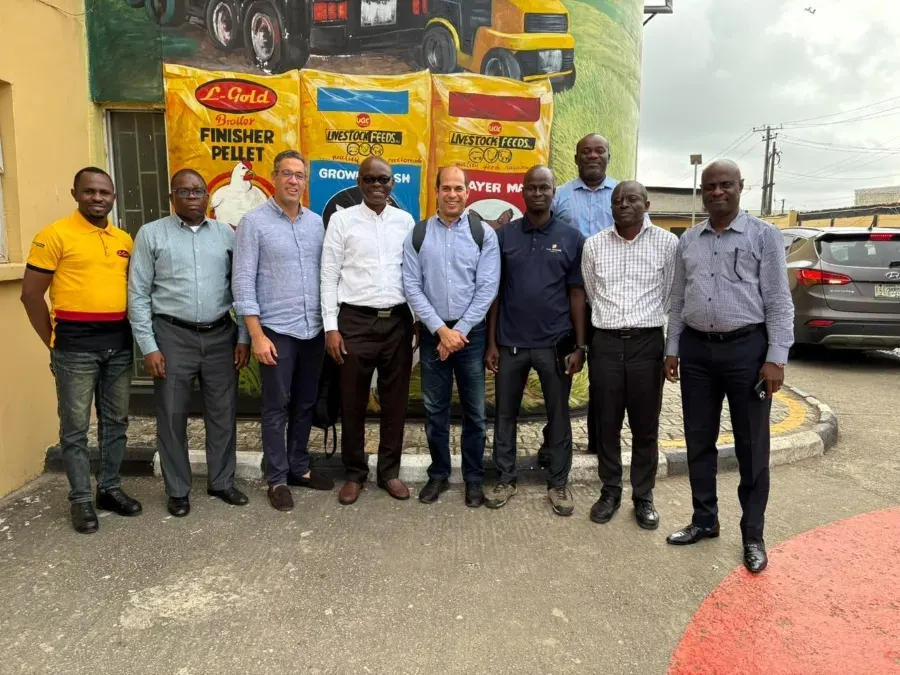
The U.S. Grains & BioProducts Council visited Nigerian feed industry stakeholders in September 2026 to promote least-cost formulation using U.S. corn, sorghum and co-products, including DDGS and corn gluten meal, ahead of an anticipated medium-term capacity increase of up to 1.5 million metric tons.
The European Feed Manufacturers' Federation (FEFAC) has published its fourth impact assessment warning that converging pressures from drought, Black Sea trade disruption, and EU Deforestation Regulation (EUDR) sourcing constraints could create a soybean meal supply gap of at least 5 million tonnes in the 2026/2027 marketing year, with total estimated costs to the EU feed and livestock sector reaching around €1.40 billion.
The European Feed Manufacturers Federation (FEFAC) has projected a soybean meal supply gap of at least 5 million tonnes in the EU for the 2026-27 marketing year, driven by drought, Black Sea trade disruptions, and sourcing constraints tied to the EU Deforestation Regulation. The federation estimates the combined cost impact on the EU feed and livestock sector could reach approximately EUR 1.4 billion and has called on EU institutions to act urgently to protect feed security.
Grain futures moved higher overnight on September 16, 2026, led by a surging soybean meal market that reached a 2.5-year high. Corn, soybeans, and wheat also posted gains, while market participants awaited the Federal Reserve's anticipated interest rate decision. Ongoing heavy rainfall in the Corn Belt, elevated crude oil prices tied to Middle East supply disruptions, and developing U.S.-China trade talks added further context to commodity market moves.