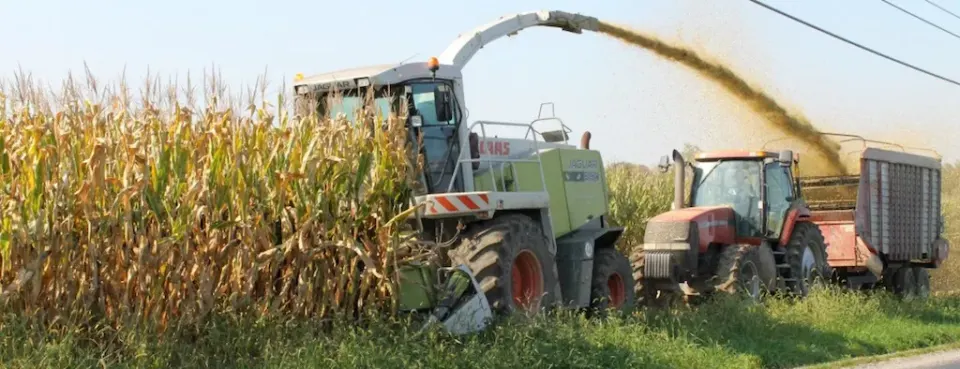
US on-highway diesel hit an all-time record of $6.53 per gallon in the week of 21 September 2026, coinciding with the harvest season. The Trump administration is weighing a range of targeted measures — including dyed-diesel distribution, state tax relief and voluntary refiner concessions — after setting aside a 90-day export ban that energy officials and industry warned would backfire. USDA projects 2026 farm fuel and oil spending at $21.6 billion, up 28.8% from 2025.
A strengthening El Niño event, combined with fertilizer shortages, geopolitical tensions, and elevated energy costs, could push global food and feed commodity prices up by 14–16%, according to procurement consultancy Beroe. Key feed ingredients including corn, vegetable oils, and sugar face varying levels of supply and price risk, with the full market impact potentially not materialising until 2028.
Corn, soybean, and wheat futures all closed lower on 23 September 2026, pressured by weak ethanol output, lower EU and UK crop forecasts from Coceral, ongoing Black Sea military strikes, and shifting South American production outlooks, according to an ADM Investor Services market commentary.
Grain and oilseed futures closed mostly lower on 22 September 2026, according to ADM Investor Services analyst Mark Soderberg. Corn drifted back toward session lows while managed money extended a long position that ADMIS described as a potential record high. Soybeans finished mixed, soybean meal protein value reached a seven-month high, and wheat futures fell sharply amid ongoing Black Sea conflict and softening global supply signals.
An Ohio State University Extension specialist says reports of Gibberella ear rot during the 2026 corn silage harvest indicate likely Deoxynivalenol (DON) and Zearalenone (ZEA) contamination, and urges dairy producers to sample feed now and again at feed-out, while reviewing storage and nutritional management practices to limit herd impacts.
Philippine corn production is projected to fall 14.4% to 2.08 million tonnes following typhoon damage, with El Niño conditions forecast to intensify into late 2026. The supply squeeze is accelerating feed-industry interest in drought-tolerant millet as a partial corn substitute, while European and Black Sea export prices remain broadly stable.
A series of typhoons in the Philippines has reduced July–September 2026 corn production by an estimated 14.4%, tightening regional feed grain availability and pushing up input cost risk for Southeast Asian feed manufacturers. CBOT December 2026 corn futures are trading around 529 USc/bu, while buyers consider alternative grains including millet.
Chicago corn futures rose on 21 September 2026, driven by trader positioning ahead of US–China talks that could unlock new Chinese grain purchases and by persistent Black Sea supply uncertainties. Gains were broad-based but moderate, with the market still awaiting concrete outcomes from the summit.
German feed corn prices remain steady at 0.295 EUR/kg EXW Drentwede amid a drought-reduced domestic harvest, while Ukrainian export corn at Odesa has softened to 0.157–0.159 EUR/kg on CPT and FOB terms, widening the spread between the two origins and keeping EU feed buyers well supplied from Black Sea sources despite ongoing logistics risks.
Chicago December wheat futures settled lower on September 21, 2026, but a combination of solid US export sales and persistent Black Sea supply disruption risks is preventing a deeper price correction, according to CMB News.
International corn markets are navigating a tug-of-war between a projected record 66 million tonne Argentine maize harvest for 2026/27 and near-term European Union supply tightness driven by Ukrainian logistics bottlenecks. CBOT futures softened on profit-taking ahead of a U.S.–China summit, while Euronext corn held firm on constrained Black Sea inflows and elevated EU import demand.
Forecast rainfall across the central and southern Plains is expected to improve seedbed conditions for 2027 hard red winter wheat planting, while the Corn Belt faces a divided harvest picture: drier conditions offer eastern growers a harvest window, but renewed moisture across Nebraska, Iowa and Minnesota threatens further delays in the west.