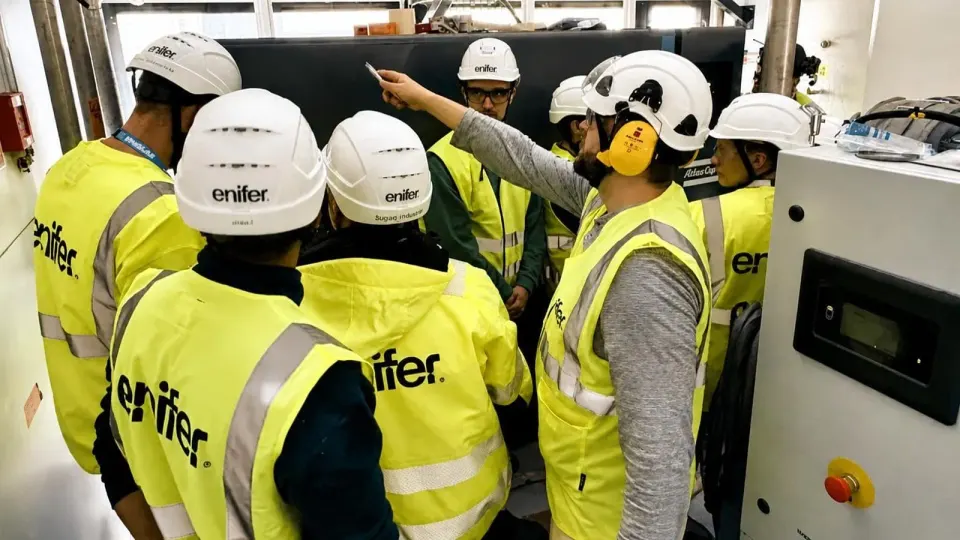
Finnish biotechnology company Enifer has started commissioning its first industrial-scale PEKILO® mycoprotein facility in Kantvik, Finland, with a planned output of 500 kg of dry mycoprotein per hour. The plant, funded partly through the EU's NextGenerationEU programme, aims to strengthen Finland's domestic protein supply for animal feed as the country's self-sufficiency in supplementary plant-based protein stands at only around 15%.
A European Commission study completed in June 2026 estimates that feed demand for ten key farmed species in the EU grew from under 900,000 tonnes in 2013 to almost 1.1 million tonnes in 2023, while identifying plant ingredients, cost, regulation and supply-chain exposure as central challenges for the sector's future.
A new Portuguese initiative, the Food4Thought project, is working with secondary-school and university students to counter misinformation about farmed fish and insects as food sources, using a three-stage educational approach backed by scientific evidence.
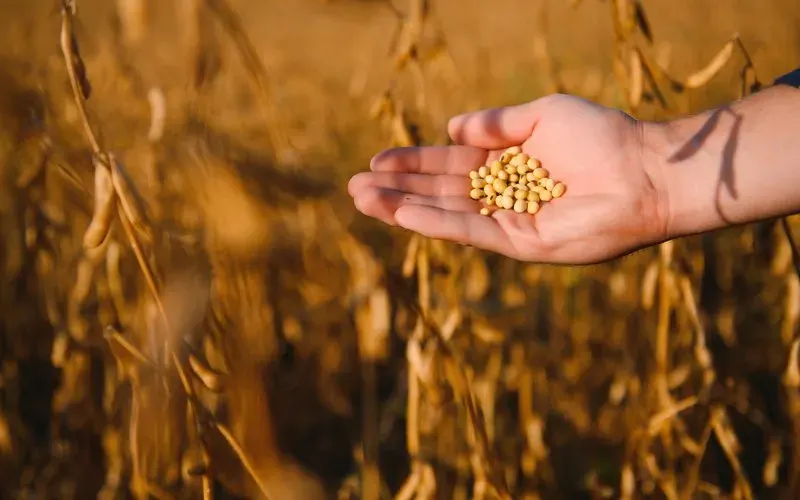
The European Feed Manufacturers' Federation (FEFAC) has published its fourth impact assessment warning that converging pressures from drought, Black Sea trade disruption, and EU Deforestation Regulation (EUDR) sourcing constraints could create a soybean meal supply gap of at least 5 million tonnes in the 2026/2027 marketing year, with total estimated costs to the EU feed and livestock sector reaching around €1.40 billion.
IFFO – The Marine Ingredients Organization reports that fishmeal production in the first seven months of 2026 is down 49 percent year-on-year, while fish oil output has fallen 30 percent, with declines driven primarily by Peru and Chile and compounded by softer catches in Africa and Northern Europe.
The European Feed Manufacturers Federation (FEFAC) has projected a soybean meal supply gap of at least 5 million tonnes in the EU for the 2026-27 marketing year, driven by drought, Black Sea trade disruptions, and sourcing constraints tied to the EU Deforestation Regulation. The federation estimates the combined cost impact on the EU feed and livestock sector could reach approximately EUR 1.4 billion and has called on EU institutions to act urgently to protect feed security.
A new IndexBox market report projects the global multi-enzyme complexes for aquafeed market will grow at a compound annual growth rate of 7.5–9.0%, with the baseline scenario estimate at 8.2%, between 2026 and 2035. Growth is fuelled by rising aquaculture output, pressure to reduce feed costs, and a shift toward customised enzyme blends. Asia-Pacific holds an estimated 55% share of demand, while Latin America, the Middle East, and Africa are identified as the fastest-growing regions.
US poultry by-product meal prices climbed close to all-time highs in early September 2026, rising 18.7% in a month as constrained global fishmeal availability pushed aquafeed formulators toward alternative proteins. Both IFFO and the FAO flagged continued tightness in fishmeal markets, driven by lower fishing quotas in South America and sustained aquaculture demand in China.