Argentina's agro-industrial exports to the European Union increased 21% in value during the first four months the Mercosur-EU trade agreement was in provisional force, with tariff-reduced products posting an even steeper 44% gain, according to Argentina's Secretariat of Agriculture, Livestock and Fisheries.
Nigeria's Ministry of Livestock Development is in discussions with UNIDO on technical cooperation to establish a digital livestock identification and traceability system, with potential applications in animal health monitoring, product certification, export market access and combating livestock theft.
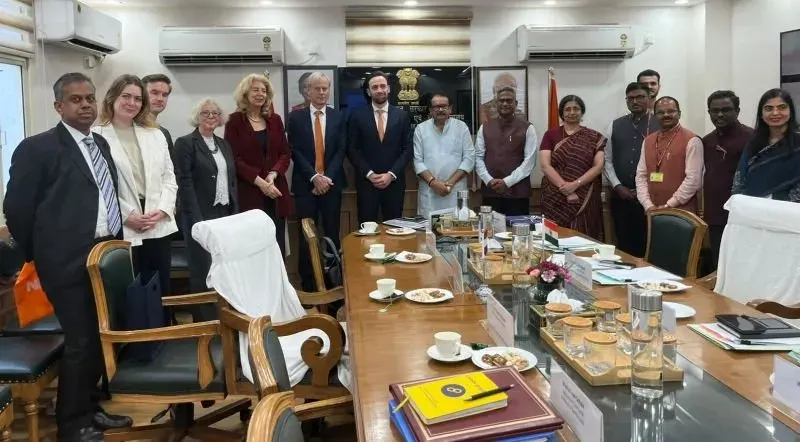
India and the Netherlands have agreed to set up an Indo-Dutch Centre of Excellence on Dairy Training at CEAH, Bengaluru, following a bilateral ministerial meeting that also covered animal nutrition, antimicrobial resistance, vocational training for farmers, and the exchange of a veterinary health certificate for live horse exports.
China's East Hope Group is converting a grain elevator in Kazakhskoye village, Akmola region, into a 100,000-tonne feed production facility at a cost of US$6 million, with launch planned for October 2026.
China has published a 1,619-tariff-line list of U.S. products eligible for consideration for lower tariffs, covering corn, wheat, cotton, beef, pork, dairy and ethanol, but notably omitting commercial (non-seed) soybeans and distillers dried grains with solubles (DDGS). Actual tariff reductions remain pending domestic legal processes in each country, and the widely cited "30-for-30" figures represent a 2024 trade valuation benchmark rather than a purchasing or savings commitment.
Indonesia's Agriculture Ministry has allocated around Rp 17 trillion to build an integrated livestock industry spanning feed mills, hatcheries, poultry and dairy farms across the country, with five initial sites in Lampung, East Java, South Sulawesi, West Nusa Tenggara and Gorontalo targeted for completion in 2027.
Deoxynivalenol (DON), commonly known as vomitoxin, is emerging as a significant problem in the 2026 corn harvest, prompting grain handlers including Dayton Cargill to test every load. The heat-stable mycotoxin concentrates in distillers dried grains and poses regulatory and financial risks for the animal feed industry.
Agricultural commodity futures posted sharply divergent results in the week ending 25 September 2026, with November soybeans gaining 15½ cents to $13.19 per bushel and November feeder cattle surging nearly $14, while wheat contracts fell as much as 27¾ cents. China trade developments, harvest-season supply pressure, and commodity-specific fundamentals drove the split outcomes, according to a weekly market analysis published by Ag Bull on 26 September 2026.
The second day of the Compound Livestock Feed Manufacturers Association (CLFMA) of India's 67th National Symposium in Mumbai brought together policymakers, industry leaders, scientists and farmers to address feed security, artificial intelligence, veterinary capacity and government-industry collaboration in India's animal-agriculture sector.
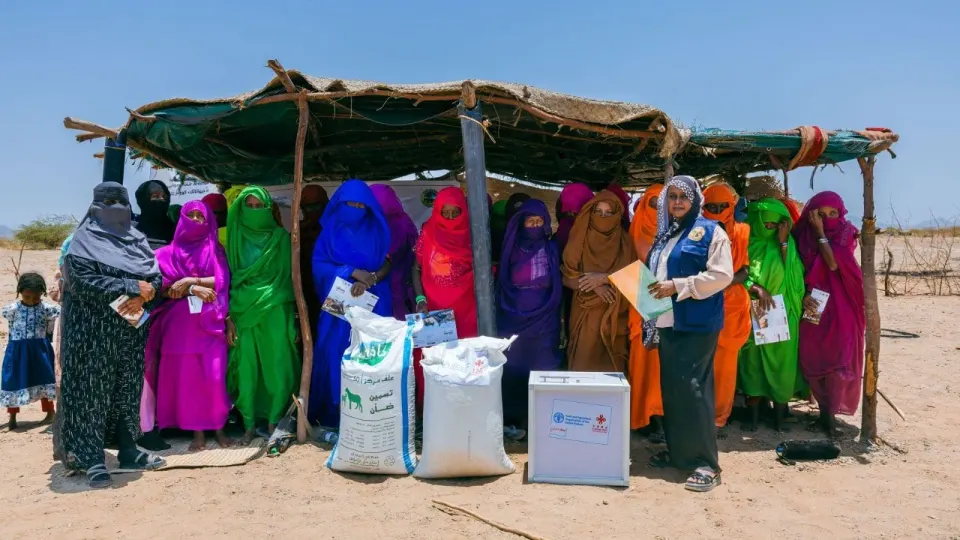
The UN Food and Agriculture Organization has distributed 100 tonnes of concentrated animal feed to 3,200 agropastoral households in Sudan's Red Sea State to protect livestock and sustain milk production amid drought-driven feed shortages, with the programme backed by US$2 million in emergency funding from the Government of China.
The Philippine Department of Agriculture is reviewing broader use of millet in animal feed rations to reduce the country's dependence on corn as a very strong El Niño, projected to persist into the first half of 2027, raises the risk of drought-related supply shocks. While corn remains the dominant feed grain, any large-scale millet adoption could gradually temper growth in Philippine corn import demand, a development international exporters are beginning to monitor.
Immigration enforcement operations in Kansas, Oklahoma and Texas have cut federally inspected cattle slaughter by more than 31,000 head versus the prior week through Thursday, September 25, 2026, with the Kansas Livestock Association, Oklahoma Cattlemen's Association and Texas Cattle Feeders Association warning of millions of dollars in lost revenue and delays to fed cattle deliveries. The disruption is affecting feedyards, processing plants, feed and grain businesses and transport operations across a region that accounts for roughly 22% of the nation's grain-fed beef supply.