A market research report from Future Market Insights projects the global aquafeed market will grow from USD 66.7 billion in 2026 to USD 123.6 billion by 2036 at a 6.4% CAGR, driven by recurring commercial aquaculture demand. Conventional aquafeed is estimated to hold a 90% share of the nature category in 2026, while fish accounts for 36% of species-category demand.
ACTIPRO, the animal nutrition brand of VEOS Group, and European feed manufacturer VERONESI have announced a strategic partnership to integrate upcycled egg powder into aquaculture feed formulations. The collaboration, unveiled at the Aquaculture Europe 2026 conference in Ljubljana, Slovenia, creates a closed-loop supply chain in which egg by-products from the Veronesi Group are processed by ACTIPRO into a functional egg powder and returned to VERONESI for inclusion in its aqua feed lines.
A peer-reviewed study by researchers from the University of Porto, CIIMAR, and the University of Florence, in collaboration with EPAX®, found that fatty acid ethyl ester (FAEE) oil — a byproduct of omega-3 supplement production — can completely replace fish oil in juvenile European seabass diets without impairing growth, feed utilization, or nutrient digestibility. However, the substitution significantly reduced muscle DHA levels, pointing to a potential nutritional quality trade-off that may require mitigation.
France-based Innovafeed and Dutch company Protix have jointly published a white paper arguing that current life cycle assessments of insect-derived feed ingredients rely on outdated pilot-scale data and fail to capture real-world sustainability gains already achieved at industrial scale, including a reduction in Innovafeed's carbon intensity by a factor of five since 2022.
A European Commission study completed in June 2026 estimates that feed demand for ten key farmed species in the EU grew from under 900,000 tonnes in 2013 to almost 1.1 million tonnes in 2023. The report identifies plant ingredients as now comprising the majority of material demand, while highlighting cost, scalability and regulatory hurdles facing alternative proteins and oils.
The Philippines is exploring a more diversified aquafeed ingredient base as El Niño, global supply disruptions, and import dependence increase pressure on conventional feed sources, according to Ateneo de Manila University associate professor Janice A. Ragaza.
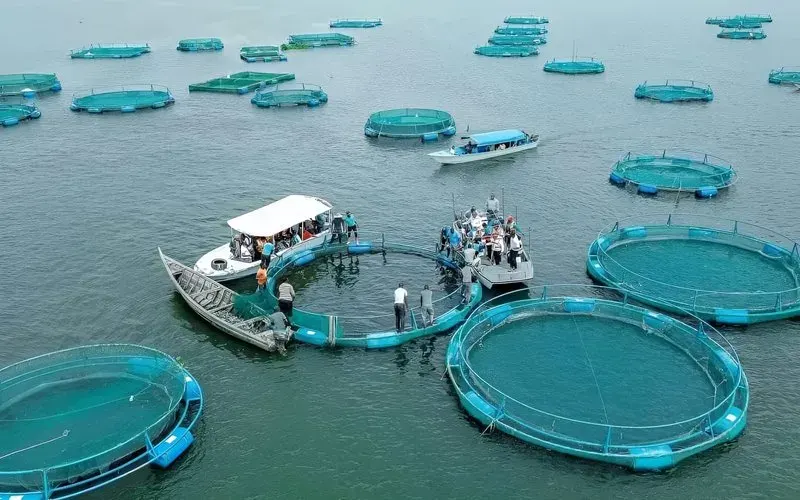
Tanzania's aquaculture output grew from 44,735 tonnes in 2020/21 to 234,525 tonnes in 2025/26, according to Ministry of Livestock and Fisheries data, as cage numbers, hatchery capacity and commercial feed use all expanded sharply. The country's director of aquaculture outlines priorities including feed manufacturing, cold-chain investment and sustainability governance ahead of the World Aquaculture Tanzania 2026 conference in Dar es Salaam.