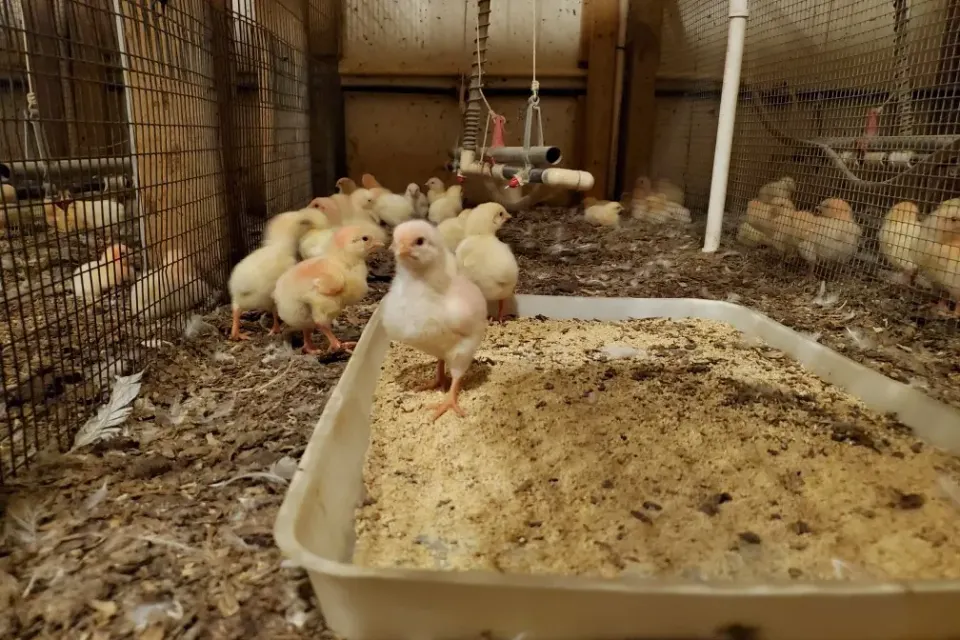
A Penn State University study published in Poultry Science found that a broiler chicken's age has a far stronger influence on its resistome than dietary additives such as antibiotics, probiotics, or essential oils, lending support to further investigation of antibiotic alternatives in poultry production.
India and the Netherlands have agreed to set up an Indo-Dutch Centre of Excellence on Dairy Training at CEAH, Bengaluru, following a bilateral ministerial meeting that also covered animal nutrition, antimicrobial resistance, vocational training for farmers, and the exchange of a veterinary health certificate for live horse exports.
Brazil anticipates being restored to the European Union's approved list of poultry and honey suppliers following a positive assessment, after the country was left off the list when new EU import rules took effect on 3 September 2026.
Australia's Department of Agriculture, Forestry and Fisheries has briefed stakeholders on the EU Deforestation Regulation, which is now confirmed to take effect from 31 December 2026 after two consecutive 12-month delays. Australian beef and lamb exporters shipping product from October 2026 onwards must comply with the new rules, with geolocation of supply properties being the primary requirement for Australia's "low-risk" country classification.
Researchers at Chile's Pontifical Catholic University of Valparaíso have developed a synthetic peptide-based feed additive, Aqua P-Enhance, designed to boost Atlantic salmon's innate immune response against salmonid rickettsial septicaemia. Salmon farming company Invermar has agreed to integrate the additive into its feed production lines for real-world farm trials, with performance targets including a 50% reduction in SRS-related mortality and antimicrobial use, and a 10% increase in final body weight.
A new study published in Emerging Infectious Diseases has identified previously unrecognised cross-border circulation of a multidrug-resistant Campylobacter coli sequence type across nine European countries between 2018 and 2025, challenging the long-held view that such infections are sporadic and unrelated. Poultry was identified as the primary animal source, and researchers are calling for coordinated genomic surveillance.
The Food and Agriculture Organization of the United Nations convened a global conference in Rome on 22 September 2026 to translate One Health principles into practical action across agrifood systems, unveiling a new livestock data and intelligence platform to support early warning and evidence-based decision-making.