Penn State study finds chicken age, not feed additives, drives antimicrobial resistance gene changes
A Penn State University study published in Poultry Science found that a broiler chicken's age has a far stronger influence on its resistome than dietary additives such as antibiotics, probiotics, or essential oils, lending support to further investigation of antibiotic alternatives in poultry production.

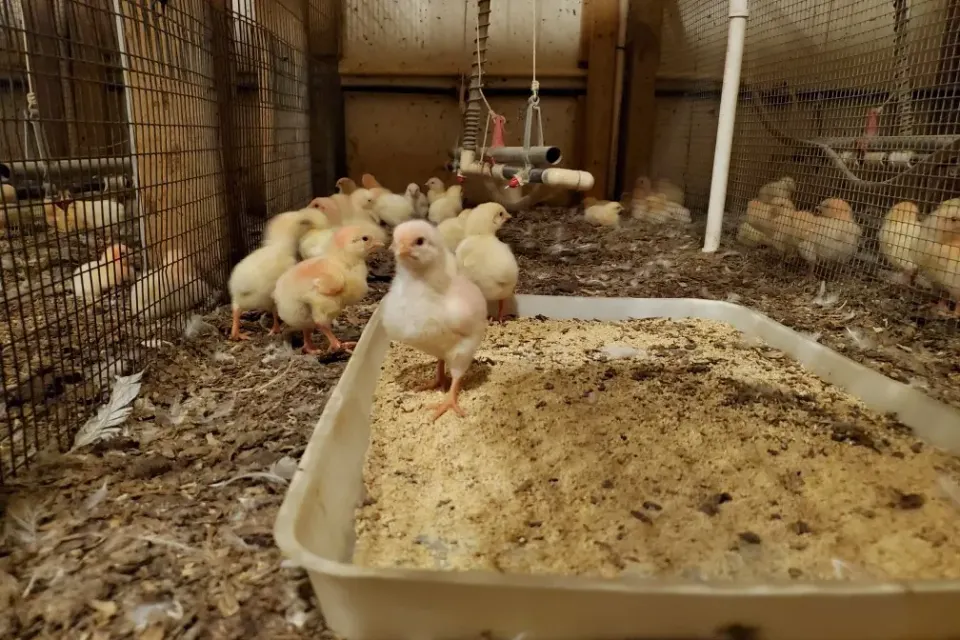
Researchers at Penn State University have found that the age of broiler chickens — not the feed additives they receive — is the dominant factor shaping the birds' collection of antimicrobial resistance genes, known as the resistome. The findings, published in the journal Poultry Science, add important context to ongoing industry efforts to replace in-feed antibiotics with alternatives such as probiotics and essential oils.
The study, conducted at the Penn State Poultry Education and Research Center, enrolled 320 broiler chickens divided across four dietary treatments: a control diet with no additives, a diet containing an antibiotic, a diet containing essential oils, and a diet containing a probiotic. Researchers collected fecal samples at days 1, 10, and 21 of the birds' lives and used DNA sequencing to characterise resistance genes, ultimately identifying 823 unique resistance genes across all samples.
Senior author Erika Ganda, associate professor of food animal microbiomes in Penn State's College of Agricultural Sciences, said the results do not argue against the use of alternatives but rather support their continued evaluation. "Antibiotic resistance is an important problem, and poultry producers are increasingly using products such as probiotics and essential oils instead of antibiotics, however, we don't fully know whether these products affect antibiotic-resistance genes in chickens," she said. "In this experiment, probiotics and essential oils did not produce substantial or sustained changes in the overall resistome, which supports further investigation of these products as antibiotic alternatives."
Study first author Ana Fonseca, who completed a dual-title doctorate in animal science and microbiome sciences at Penn State and now works as a poultry management educator with Penn State Extension, said the research team was surprised that antibiotic treatment also failed to produce a sustained shift in the overall resistome. She attributed the pattern to natural microbial turnover in the gut. "The resistome of a one-day-old chick looked quite different from that of a 10-day-old chick, and the resistome changed again by day 21," Fonseca said. "As chickens grow, the community of bacteria living in their gut changes naturally... Because different bacteria carry different resistance genes, natural changes in the microbial community also reshape the resistome."
Fonseca cautioned against over-interpreting the results. The findings do not suggest feed additives never affect antibiotic resistance in poultry, but that under the conditions of this experiment, natural changes in the chicken's gut microbial community appeared to have a bigger effect on resistance genes than the dietary treatments.
She said broader implications extend beyond the farm. "Understanding where resistance genes come from – and what causes them to change – can help us develop safer and more sustainable ways to raise poultry, while addressing the global problem of antimicrobial resistance," Fonseca said.
Prepared with AI assistance by Endata and reviewed by the editorial team.