Loading…
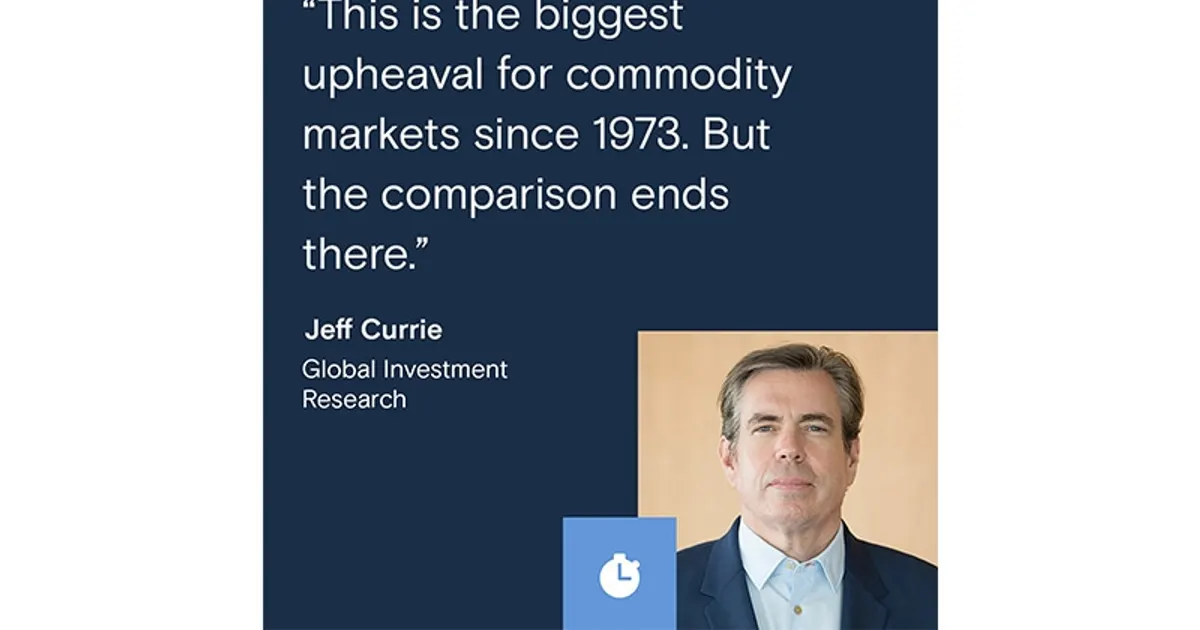
Goldman Sachs says the Russia-Ukraine war is the largest commodity market upheaval since the 1973 oil embargo, affecting grains, oil, gas, metals and other inputs. The energy shock is most acute in Europe, which relies heavily on Russian exports.
Goldman expects a buyer boycott and a decoupling between Russia and the West to shape supply chains.
Sanctions and the physical decoupling from Russia tighten supply across energy and agricultural inputs, supporting higher prices for grains and energy. Feed producers should expect elevated input costs as these supply chains reconfigure.
 goldmansachs.comJeff Currie Global Investment ResearchMar 17, 2022
After 323 past bullish geopolitics events, Corn moved a median +0.5% over 5 sessions (57% higher; middle half -1.5% to +2.9%), and +0.9% over 20.
After 361 past bullish geopolitics events, Wheat (SRW) moved a median +0.7% over 5 sessions (58% higher; middle half -1.4% to +3.7%), and +1.3% over 20.
After 626 past bullish geopolitics events, Crude Oil (WTI) moved a median +2.1% over 5 sessions (62% higher; middle half -2.3% to +8.5%), and +1.6% over 20.
After 136 past bullish geopolitics events, Natural Gas moved a median +2.7% over 5 sessions (63% higher; middle half -1.8% to +8.8%), and +4.0% over 20.
Moves of each commodity's benchmark from the last close before the event. Historical reads pool past events of the same kind; they describe what happened, not what will. Not investment advice.
