Loading…
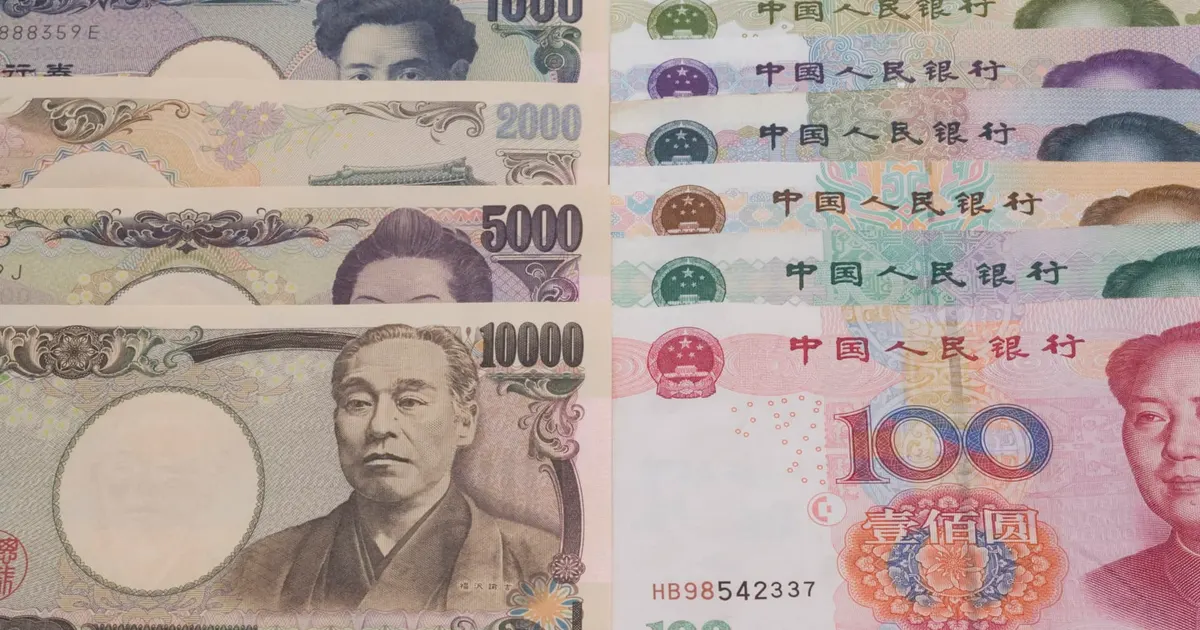
The yuan fell to 6.92 per dollar, its weakest since December, as China announced higher tariffs on $60 billion of US goods after the US raised tariffs on $200 billion of Chinese products. Concerns grew that China might sell its Treasury holdings as leverage.
Retaliatory tariffs on US goods threaten US farm export demand, particularly soybeans, and a weaker yuan makes US agricultural imports more expensive for Chinese buyers, pressuring US feed grain and soybean prices.
 cnbc.comReutersMay 13, 2019
After 803 past bearish trade events, Soybeans moved a median +0.0% over 5 sessions (51% higher; middle half -1.7% to +1.7%), and +0.9% over 20.
After 683 past bearish trade events, Corn moved a median -0.2% over 5 sessions (47% higher; middle half -1.7% to +1.6%), and +0.3% over 20.
After 40 past bullish trade events, Chinese Yuan (CNY per USD) moved a median +0.6% over 5 sessions (75% higher; middle half +0.0% to +1.4%), and +1.1% over 20.
Moves of each commodity's benchmark from the last close before the event. Historical reads pool past events of the same kind; they describe what happened, not what will. Not investment advice.
On 2019-05-13 the yuan fell to about 6.92 per dollar, its weakest since December, after China announced retaliatory tariffs on $60B of US goods, which directly explains the 0.80% one-day move.
China's tariff hike on $60B of US goods on May 13 is the main trade shock hitting soybean demand expectations.
