Loading…
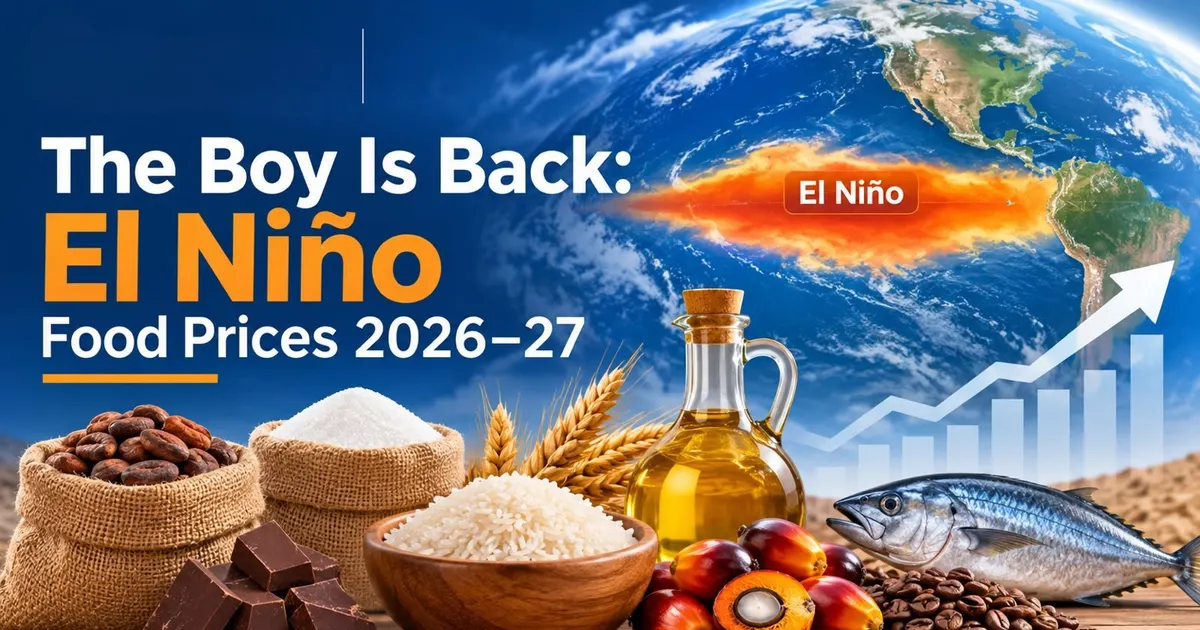
A very strong El Niño is developing and expected to strengthen through year-end, with the FAO food price index at 136.0 in September, its highest since November 2022. Cereal and vegetable oil prices were 17.2% and 18.3% higher year on year, and Black Sea shipping constraints have also weighed on the FAO's cereal trade forecast.
Studies cited suggest El Niño may lift soybean yields while cutting maize, rice and wheat.
Weather-driven supply risk combined with constrained Black Sea shipping supports firmer grain and vegetable oil prices, while mixed yield effects across crops leave the net direction uneven.
 thefoodeshow.comThe FoodEshow TeamNov 3, 2026
After 1,465 past bullish weather events, Corn moved a median +0.2% over 5 sessions (54% higher; middle half -1.4% to +1.9%), and +0.9% over 20.
After 1,072 past bullish weather events, Wheat (SRW) moved a median +0.2% over 5 sessions (55% higher; middle half -1.4% to +2.3%), and +0.3% over 20.
After 179 past bullish weather events, Rough Rice moved a median +0.4% over 5 sessions (55% higher; middle half -1.4% to +2.5%), and +2.2% over 20.
After 324 past neutral weather events, Soybeans moved a median +0.0% over 5 sessions (52% higher; middle half -1.4% to +1.7%), and +0.7% over 20.
Moves of each commodity's benchmark from the last close before the event. Historical reads pool past events of the same kind; they describe what happened, not what will. Not investment advice.
