Loading…
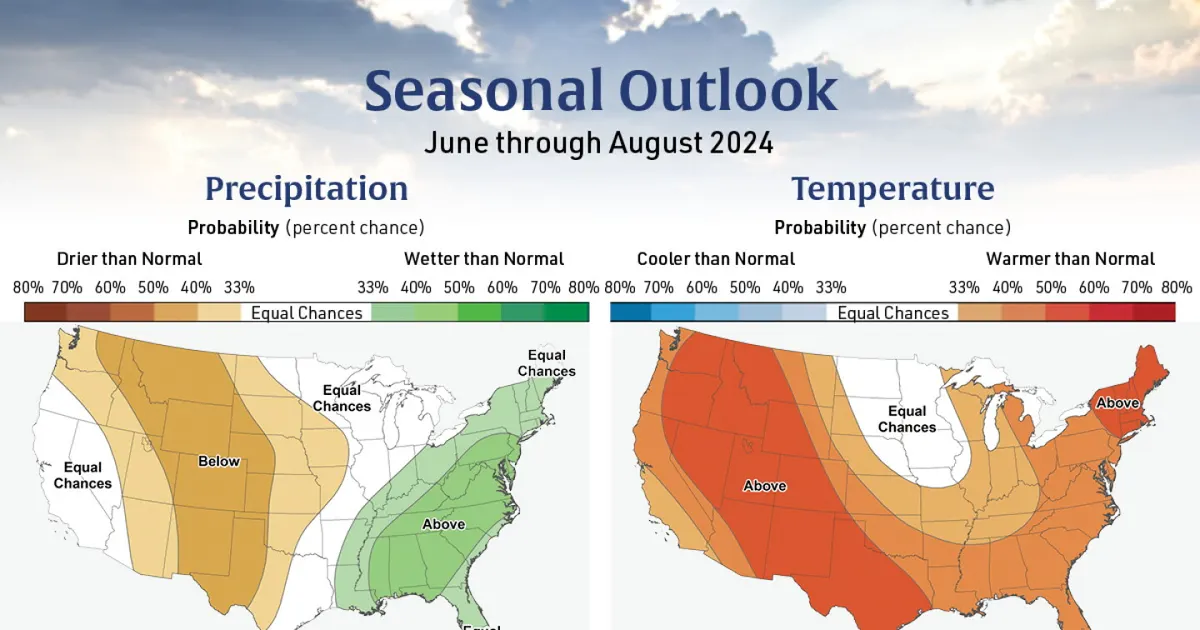
NOAA gives a 60% chance La Niña develops between June and August and an 85% chance it is in effect by November 2024 to January 2025. USDA meteorologist Brad Rippey says impacts may not be felt until autumn, and La Niña could bring dryness to the southern US.
A possible La Niña-linked dry spell in the southern US and later growing-season risk could support corn, soybean and wheat prices, though the impact is months away.
 agweb.comApr 18, 2024
After 1,465 past bullish weather events, Corn moved a median +0.2% over 5 sessions (54% higher; middle half -1.4% to +1.9%), and +0.9% over 20.
After 1,079 past bullish weather events, Soybeans moved a median +0.3% over 5 sessions (54% higher; middle half -1.4% to +2.0%), and +0.9% over 20.
After 1,072 past bullish weather events, Wheat (SRW) moved a median +0.2% over 5 sessions (55% higher; middle half -1.4% to +2.3%), and +0.3% over 20.
Moves of each commodity's benchmark from the last close before the event. Historical reads pool past events of the same kind; they describe what happened, not what will. Not investment advice.
