Loading…
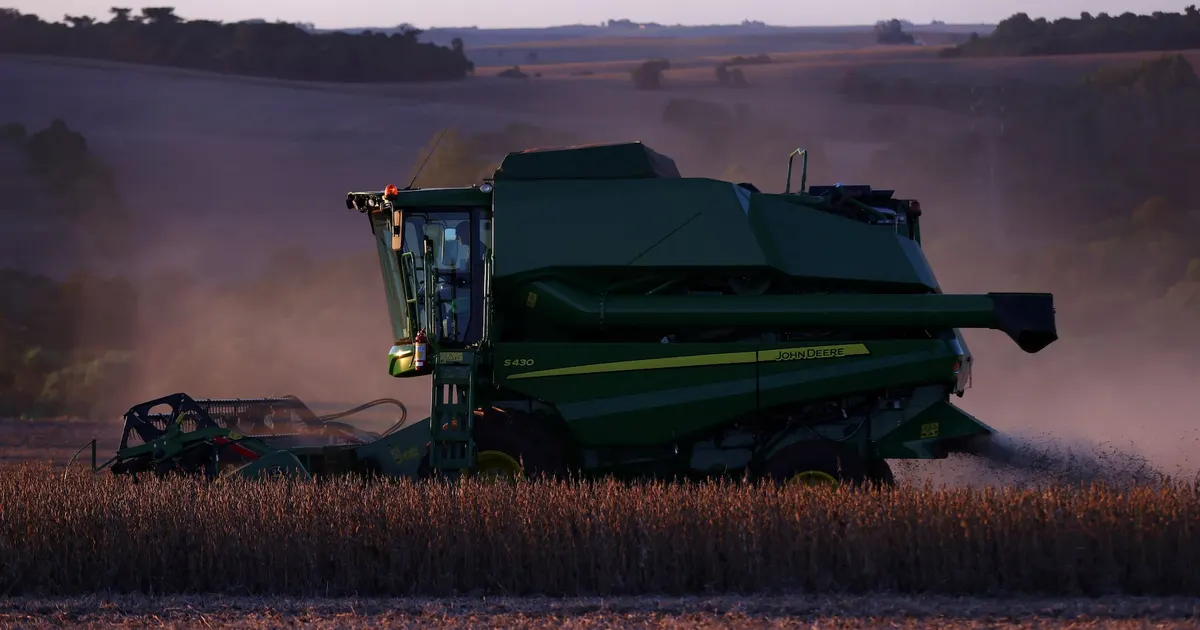
State-owned Sinograin and COFCO made all purchases of about 12 million tons of U.S. soybeans following the thaw in ties. Higher U.S. prices kept private traders out.
China's 13% tariff on U.S. soybeans compares with a 3% duty on Brazilian supplies.
The tariff gap favors Brazilian beans for private crushers, so US demand depends on state buying and may stay limited, weighing on US soybean prices relative to Brazil.
 reuters.comNaveen Thukral, Ella Cao, Ana ManoJan 26, 2026
After 803 past bearish trade events, Soybeans moved a median +0.0% over 5 sessions (51% higher; middle half -1.7% to +1.7%), and +0.9% over 20.
After 224 past neutral trade events, Soybean Meal moved a median -0.2% over 5 sessions (43% higher; middle half -1.7% to +1.2%), and -0.2% over 20.
Moves of each commodity's benchmark from the last close before the event. Historical reads pool past events of the same kind; they describe what happened, not what will. Not investment advice.
