Loading…
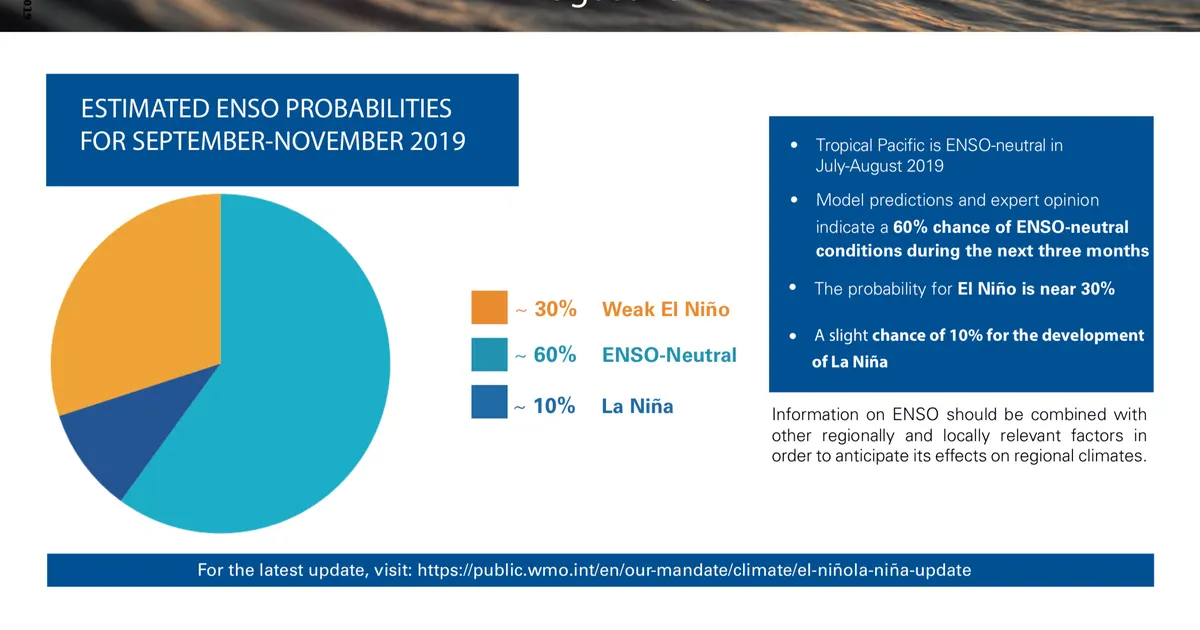
The WMO says average sea surface and land temperatures are forecast to be above normal for September to November 2019, even without a full El Niño. It notes that July 2019 was the hottest month on record and that ocean heat content reached new highs in 2018.
Persistently warm conditions raise the risk of heat stress and drought in major grain-producing areas, which can support feed grain prices over time. The warning is general and does not point to a specific crop loss.
 wmo.intSep 2, 2019
After 2,467 past weather events, Corn moved a median +0.1% over 5 sessions (51% higher; middle half -1.5% to +1.7%), and +0.6% over 20.
After 1,964 past weather events, Soybeans moved a median +0.1% over 5 sessions (51% higher; middle half -1.7% to +1.8%), and +0.3% over 20.
After 1,773 past weather events, Wheat (SRW) moved a median +0.1% over 5 sessions (52% higher; middle half -1.5% to +2.1%), and +0.2% over 20.
After 361 past weather events, Palm Oil moved a median +0.0% over 5 sessions (51% higher; middle half -1.3% to +1.3%), and -0.2% over 20.
Moves of each commodity's benchmark from the last close before the event. Historical reads pool past events of the same kind; they describe what happened, not what will. Not investment advice.
