Loading…
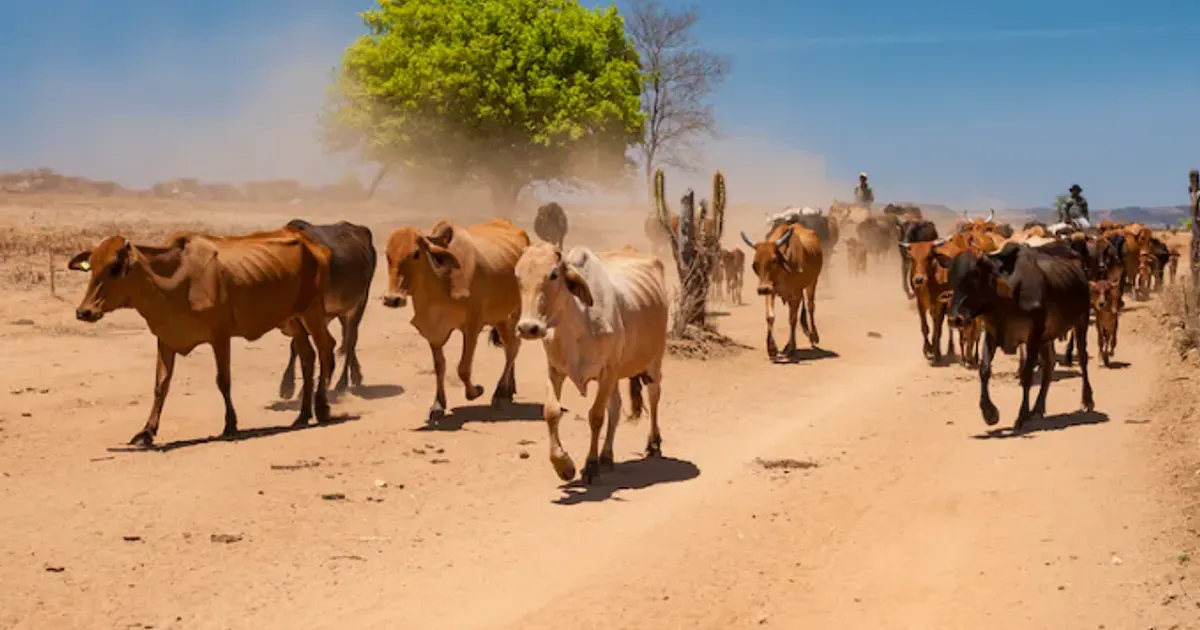
A Priestley Centre blog says the equatorial Pacific is expected to return to neutral between March and May 2023 after three consecutive La Niña years. It adds that El Niño conditions are likely to develop during the northern autumn and winter.
The piece frames ENSO as a driver of global precipitation and temperature patterns.
A shift toward El Niño raises the risk of drought in parts of Asia, Australia and Southeast Asia later in 2023, which can tighten supplies of crops such as palm oil, grains and oilseeds. The price effect would depend on how strong the event becomes.
 climate.leeds.ac.ukClare MartynskiFeb 6, 2023
After 2,467 past weather events, Corn moved a median +0.1% over 5 sessions (51% higher; middle half -1.5% to +1.7%), and +0.6% over 20.
After 1,964 past weather events, Soybeans moved a median +0.1% over 5 sessions (51% higher; middle half -1.7% to +1.8%), and +0.3% over 20.
After 1,773 past weather events, Wheat (SRW) moved a median +0.1% over 5 sessions (52% higher; middle half -1.5% to +2.1%), and +0.2% over 20.
After 361 past weather events, Palm Oil moved a median +0.0% over 5 sessions (51% higher; middle half -1.3% to +1.3%), and -0.2% over 20.
Moves of each commodity's benchmark from the last close before the event. Historical reads pool past events of the same kind; they describe what happened, not what will. Not investment advice.
