Loading…
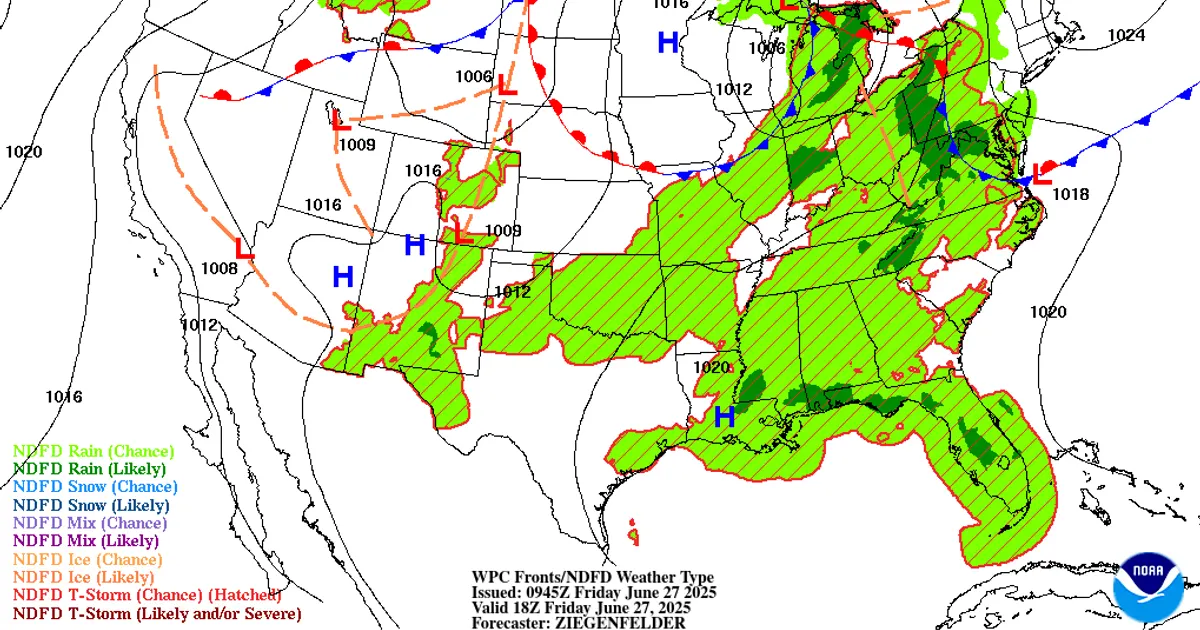
Scattered showers and thunderstorms covered parts of the Corn Belt, and many Midwest production areas had ample soil moisture. As of June 22, 4% of corn was silking and 8% of soybeans were blooming, while winter wheat harvest was behind the five-year average at 19%.
Adequate soil moisture during early reproductive stages supports yield prospects and limits weather-driven price spikes. Slow wheat harvest progress is a minor supply-timing factor.
 brownfieldagnews.comGreg SouljeJun 27, 2025
After 357 past bearish weather events, Corn moved a median -0.3% over 5 sessions (44% higher; middle half -2.2% to +1.3%), and -0.5% over 20.
After 324 past neutral weather events, Soybeans moved a median +0.0% over 5 sessions (52% higher; middle half -1.4% to +1.7%), and +0.7% over 20.
After 29 past neutral weather events, Wheat (HRW) moved a median +0.6% over 5 sessions (52% higher; middle half -1.9% to +2.3%), and -0.7% over 20.
Moves of each commodity's benchmark from the last close before the event. Historical reads pool past events of the same kind; they describe what happened, not what will. Not investment advice.
Ample Corn Belt soil moisture and an active rainy pattern going into pollination supported good yield prospects, which weighs on prices.
