USGBC Takes Japanese Feed Grain Buyers on U.S. Corn Value Chain Tour in Iowa and Washington
The U.S. Grains & BioProducts Council recently guided a delegation of Japanese corn food and feed end-users through sites in Iowa and Washington, exposing newer buyers to U.S. corn production, quality standards, and export logistics in a bid to strengthen long-term trade ties with Japan.

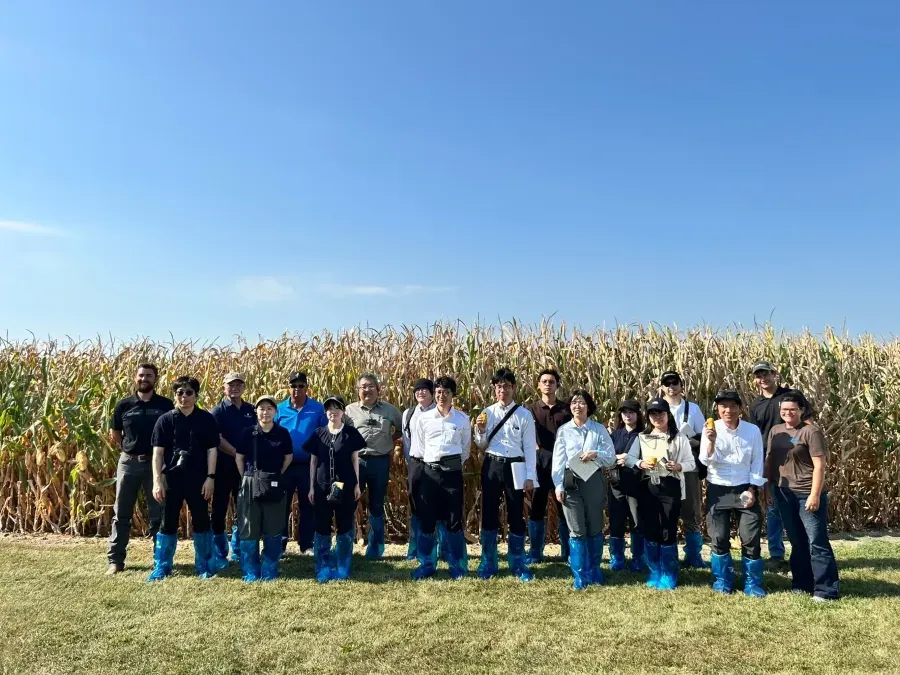
The U.S. Grains & BioProducts Council (USGBC) has escorted a group of Japanese corn food and feed end-users on a tour of Iowa and Washington, aiming to deepen their understanding of U.S. corn production and export processes, the organization reported on 17 September 2026.
According to USGBC, the delegation was composed primarily of newer market participants. Tommy Hamamoto, USGBC director in Japan, described the group as "relatively new, less experienced feed grain buyers who were interested in general education about the advantages of U.S. corn and meetings with companies involved in production, quality testing and exports to Japan."
The Iowa leg of the tour included a visit to an ADM river terminal in Burlington, which USGBC said illustrated how U.S. agricultural goods are moved for export. ADM is identified as a USGBC member. The delegation also toured two ethanol plants and a farm to observe corn production firsthand. Iowa State University then hosted the group at its Kent Feed Mill, where participants received a demonstration of how U.S. corn is used in feed formulas to maximize nutritional content.
The group subsequently travelled to Washington, where it visited a shipping logistics company and an export terminal to observe how U.S. products reach customers in Asia.
Hamamoto framed the outreach as strategically important for the future of the bilateral trade relationship. "Japan is a mature market with a strong trade relationship with the U.S. agricultural industry, and outreach to the next generations of customers through these trade teams helps keep Japan as an export destination for future U.S. farmers," he said.
He added that exposure to quality and safety frameworks was intended to reinforce buyer confidence: "Better understanding the strong frameworks and standards of quality and safety throughout the U.S. agricultural export chain reassures potential customers and builds their trust in U.S.-origin products."
Hamamoto also said the hands-on experience reinforced participants' broader understanding of the trade relationship: "Meeting producers and observing shipping procedures solidified participants' knowledge of U.S. corn quality and transparency that underpins the outstanding U.S.-Japan trade relationship."
The USGBC organises similar buyer-education tours for importers from multiple countries as part of its broader market development work.
Prepared with AI assistance and reviewed by the editorial team.