SEPA adopts eDNA seabed testing for Scottish salmon farm regulation
Scotland's environmental regulator SEPA has formally incorporated environmental DNA (eDNA) analysis into its regulatory process for monitoring seabed condition around salmon farms, cutting assessment time from around 16 weeks to around six weeks and allowing operators to use eDNA results as evidence of compliance.

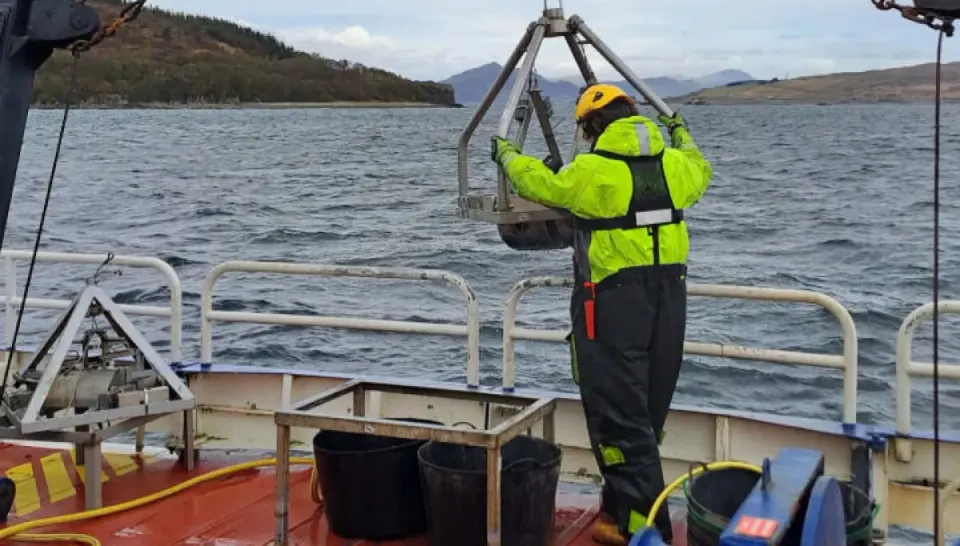
The Scottish Environment Protection Agency (SEPA) announced on 25 September 2026 that environmental DNA (eDNA) analysis has been incorporated into its regulatory process for assessing the condition of the seabed around marine salmon farms, marking a shift from reliance on traditional sediment analysis alone.
Under the new approach, farm operators may submit eDNA results as evidence that required environmental standards are being met, without traditional analysis being required in every case. Where eDNA results indicate potential non-compliance, the sediment sample collected for eDNA analysis remains available for further traditional examination.
Traditional seabed assessment involves specialist identification and counting of organisms within sediment samples, a process that can take around 16 weeks. SEPA said eDNA results are potentially available in around six weeks, significantly shortening the period between monitoring and regulatory response.
Mike Montague, lead specialist for aquaculture at SEPA, said the change does not alter the underlying standards. "The environmental standards haven't changed and neither has our regulatory role. What has changed is the science available to support that regulation," he said. Montague added that the faster turnaround matters because "where there is evidence of a potential problem, operators can respond and we can investigate and intervene sooner where required."
SEPA published guidance setting out how the approach can be used and noted that eDNA is not a new technology, having been developed and tested through collaboration involving the agency and partners across industry, science, and academia.
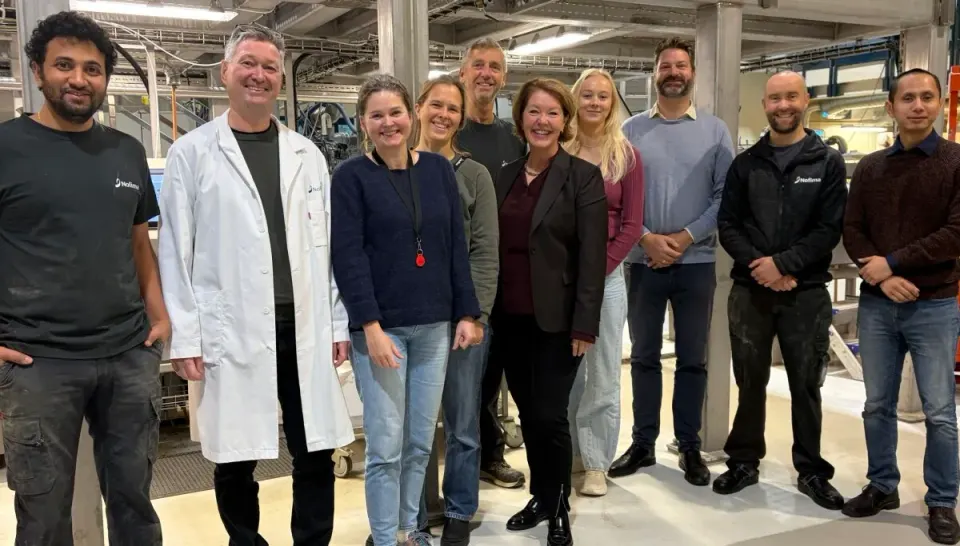
The eDNA method was developed through a partnership project called BactMetBar, supported by funding from the Sustainable Aquaculture Innovation Cluster (SAIC). The research effort was led by the Scottish Association for Marine Science (SAMS), a partner of the University of the Highlands and Islands, and the Technical University of Kaiserslautern (TUK). Other BactMetBar partners included salmon farmers Mowi Scotland and Scottish Sea Farms, trade body Salmon Scotland, and the Institute for Biodiversity and Freshwater Conservation (UHI).
SAMS associate professor Tom Wilding explained that the analysis uses a combination of machine learning and metabarcoding. "Using a random forest, which is a form of artificial intelligence, we have trained the model on 950 samples, so it knows which bacteria are most useful in predicting the health status of sediment," Wilding said. He added that the approach "removes a lot of the time pressure on taxonomists delivering more manual analysis."
Dr Iain Berrill, technical director at Salmon Scotland, said fish farmers had a strong track record of supporting research and innovation. "This new approach is a great example of that, bringing together salmon farmers, scientists, and regulators to develop new science and turn it into a practical tool for environmental monitoring," he said.
The development of the eDNA method was informed by the research paper eDNA2IQI: an eDNA/random forest-based prediction tool that accurately predicts ecological status for regulatory-compliance assessment, published on ScienceDirect.
Prepared with AI assistance and reviewed by the editorial team.