Nofima Study: Salmon Gills Show Biological Stress Responses to Climate Stressors Before Visible Damage Appears
A joint study by Norway's Nofima and Spain's IATS has found that Atlantic salmon gills undergo measurable changes in bacterial communities and gene expression in response to simulated marine heatwaves, low oxygen, and jellyfish exposure — well before any visible damage is observed. The findings, published in Frontiers in Marine Science, highlight growing concerns about the impact of combined climate-related stressors on farmed salmon gill health.

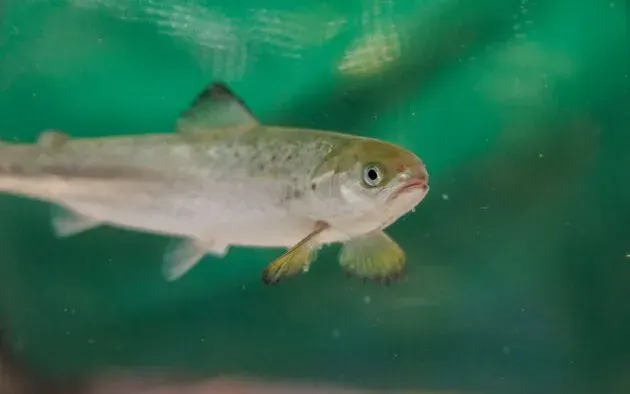
A new study by Norwegian research institute Nofima and the Spanish institute IATS (Instituto de Acuicultura Torre de la Sal) has found that Atlantic salmon gills undergo significant biological changes when exposed to simulated marine heatwaves, reduced oxygen, and jellyfish — all before any visible signs of damage appear in the fish.
The research, published in Frontiers in Marine Science on 25 September 2026, examined farmed Atlantic salmon weighing approximately 100 grams in a controlled experimental environment. According to the source, the simulated marine heatwave involved increasing the water temperature from 12°C to 17°C over five days, followed by 10 days at the elevated temperature. Some fish were also exposed to reduced oxygen levels, while others were exposed to minced moon jellyfish (Aurelia aurita), a species that occurs regularly along the Norwegian coast.
Fish health scientist Carlo C. Lazado at Nofima said the gills responded at a microbial and genetic level well ahead of any outward deterioration. "Our study shows that, together, these stressors affect the bacterial flora on the gills and which genes the salmon switch on and off, long before anything can be seen on the gills. Gill health issues are a growing problem for salmon, and increasingly unpredictable environmental conditions are putting the gills under severe pressure," Lazado said in a press release.
Among the key findings, the study found that the heatwave altered the bacterial composition on gill surfaces. According to the source, the bacterial analyses showed that the environmental treatments explained almost half of the variation in microorganisms on the gill surface, and that the heatwave led to a clear increase in bacterial diversity, as well as a substantial rise in the bacterial genera Streptococcus and Staphylococcus. The source notes that many species within these groups are harmless, but some can cause problems when fish are stressed or in poor health.
At the gene expression level, the researchers found that more than 600 genes changed their expression, with temperature having the greatest effect. Higher temperatures made genes linked to mucus production more active, while key components of the fish's innate immune system became less active. The source describes this pattern as a physiological reallocation, in which salmon deprioritize growth and tissue maintenance in favour of an acute stress response and cell protection.
The study also examined the combined effect of stressors. When fish were exposed to moon jellyfish at stable temperatures, there was little effect at the gene level. However, when jellyfish exposure occurred after fish had already been through a heatwave and low oxygen levels, more changes occurred in the gills, suggesting that multiple simultaneous stressors can compound pressure on gill protective barriers.
Senior scientist Elisabeth Ytteborg at Nofima drew a connection to previous skin research. "Understanding how climate stress affects the gills of farmed salmon is important for the industry to deal efficiently with climate change. We have previously seen similar effects in fish skin, where higher temperatures weaken the skin's natural protective barrier. These damages, which we call microdamages, are not visible on the fish, but they can make the fish more vulnerable when exposed to other stressors," she said.
Lazado also emphasized the broader significance of the international collaboration. "This is an important collaboration that we hope to continue for many years to come. Climate change in the ocean affects all species, and the consequences are becoming increasingly clear. Through long-term collaboration, we can develop the knowledge needed to meet these challenges, both in aquaculture and in safeguarding wild marine stocks," he said.
The research was conducted in part through the EU-funded EATFISH project. PhD candidate Socorro Toxqui-Rodríguez from IATS spent a research stay in Tromsø and contributed to the experiments. The full citation is: Toxqui-Rodríguez, S., Ytteborg, E., Johansen, L.-H., Sitjà-Bobadilla, A., Pérez-Sánchez, J., Lazado, C. C., & Piazzon, M. C. (2026). Climate change-related stressors in aquaculture: modulation of gill microbiota and transcriptome in Atlantic salmon. Frontiers in Marine Science, 13(August), 1–15. https://doi.org/10.3389/fmars.2026.1913823.
Prepared with AI assistance and reviewed by the editorial team.