Norway awards £4.6m to expand Nofima's Aquafeed Technology Centre
The Research Council of Norway has awarded NOK 58.851m (£4.62m) to a consortium led by Nofima, NORCE, and the University of Bergen to develop a second phase of the Aquafeed Technology Centre, strengthening Norway's national research infrastructure for sustainable aquafeed ingredient development and testing.

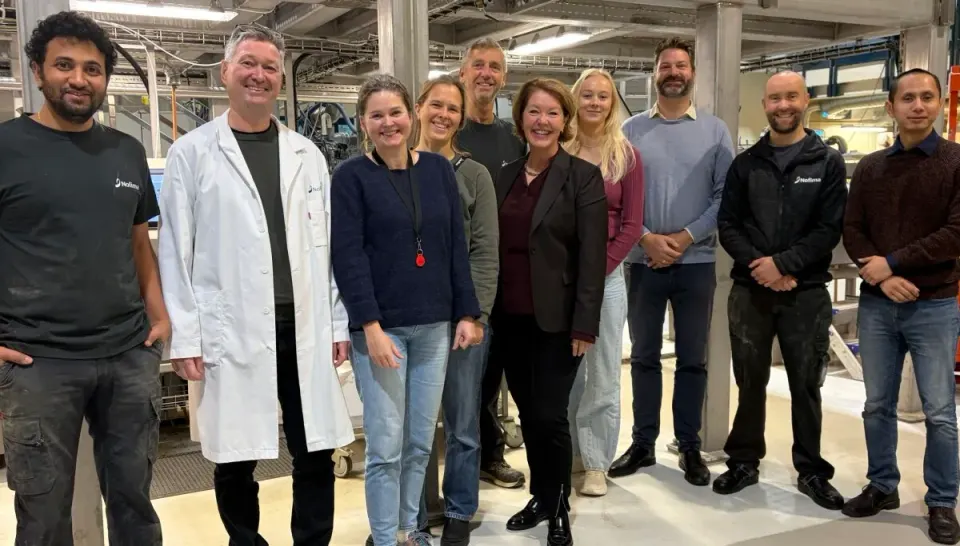
Norwegian research institute Nofima, together with research centre NORCE and the University of Bergen (UiB), has secured NOK 58.851m (£4.62m) from the Research Council of Norway to expand its Aquafeed Technology Centre into a second phase, according to a report published by Fish Farming Expert on 24 September 2026.
The funding forms part of a broader NOK 1.24bn (£97.3m) infrastructure round from the Research Council of Norway, which was shared among 18 projects selected from 97 applications.
The Aquafeed Technology Centre Phase II will further develop a national research infrastructure for the development and testing of raw materials, ingredients, and feed for aquaculture. The infrastructure is intended to give both research communities and industry access to advanced facilities for processing, formulation, and evaluation of new feed ingredients, with a stated goal of contributing to more sustainable resource utilisation and innovation in the aquaculture sector. The project will also aim to strengthen knowledge about raw materials, nutrition, and feed utilisation in farmed fish.
Tor Andreas Samuelsen, who heads the centre at Nofima, expressed his reaction to the award: "We are incredibly proud and delighted today," he said, adding that "Upgrading the Aquafeed Technology Centre puts us in an even stronger position to contribute to the development of a sustainable industry for feed ingredients, feed and other bio-based products."
Erik-Jan Lock, research director for nutrition and feed technology at Nofima, placed the investment in the context of the centre's history. "Phase 1 of the Aquafeed Technology Centre (opened in 2015) has been an important driver of research and innovation," he said. "With this investment, we are ensuring that Norway will continue to have the knowledge and capacity to develop and process the raw materials of tomorrow."
Other projects awarded funding in the same round included Biobank Norway 5, which received NOK 89.9m, NOK 198.5m for cleanroom and nanotechnology equipment, NOK 141.2m for Norway's contribution to the Large Hadron Collider at CERN, and NOK 75.2m to expand climate observation systems on Svalbard.
Prepared with AI assistance and reviewed by the editorial team.