Aquaculture Expansion Could Direct Up to 46% of Wild Fish Catches to Feed by 2040, Report Warns
A report by the Changing Markets Foundation, produced with University of British Columbia researchers, warns that wild-caught fish used for aquaculture feed could rise sharply by 2040 if growth concentrates in carnivorous species such as salmon, shrimp, sea bream and sea bass. The FAO has disputed the interpretation of a 75% growth figure cited in the report, and the findings have sharpened debate over species choice, feed composition, and the impact on small-scale fishing communities.

A new report by the Changing Markets Foundation, produced with researchers from the University of British Columbia, warns that the share of global wild fish catches directed toward aquaculture feed could rise substantially by 2040, depending on which species drive future industry growth.
The report estimates that around 13.3% of current global wild fish catches are used for aquaculture feed. It sets out a range of scenarios based on the types of species that dominate future aquaculture expansion. Where growth is concentrated in species that require little or no fish-based feed — such as shellfish and carp — the share of wild catches used for feed could remain in the range of 13%–17%. However, if carnivorous species such as salmon, shrimp, sea bream and sea bass continue to account for a significant share of growth, demand could rise to 29%–38% of global catches. Under a market-driven scenario heavily weighted toward those carnivorous species, the report estimates that 34%–46% of wild-caught fish could be directed toward aquaculture feed by 2040.
FAO Disputes Interpretation of 75% Growth Figure
The report examined a 2023 FAO roadmap that discussed achieving at least 75% growth in global sustainable aquaculture from 2020 levels by 2040. Manuel Barange, FAO assistant director general and director of its Fisheries and Aquaculture Division, disputed how that figure has been characterised. He said it represented a discussion of possible options rather than a formal proposal, and stated that the FAO's actual aquaculture growth target is 35% by 2030 compared with 2020 levels, under its earlier Blue Transformation roadmap. Barange also noted that the sector had already grown by 17% between 2020 and 2024.
Barange said he expects the volume of marine ingredients used by aquaculture may not increase during the period covered by the FAO's 2030 growth target, pointing to improvements in feed efficiency and the development of alternative ingredients. The FAO's global guidelines for sustainable aquaculture were adopted by its Committee on Fisheries in 2024 and, according to Barange, were approved by consensus among members.
Feed Composition and Species Mix at the Centre of Debate
The report highlights that aquaculture's demand for wild fish is not determined simply by the scale of the industry. Species such as carp and shellfish generally require little or no fish-based feed, while some carnivorous species have historically relied more heavily on fishmeal and fish oil derived from wild-caught fish.
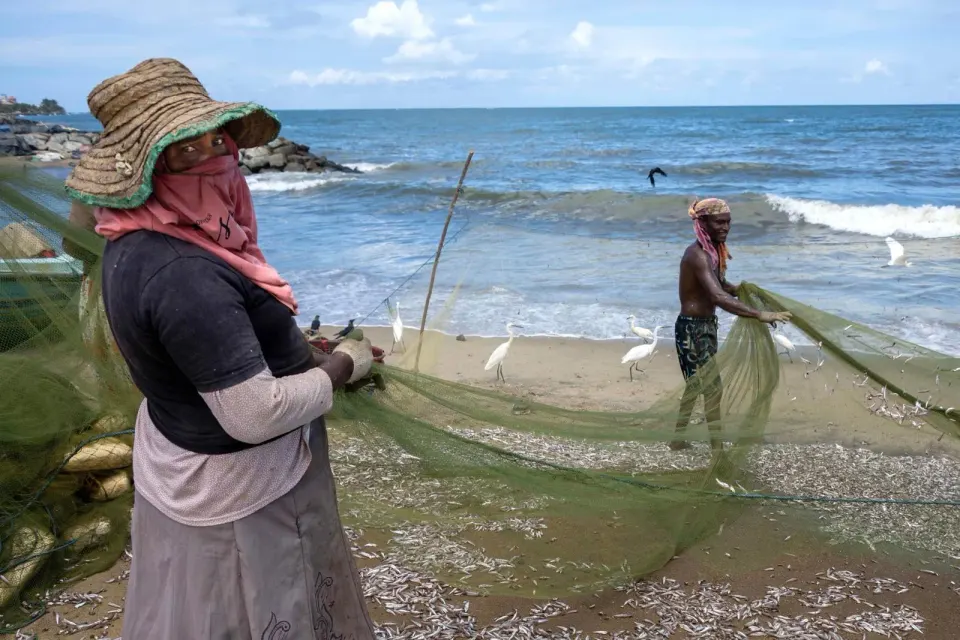
The Changing Markets Foundation argues that stronger safeguards are needed to ensure that fish used as feed does not compete with food supplies or undermine the livelihoods of small-scale fishing communities. Representatives of small-scale fisheries at the FAO's Committee on Fisheries meeting in Rome argued that industrial aquaculture can place additional pressure on fishing communities, particularly when wild fish are processed into feed for farmed species destined for higher-value markets.
Herman Kumara of the World Forum of Fish Harvesters and Fish Workers said representatives of small-scale fisheries felt that aquaculture was receiving increasing attention from governments because of its economic potential.
Nutritional Contribution Acknowledged
Researchers studying aquaculture's nutritional role have pointed to its broader contribution to food security. Laura Elsler of the Harvard T.H. Chan School of Public Health said aquaculture makes a substantial contribution to nutrition globally, with significant production growth occurring in low- and middle-income countries for domestic consumption.
The debate therefore centres not only on how much aquaculture expands, but also on which species are farmed, what they are fed, where production takes place and who benefits from the resulting seafood supply.
Prepared with AI assistance and reviewed by the editorial team.