Loading…
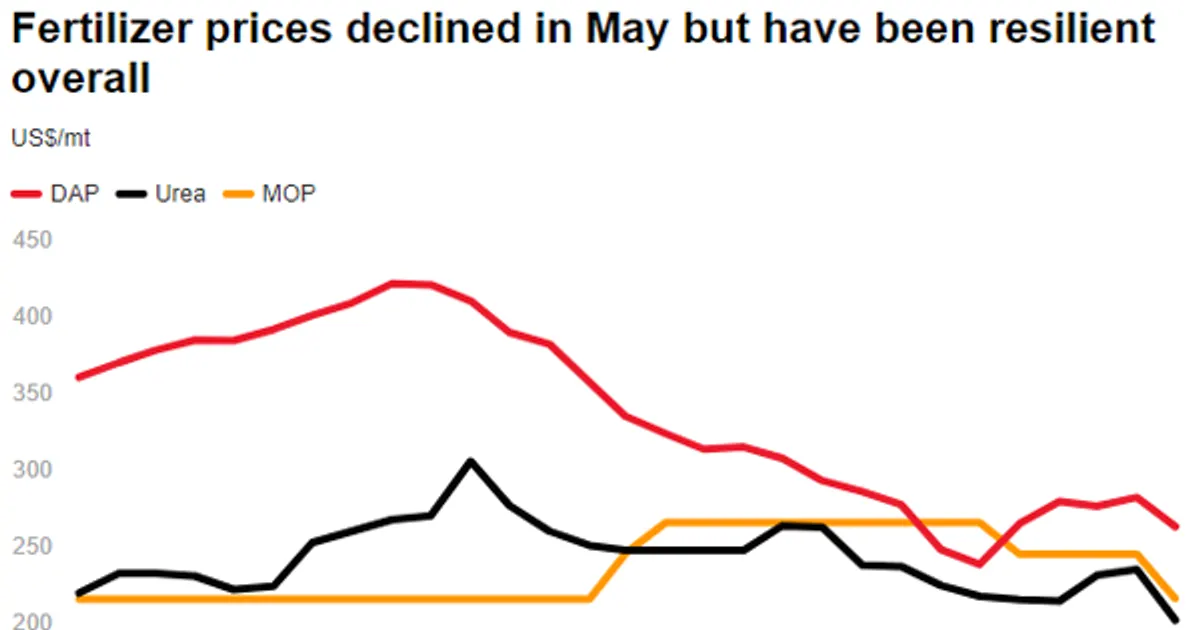
The World Bank's fertilizer price index fell 8.5% in May 2020 as lower input costs and weak seasonal demand outweighed easing supply bottlenecks. DAP prices dropped 6.7% in May, partly on lower ammonia costs.
The bank forecasts fertilizer prices about 10% lower in 2020 than in 2019, with risks from a second COVID-19 wave and currency weakness in major fertilizer markets.
Softer nitrogen and phosphate costs lower the cost of crop inputs, which weighs on fertilizer-linked price expectations and may ease input pressure for feed grain producers.
 blogs.worldbank.orgJohn Baffes, Wee Chian KohJun 25, 2020
After 42 past bearish report events, Urea moved a median +0.3% over 5 sessions (57% higher; middle half -1.9% to +3.3%), and +2.9% over 20.
After 35 past bearish report events, DAP moved a median 0.0% over 5 sessions (37% higher; middle half -0.7% to +1.5%), and +0.6% over 20.
Moves of each commodity's benchmark from the last close before the event. Historical reads pool past events of the same kind; they describe what happened, not what will. Not investment advice.
