UK 2026 Cereal Harvest Closes Below Average as Dry Weather Hits Wheat and Barley
The Agriculture and Horticulture Development Board's final assessment of the UK's 2026 cereal harvest shows winter wheat averaging 6.9 t/ha — about 11% below the five-year average — while spring barley and oats also fell well short of benchmarks. Oilseed rape was the sole standout crop, yielding roughly 19% above its five-year average. AHDB warns that some arable farmers are now facing a second or third successive difficult harvest.

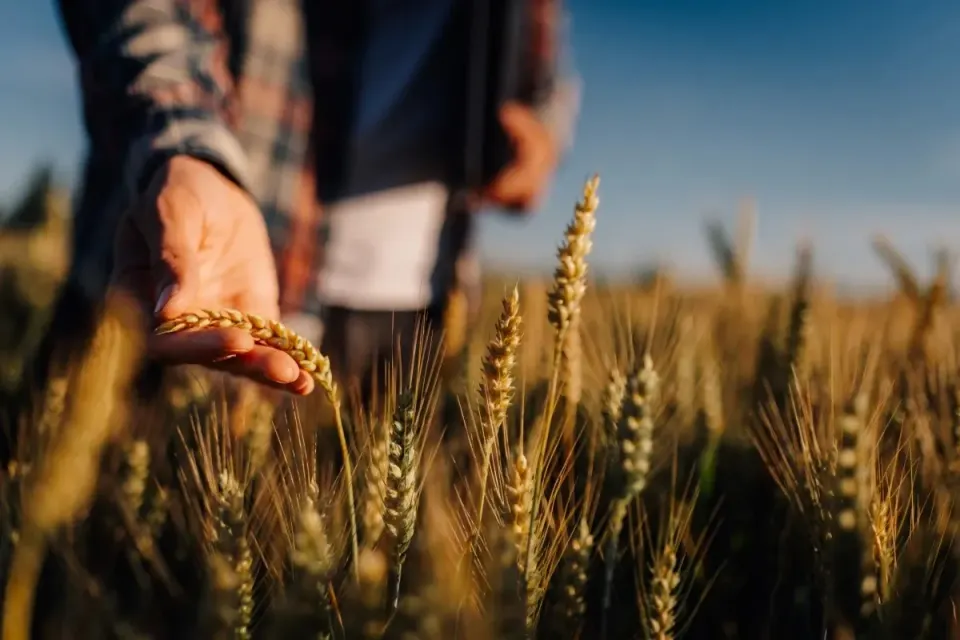
The UK's 2026 cereal harvest has concluded with yields for several major crops significantly below recent averages, according to the final assessment published by the Agriculture and Horticulture Development Board (AHDB). The results carry direct implications for the availability and cost of domestically produced feed grains, including wheat and barley, two of the most widely used energy ingredients in compound animal feed.
Wheat and barley bear the brunt
According to AHDB's survey of 60 farms across the UK, winter wheat averaged 6.9 metric tons per hectare (t/ha) — around 11% below the UK five-year average. Spring barley performed worse still, at 4.8 t/ha, approximately 17% below its five-year benchmark. Oats averaged 4.6 t/ha, about 14% below average.
Winter barley was comparatively stable, with an average yield of 6.9 t/ha broadly in line with its five-year average. Oilseed rape stood apart from the wider picture, recording an average yield of 4.0 t/ha — around 19% above its UK five-year average — making it the strongest performer in the final assessment.
Within those headline figures, however, variation between individual farms was pronounced. For winter wheat, AHDB reported yields ranging from just 3.9 t/ha to 11.5 t/ha, with differences in soil type, drilling date, previous cropping, local weather, and moisture availability all cited as contributing factors.
Dry conditions the key driver
Prolonged dry weather from spring onwards was the dominant factor shaping this year's outcomes. Lighter soils were disproportionately affected because of their lower capacity to retain moisture, while heavier soils and farms that received more localised rainfall were better placed to maintain yields.
Regional variation was also significant. Harvesting progressed more rapidly through England and Wales before slowing as it moved northward. Crops in northern England and Scotland generally performed better, helping to moderate the eventual national averages, though not enough to offset weaker results in drier southern areas.
Quality concerns add to financial pressure
AHDB noted that crop quality has been highly variable, particularly in areas where yields suffered most. For animal feed compounders and grain traders, this raises questions about the specification and usability of some of this year's domestic supply, with grain sampling and storage management identified as priorities in the coming months.
The financial impact on arable farming businesses is compounded by the timing. AHDB said this is the second, and in some cases the third, successive challenging harvest for arable farmers in some areas, with the cumulative effect potentially significant for those who have experienced below-average production across more than one season. Lower volumes combined with quality variability add uncertainty to both spot and forward grain marketing.
AHDB has produced a Harvest Toolkit covering grain sampling, storage, and contract considerations to assist growers navigating the post-harvest period.
Prepared with AI assistance and reviewed by the editorial team.