NRGene Canada produces omega-3-rich black soldier fly larvae using fish-processing waste
NRGene Canada has successfully reared black soldier fly larvae containing marine omega-3 fatty acids EPA and DHA by feeding the insects on fish-processing by-products from Ile-a-la-Crosse Fish Company, with the trial validated at semi-industrial scale in Saskatoon. The partners are now planning an on-site rearing facility in Saskatchewan.

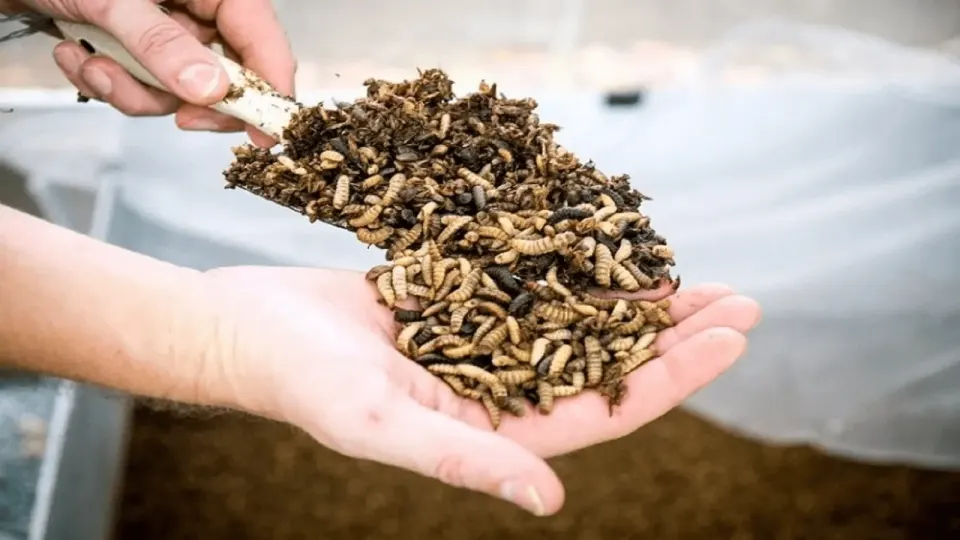
NRGene Canada has produced black soldier fly (BSF) larvae enriched with the marine omega-3 fatty acids EPA and DHA by rearing the insects on fish-processing by-products, in a development the company says could create a higher-value ingredient for poultry feed.
The work was carried out in partnership with Ile-a-la-Crosse Fish Company and used a dedicated BSF feed recipe built around local fish-processing waste. The recipe was validated at semi-industrial scale at the North American Insect Center in Saskatoon, Saskatchewan.
The trial processed 0.3 tonnes of feed in which fish-processing by-products made up half the diet. It yielded approximately 90 kg of MaxBSF™ larvae over an 11-day production cycle — a five-day nursery stage followed by a six-day grow-out — at a wet feed conversion ratio of approximately 3.3.
Analysis by Prairie Tide Diversified showed that larvae reared on the fish-based feed contained between 5.16% and 7.94% total omega-3 as a share of total fatty acids, compared with 1.12% in larvae of the same genetics reared on standard feed. EPA was present at 1.14% to 1.89% and DHA at 0.37% to 0.65% in the fish-fed larvae, while neither marine omega-3 was detected in the standard-feed group. The omega-6 to omega-3 ratio in the fish-fed larvae fell as low as 1.2:1, against 12.8:1 in the standard-feed larvae.
NRGene said the enriched profile could create opportunities for MaxBites™, its dried BSF larvae product for animal feed. The company also indicated that the product could potentially be used as a supplement in laying-hen rations, with the partners aiming to explore whether the nutritional profile could support higher omega-3 levels in eggs. The source notes that egg enrichment remains a potential application and has not yet been demonstrated in production.
The project addresses a recognised handling challenge: fish-processing by-products are high in moisture and fat and spoil quickly, requiring a dedicated feed formulation and controlled rearing conditions.
Following the semi-industrial validation, NRGene and Ile-a-la-Crosse Fish Company are planning an on-site BSF rearing facility in Ile-a-la-Crosse, sized to match the region's available fish-processing by-products. BSF eggs and neonates for the planned facility would be supplied by FairGene, a joint venture between NRGene Canada and Fairville Farming in Alberta that began producing BSF eggs in July 2026.
The project forms part of NRGene Canada's hub-and-spoke model, which combines centralised BSF egg production with regional rearing facilities sited near suitable organic by-product streams.
Prepared with AI assistance and reviewed by the editorial team.