Mycotoxin-Induced Organ Damage Can Block Vitamin D Activation in Poultry, Industry Article Warns
An article published in The Poultry Punch warns that mycotoxin-induced liver and kidney damage can prevent poultry from converting dietary Vitamin D₃ into its biologically active form, resulting in functional deficiency even when feed is adequately supplemented. The piece also profiles a plant-derived bioactive Vitamin D supplement, Avitriol, claimed to bypass the affected conversion pathway.

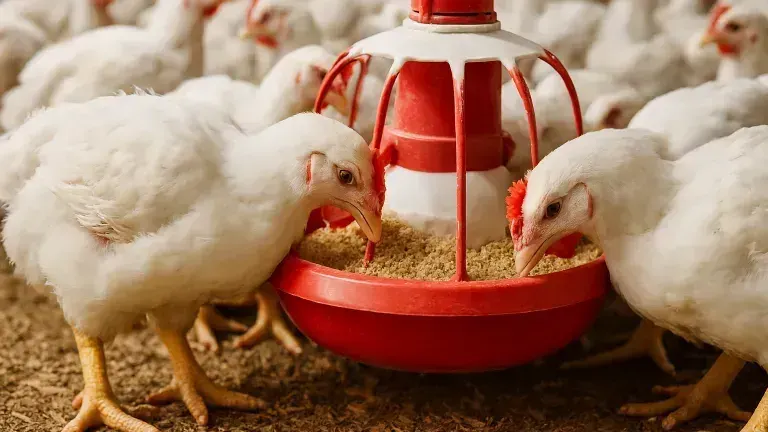
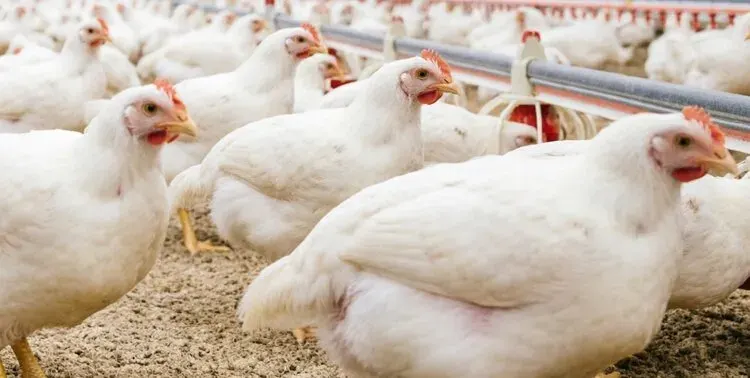
Mycotoxin contamination of commercial feed ingredients can impair the hepatic and renal hydroxylation steps required to convert dietary Vitamin D₃ into its active metabolite, creating a state of functional Vitamin D insufficiency in poultry flocks even when supplementation levels appear adequate, according to an article published on 26 September 2026 in The Poultry Punch.
The article explains that conventional dietary Vitamin D₃ (cholecalciferol) is biologically inactive when consumed and must undergo two sequential organ-dependent conversions before it can exert physiological effects. According to the publication, the nutrient is first converted in the liver to 25-hydroxycholecalciferol [25(OH)D₃], and then further converted in the kidney to 1,25-dihydroxycholecalciferol [1,25(OH)₂D₃], described as "the biologically active form that binds to Vitamin D receptors and initiates cellular responses."
The article identifies several mycotoxin classes as threats to this pathway. Aflatoxins are said to cause "oxidative stress, hepatocellular damage, suppressed hepatic enzymes," while Ochratoxin A is noted to affect "both activation organs simultaneously." Fumonisins are described as impairing bile flow, which in turn "reduces absorption of fat-soluble Vitamin D," and trichothecenes such as T-2 and DON are associated with "impaired hepatic protein synthesis, inflammatory damage." The publication notes that mycotoxins are "heat-stable and survive pelleting and feed processing, so they are not eliminated in the mill," and that commercial feed ingredients "commonly carry more than one mycotoxin simultaneously."
The piece warns that performance losses from subclinical mycotoxin exposure are "frequently subclinical eroding productivity well before any visible disease appears and often being misattributed to management or formulation inconsistencies." Consequences attributed to functional Vitamin D insufficiency include "reduced bone mineralization and increased incidence of tibial dyschondroplasia and rickets, poor eggshell quality and shell strength, reduced hatchability and chick quality, impaired calcium and phosphorus utilization, reduced immune competence, poor growth performance, and reduced flock uniformity."
The article states that simply increasing dietary cholecalciferol does not address the problem when the conversion pathway is compromised: "Adding more dietary cholecalciferol does not fix a damaged activation pathway. If the liver cannot convert it, the extra Vitamin D₃ is simply unused."
A substantial portion of the article is devoted to profiling Avitriol, a product described as "a natural phytogenic feed supplement containing 1,25-dihydroxycholecalciferol [1,25(OH)₂D₃], the metabolically active form of Vitamin D₃, in plant-derived glycosidic form." The publication claims the product "bypasses both organs" and "interacts directly with Vitamin D receptors without requiring prior activation in the liver or kidney." The glycosidic form is said to "enable a controlled, gradual release of the active metabolite," and the product is stated to retain "strong stability through pelleting and feed manufacturing."
The article also references broiler trial data attributed to Agrivet Research and Advisory Pvt. Ltd., Kolkata, India, with full data described as "available on request." According to the article, "birds receiving Avitriol also showed significantly higher antibody titres against Newcastle Disease Virus than control and partially activated Vitamin D groups." No independent peer-reviewed publication of this trial data is cited in the article.
The article was published by The Poultry Punch, an English-language monthly poultry magazine. The content is presented in part as educational nutrition science and in part as a product profile for Avitriol; readers should note that the trial evidence cited is attributed to the product's affiliated research organisation and has not, based on the available source, been independently verified.
Prepared with AI assistance and reviewed by the editorial team.