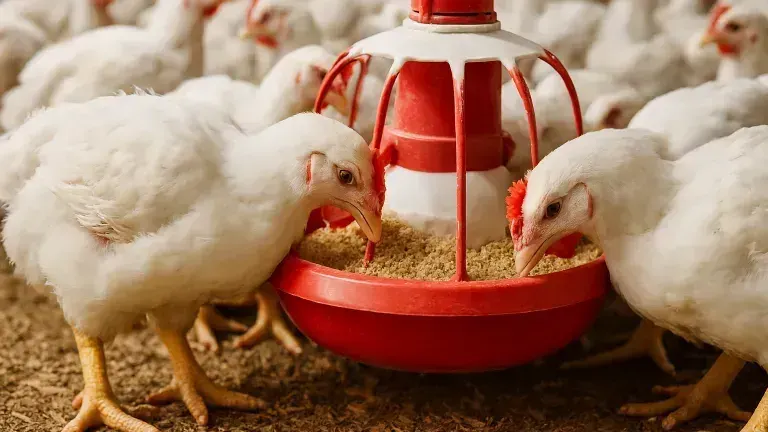
Chinese Researchers Find Ralstonia eutropha Bacterial Protein Can Replace Soybean Meal in Broiler Diets
A Chinese study published in September 2026 reports that single-cell protein derived from the bacterium Ralstonia eutropha H16 can substitute soybean meal in broiler chicken diets at inclusion levels up to 8%, maintaining growth performance while improving antioxidant capacity, immune status, and gut health.

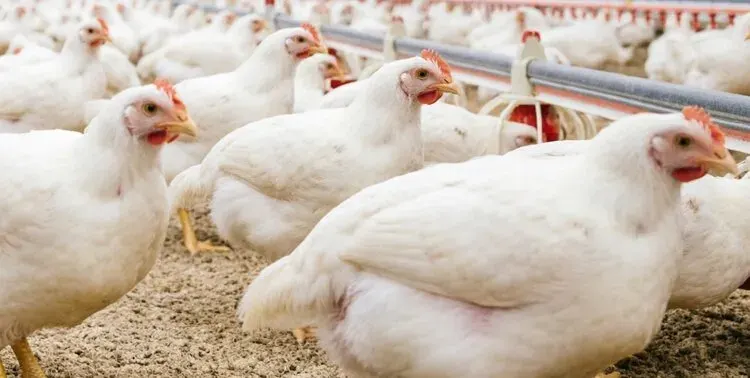
Chinese researchers have presented results from what they describe as the first systematic study on incorporating single-cell bacterial protein into broiler chicken diets, reporting that biomass from the Ralstonia eutropha H16 strain (SCP-H16) can serve as a full alternative to soybean meal without impairing bird growth and with measurable health benefits, according to a report by AgroXXI.ru published on 24 September 2026.
Study Design
The single-cell protein used in the trial was supplied by the Tianjin Institute of Industrial Biotechnology of the Chinese Academy of Sciences (Tianjin, China). A total of 540 one-day-old male Arbor Acres broiler chicks were randomly assigned to five experimental groups, each comprising six replicates of 18 birds. The control group received a standard corn-soybean meal basal diet, while the four treatment groups received the same basal diet with SCP-H16 substituting soybean meal at 2%, 4%, 6%, and 8% inclusion levels on a nitrogen-equivalent basis. The trial ran for 42 days. The basal diet was formulated in accordance with the Chinese Broiler Feeding Standard (GB/T5916-2020).
Protein Profile of the Bacterium
According to AgroXXI.ru, the crude protein content of dried Ralstonia eutropha cells reaches between 69% and 83%, which the source states surpasses most known feed yeasts and microscopic fungi. The biomass is also described as being enriched with bioactive peptides, nucleotides, and peptidoglycans. The bacterium is also known in classical nomenclature as Cupriavidus necator.
Results
The source reports that inclusion of the microbial biomass at even the maximum dose of 8% had no negative effect on live weight gain dynamics, overall feed conversion, or meat quality indicators. Beyond maintaining performance parity, biochemical analyses reportedly recorded a pronounced stimulatory effect: total antioxidant capacity increased markedly and natural immune status was strengthened in birds receiving the bacterial protein. The source also reports that the presence of prebiotic structures in bacterial cell walls led to significantly improved intestinal morphological health, making the broilers' digestive systems resistant to pathogens without the use of feed antibiotics.
Industry Context
AgroXXI.ru notes that feed costs traditionally account for approximately 70% of total production budgets in modern broiler production. The source attributes recent soybean price volatility to climate fluctuations, declining crop yields, and a sharp rise in energy prices, which it says has threatened the profitability and sustainable development of the entire poultry sector. Single-cell protein production is highlighted as independent of climate, droughts, and seasonal factors, requiring minimal land area and capable of using agro-industrial waste or captured greenhouse gases as fermentation feedstocks.
Prepared with AI assistance and reviewed by the editorial team.