ICES raises 2027 catch advice for key North Atlantic pelagic stocks as quota-sharing dispute persists
The International Council for the Exploration of the Sea has increased its 2027 catch advice for Northeast Atlantic mackerel, blue whiting and Norwegian spring-spawning herring, with mackerel advice more than doubling. Industry group NAPA and the Marine Stewardship Council both caution that the improved outlook does not resolve more than a decade of unresolved quota-sharing disputes among Coastal States.

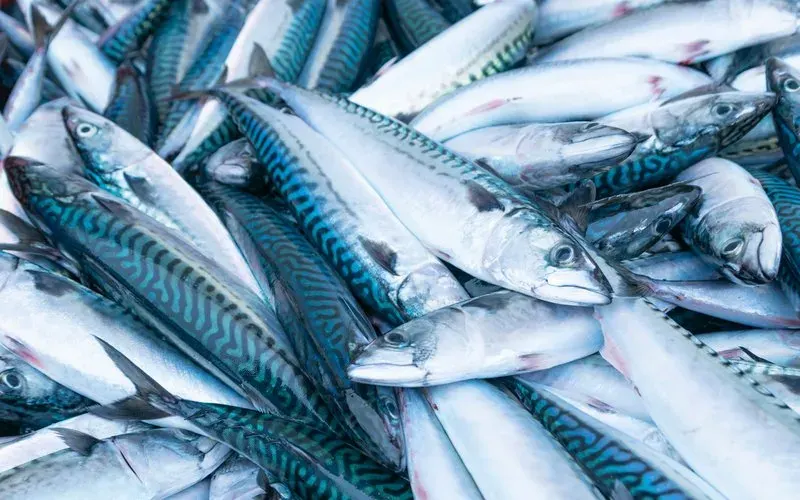
The International Council for the Exploration of the Sea (ICES) has increased its 2027 catch advice for three major Northeast Atlantic pelagic stocks — mackerel, blue whiting and Norwegian spring-spawning (Atlanto-Scandian) herring — but industry and certification bodies warn that deeper management failures remain unaddressed.
Mackerel advice more than doubles
For Northeast Atlantic mackerel, ICES advises that catches in 2027 should be no more than 352,938 tonnes under the maximum sustainable yield (MSY) approach, a 102.4% increase from the 174,357 tonnes advised for 2026. Despite the higher figure, ICES estimates a 33.2% probability that spawning-stock biomass will fall below Blim — the biomass limit reference point — in 2028, underscoring the stock's continued vulnerability.
The North Atlantic Pelagic Advocacy Group (NAPA) cautiously welcomed the improvement but argued the higher advice should not distract from the need for coordinated management. According to NAPA, mackerel catches exceeded scientific advice by 39% in 2025.
Blue whiting outlook described as "considerably more positive"
ICES advises catches of no more than 1,064,191 tonnes of blue whiting in 2027, applying the long-term management strategy agreed by Norway, the European Union, the Faroe Islands, Iceland and the UK. The figure represents a 25% increase from the 851,344 tonnes advised for 2026. ICES projects spawning-stock biomass to increase by 10.4% in 2028 under this scenario.
NAPA described the outlook as considerably more positive, but noted that the imminent end of its blue whiting Fishery Improvement Project (FIP) could limit its members' ability to capitalise on the improved stock situation.
Herring advice up 10%
For Norwegian spring-spawning herring, ICES advises catches of no more than 588,004 tonnes in 2027, based on the long-term management strategy agreed by the relevant Coastal States — a 10.1% increase from the 533,914 tonnes advised for 2026. ICES projects spawning-stock biomass to increase by 3.7% in 2028, with a 4.1% probability of falling below Blim. NAPA welcomed the increase but pointed to downward revisions in some recent recruitment estimates as a reason for continued caution.
Quota sharing remains unresolved
Despite the improved advice across all three stocks, NAPA argues the fundamental management problem remains unresolved. The organisation is calling on seven Coastal States — Norway, Iceland, the Faroe Islands, Greenland, the UK, the EU and the Russian Federation — to reach a comprehensive sharing agreement ensuring combined catches remain within scientifically advised limits. NAPA, which represents 58 global seafood businesses, said the absence of an agreed quota-sharing arrangement has undermined sustainable management for more than a decade.
"Coastal States cannot afford to mistake short-term good fortune for effective long-term management," NAPA said in its statement. The group stressed that a durable agreement would have implications throughout the supply chain, including fishers, processors, distributors, salmon farmers, retailers and consumers.
MSC cites combined fishing and climate pressures
The Marine Stewardship Council (MSC) raised similar concerns, stating that all Northeast Atlantic fisheries targeting the three stocks have lost MSC certification due to the lack of sustainable quota-sharing agreements. MSC analysis indicates that catches across the three stocks have collectively exceeded scientific recommendations by around 7.5 million tonnes over the past decade. It reports that mackerel catches have averaged 39% above recommended levels over the past 15 years, while recent Atlanto-Scandian herring and blue whiting catches were 18% and 21% above scientific advice, respectively.
MSC also highlighted climate change as an additional challenge, noting that changes in the distribution of pelagic stocks can alter their presence in different national waters and complicate negotiations among fishing nations.
Prepared with AI assistance by Endata and reviewed by the editorial team.