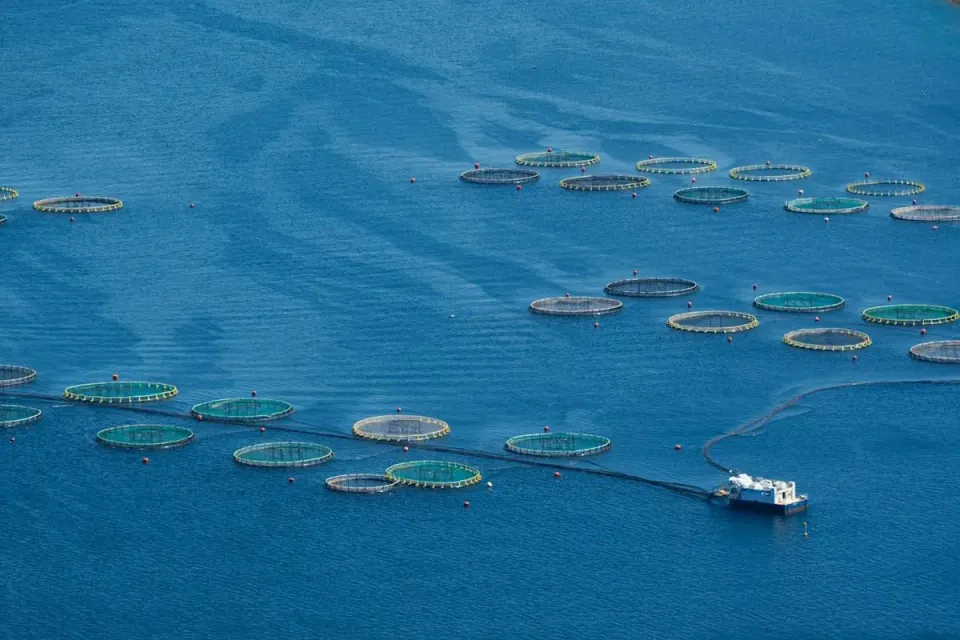
Dainichi Corporation tests marine-free diets for red seabream in F3 Fish Farm Challenge
Japan's Dainichi Corporation is competing in the F3 Fish Farm Challenge 2025–2027, raising red seabream from juvenile stage to harvest on a diet free of marine-animal ingredients. The company is using soy protein concentrate and black soldier fly meal as principal alternatives, has invested in ingredient supplier Protenga, and is trialling AI-assisted feeding alongside hand feeding to optimise performance.

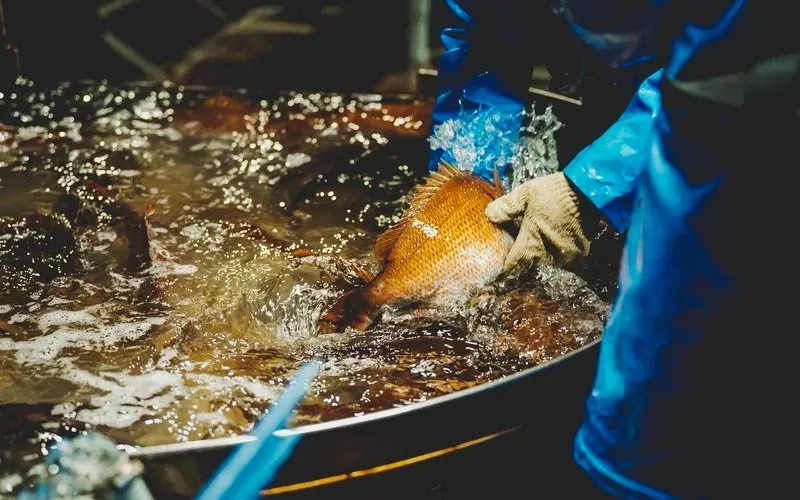
Japan's Dainichi Corporation is participating in the two-year F3 Fish Farm Challenge, running from 2025 to 2027, which tests whether carnivorous fish can be commercially produced and sold using feeds made entirely without marine-animal ingredients. The farm selling the greatest eligible volume by weight will receive a USD 90,000 grand prize, according to Aquafeed.com.
Dainichi is one of three competitors in the challenge, alongside McFarland Springs Trout in the United States and Zhang Yi Farm in China. Founded in 1982, Dainichi operates across feed development, aquaculture, seafood processing, and exports, and is participating in an F3 competition for the second time.
For the current challenge, Dainichi is raising red seabream on a diet free of marine-animal ingredients from the juvenile stage through harvest and commercial sale, while evaluating fish health, growth, feed efficiency, and product quality. Yousuke Takeda, speaking to Aquafeed.com, described soy protein concentrate and black soldier fly meal as among the principal alternative ingredients in the formulation.
Takeda noted that the current trial differs from Dainichi's previous F3 participation: "Unlike our previous trial, which began with intermediate-size fish and focused mainly on growth, this trial starts with juveniles and continues through harvest and commercial sales." The company says it hopes "to prove that we can successfully use a marine-free diet with red seabream all the way to harvest."
The main technical challenge identified by Takeda is "maintaining survival during periods of high water temperature while protecting fish health, growth rate, feed conversion, and sashimi quality." In response, Dainichi increased the proportion of black soldier fly meal in its formulation, citing studies indicating potential benefits for survival under high-temperature conditions.
To secure a reliable supply of black soldier fly meal, Dainichi said it "invested directly in Protenga." On the farming side, the company reduced stocking density per pen and is comparing automatic AI feeding against hand feeding in separate cages to adjust management based on actual conditions.
On market reception in Japan, Takeda indicated that consumer and industry attitudes are shifting: "Farmers are now open to using diets that use low inclusion levels of fishmeal or are marine-free diets. Japanese farmers realize that this will become necessary not only during years of El Niño, but also for the future."
Looking ahead, Dainichi said fish-free and ultra-low-fishmeal diets are "a top strategic priority and may become essential to the industry's survival." The company expects "insect meals, single-cell proteins, and plant proteins to play increasingly important roles, while fishmeal and fish oil use declines," adding that the pace of adoption will depend on the price, availability, consistency, and performance of these alternatives relative to conventional ingredients.
If the marine-free approach proves commercially competitive, Dainichi said it plans to market the fish as an environmentally responsible product, build awareness and demand, and expand production accordingly.
Prepared with AI assistance and reviewed by the editorial team.