Chile targets record coho salmon output of up to 349,000 tonnes in 2026 as industry expands markets
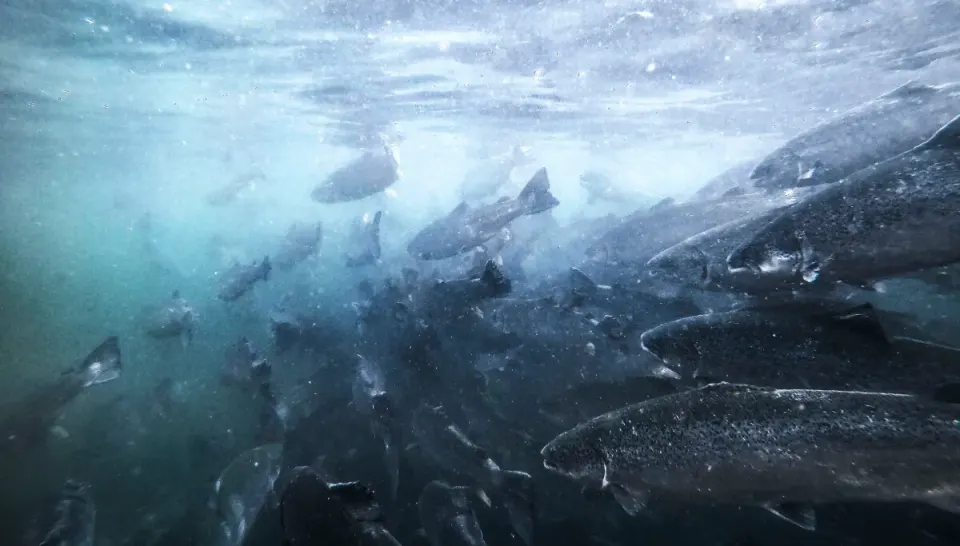
Chile's coho salmon sector is on course for a historic production record of 328,000–349,000 tonnes in 2026, driven by larger cage systems, heavier smolts and a near-doubling of active farming sites since 2010, according to data presented at the Pacific Silver 2026 forum in Puerto Varas.


Chile's coho salmon industry is heading toward a record year in 2026, with production projected to reach between 328,000 and 349,000 tonnes, according to data presented at the Pacific Silver 2026 forum held on 25 August in Puerto Varas, Chile. The event, organised by Vitapro through its Salmofood brand, brought together more than 300 participants to examine the challenges and opportunities surrounding coho salmon (Oncorhynchus kisutch) production.
Joel Leal, general manager of Aquabench, presented production data drawn from the Salmobench Digital platform, which he described as compiling "100% of the country's coho grow-out production." Leal reported that the number of active coho farming sites increased by 135% between 2010 and 2026, and that smolt entries are expected to reach 87.3 million by 2026, up from around 50–60 million per season up to 2016. Average harvest weights have risen from approximately 2.8–2.9 kg to 4.5 kg, and average smolt entry weights have nearly doubled, from approximately 130–150 g to 220–250 g.
Opening the forum, Francisco Valdés, business manager at Vitapro Chile, noted that Chile currently accounts for close to 90% of global coho production. He cited the species' production performance, rapid growth and health profile as attributes supporting more efficient and sustainable production, alongside what he described as decades of research, production experience and local genetic selection.
Coho currently ranks second in Chile's salmonid production, according to the source.
Nutrition and health challenges
Sergio Silva, development manager at Vitapro Chile, and Rayen Collipal, research product manager and data scientist at the Centro Experimental Acuícola (CEA), addressed the role of functional nutrition in managing environmental challenges. They identified digestive problems, cardiomyopathy and jaundice among the main pathological conditions currently affecting the species, with hypoxia and oxidative stress described as common underlying challenges. The speakers outlined future approaches combining predictive feeding models — incorporating variables such as tides, temperature, rainfall and currents — with preventive nutritional strategies using specific antioxidants. They also presented Oxycare, described as a Vitapro Chile careblock developed to improve fish tolerance to stress caused by hypoxia.
Hugh Ferguson, professor emeritus at the University of Stirling and principal author and editor of Systemic Pathology of Fish, discussed advanced diagnosis of pathological processes in coho salmon. Ferguson highlighted the species' resistance to diseases commonly affecting salmon and addressed conditions including PRV and cardiomyopathy syndrome. On sea lice, he explained that coho salmon experience very limited problems with the parasite due to what he described as rapid epithelial hyperplasia that occurs when lice attach, and said researchers are investigating this response for potential application in Atlantic salmon.
Paulina López, senior researcher in AquaGen's Genetics Department, discussed how genetic selection supports more sustainable coho production. Claudio Arcos, project manager and customer support at PHARMAQ Analytiq, presented digital hematology as a precision diagnostic tool for jaundice syndrome in coho salmon, highlighting its potential to provide standardised data for diagnosis and prognosis.
Market diversification
Lars Daniel Garshol, principal salmon analyst at Kontali, argued that coho and Atlantic salmon should not be viewed as competitors but as contributors to the development of the overall salmon market, particularly against a backdrop of higher costs and tighter regulations in Chile and Norway. He called for further investment, stronger communication around salmon and continued market development.
Shinya Kuroko, business development director at Cermaq Chile, highlighted a significant shift in export destinations. Until recently, Japan accounted for around 90% of Chilean coho exports, but its share has fallen to 50–60% as other Asian markets — including South Korea, Taiwan, Vietnam, the Philippines, Indonesia and Malaysia — and Latin American destinations such as Mexico and Colombia have grown. Kuroko also noted that the price gap between coho and other salmon species has halved over the past five years. Drawing a comparison with Chilean wine, he described coho as "the Carménère of the sea" and called on the industry to build a consistent story around the species.
Melissa Rodríguez, vice president at Circana, examined the U.S. market, noting that around half of consumers are looking to increase protein intake, that 86% of meals are prepared at home, and that close to 60% need to be prepared in 30 minutes or less. Rodríguez said: "Coho salmon is sold mainly in coastal areas and large cities, with room to grow among Atlantic salmon consumers."
The forum concluded with a panel featuring representatives from Invermar, Consejo del Salmón, SalmonChile, ACME Chile and Vitapro Chile. AquaGen, PHARMAQ Analytiq by Zoetis, Scale AQ and STIM Chile supported the first edition of Pacific Silver.
Prepared with AI assistance and reviewed by the editorial team.