加载中…
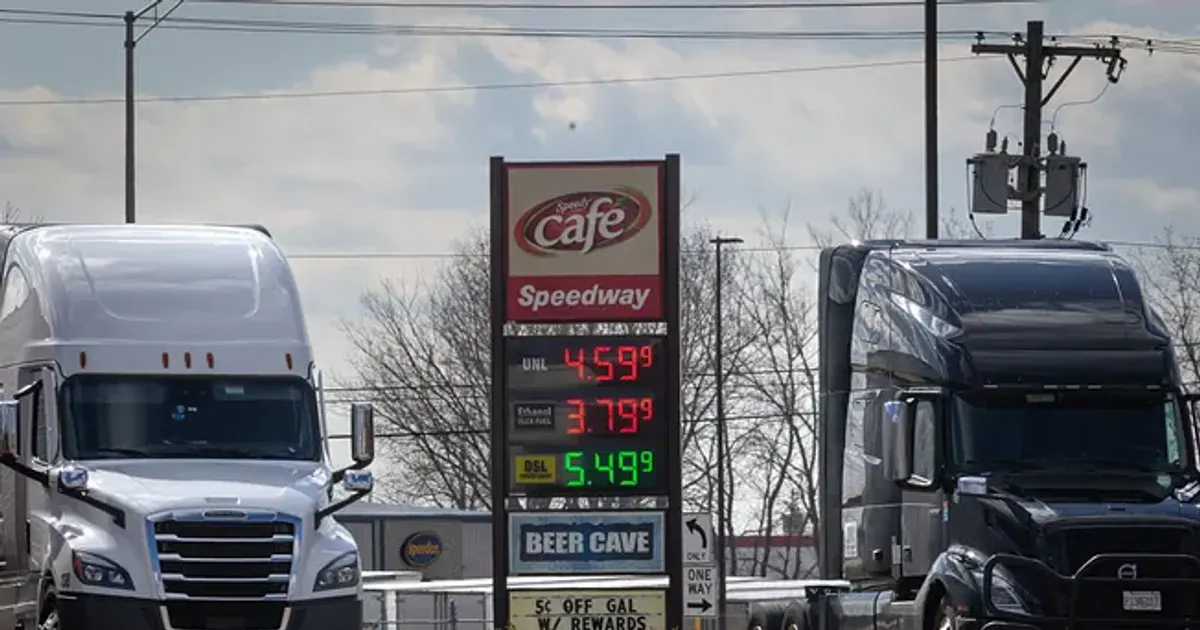
Brent crude fell below $95 at times after the US and Iran announced a two-week ceasefire, with Iran pledging safe passage through the Strait of Hormuz. Diesel prices had reached a national average of $5.64 per gallon before the ceasefire.
Analysts expect retail diesel relief to be slow and dependent on how the conflict is resolved.
Lower crude is a welcome cost relief for feed transport, but analysts expect retail diesel to fall slowly, keeping freight costs elevated. The outcome of the ceasefire will determine whether prices stay lower.
 truckingdive.comDavid Taube2026年4月8日
在过去 250 次看跌的地缘政治事件之后,原油(Brent) 在 5 个交易日内中位数变动 -3.1%(36% 上涨;中间一半区间为 -7.9% 至 +1.6%),20 个交易日内为 -5.5%。
在过去 255 次看跌的地缘政治事件之后,原油(WTI) 在 5 个交易日内中位数变动 -2.4%(31% 上涨;中间一半区间为 -7.0% 至 +1.7%),20 个交易日内为 -5.0%。
在过去 51 次看跌的地缘政治事件之后,ULSD / 柴油 在 5 个交易日内中位数变动 -2.4%(37% 上涨;中间一半区间为 -8.2% 至 +3.9%),20 个交易日内为 -2.3%。
各商品基准价相对事件前最后收盘价的变动。历史数据汇总同类过往事件;仅描述已发生的情况,不代表未来走势。不构成投资建议。
Brent fell below $95 on the ceasefire with Iran pledging safe passage through Hormuz, reducing the supply disruption premium in diesel.
Brent fell below $95 after the ceasefire and Iran's pledge of safe passage, lowering diesel feedstock and risk premia.
