Loading…
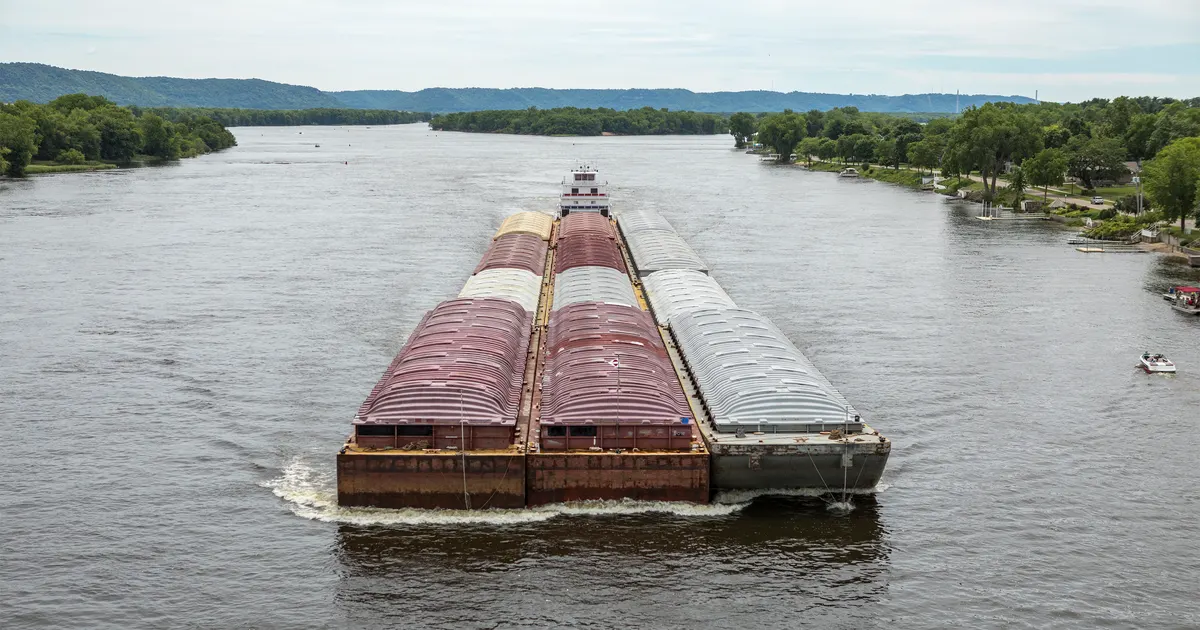
The average U.S. inland hopper barge is nearing 17.6 years old, while the industry builds about 410 new barges annually and retires 500 to 1,000. New barges cost roughly $1 million or more, and rail can absorb only a small share of barge traffic; the Mississippi system carries about half of U.S. corn and soybean exports and a third of wheat exports through the Gulf.
A shrinking, aging fleet and higher replacement costs could constrain grain transport and raise freight expenses. Higher barge costs can weaken farm-level basis and returns, while threatening U.S. export competitiveness.
 cobank.comTanner Ehmke, Emmie NoyesNov 10, 2026
After 359 past bearish logistics events, Corn moved a median -0.3% over 5 sessions (44% higher; middle half -1.5% to +1.5%), and -0.5% over 20.
After 297 past bearish logistics events, Soybeans moved a median +0.3% over 5 sessions (54% higher; middle half -1.5% to +1.8%), and +0.7% over 20.
After 137 past bearish logistics events, Wheat (SRW) moved a median -0.3% over 5 sessions (44% higher; middle half -2.2% to +1.0%), and +0.0% over 20.
After 11 past bearish logistics events, Wheat (HRW) moved a median -0.3% over 5 sessions (45% higher; middle half -2.8% to +0.9%), and +0.4% over 20.
Moves of each commodity's benchmark from the last close before the event. Historical reads pool past events of the same kind; they describe what happened, not what will. Not investment advice.
