Loading…
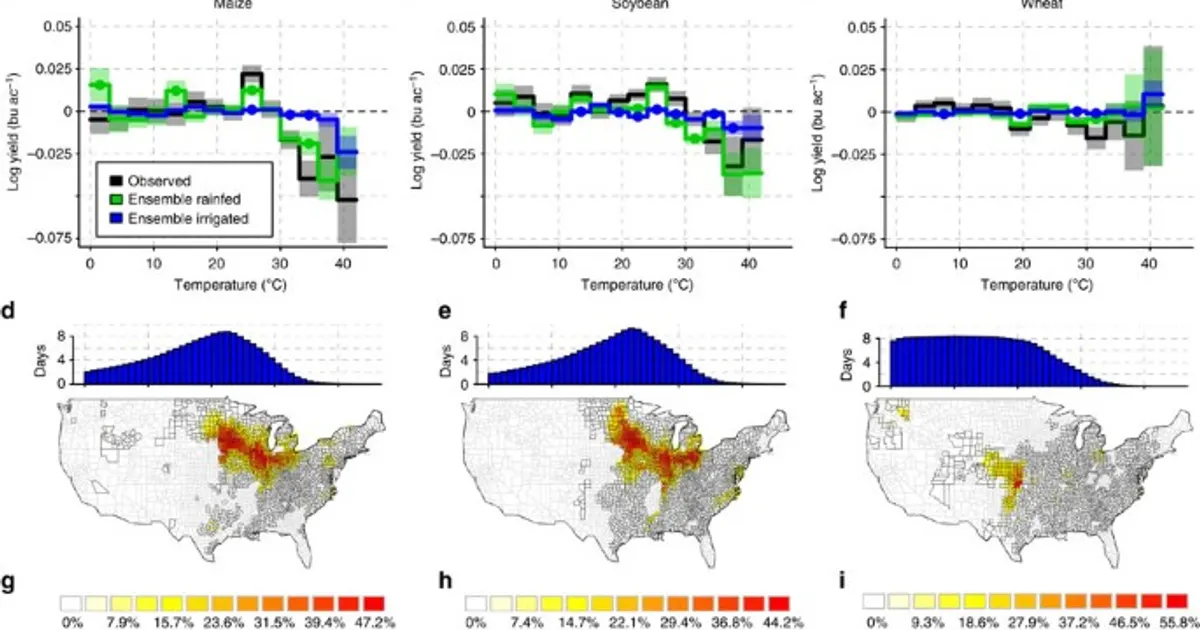
A Nature Communications study using an ensemble of nine crop models reproduces observed US maize, soybean and wheat yield responses to high temperatures. Each day above 30°C reduces rainfed maize and soybean yields by up to 6%, while irrigated areas show weak declines.
The findings strengthen the case that heat stress and water availability drive yield risk, a longer-term supply consideration for corn and soybean prices rather than an immediate market shock.
 nature.comSchauberger, Bernhard, Archontoulis, Sotirios, Arneth, Almut, Balkovic, Juraj, Ciais, PhilippeFeb 1, 2017
After 770 past neutral report events, Corn moved a median +0.2% over 5 sessions (54% higher; middle half -1.1% to +1.6%), and +0.7% over 20.
After 563 past neutral report events, Soybeans moved a median -0.1% over 5 sessions (48% higher; middle half -1.7% to +1.6%), and -0.1% over 20.
Moves of each commodity's benchmark from the last close before the event. Historical reads pool past events of the same kind; they describe what happened, not what will. Not investment advice.
