Loading…
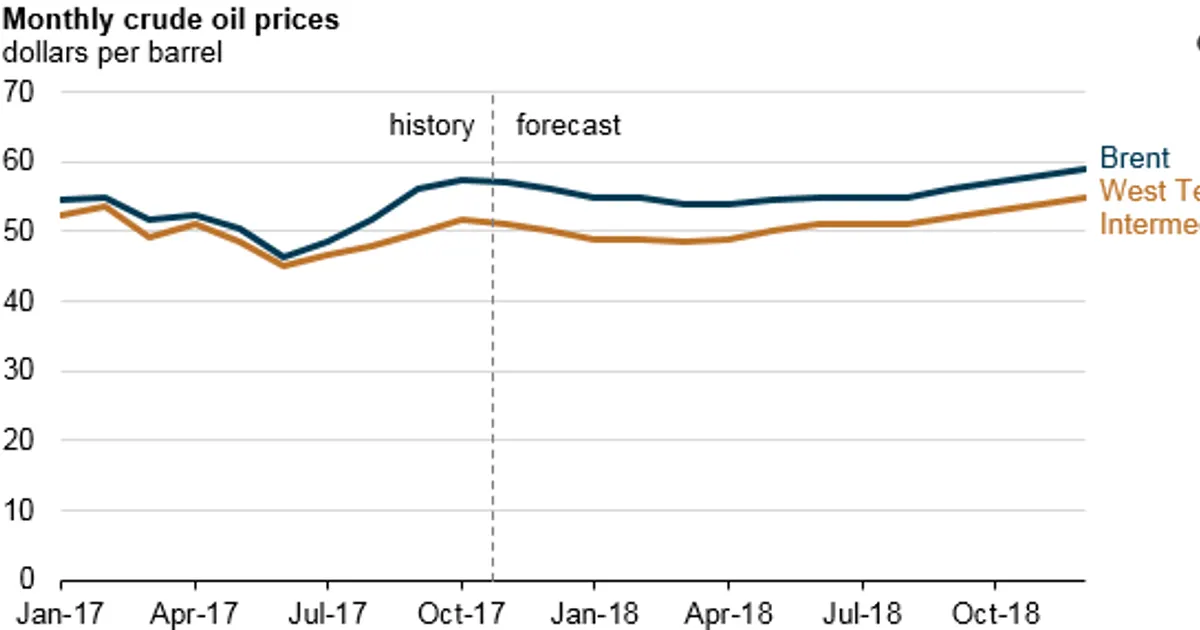
The EIA's November outlook forecasts the Brent-WTI spread at $6 per barrel through the first quarter of 2018, narrowing to $4 in the second half of 2018. The wider spread reflects transport bottlenecks moving crude from Cushing and the Permian basin to the U.S. Gulf Coast.
WTI averaged $6 below Brent in September and October.
Pipeline constraints keep inland U.S. crude discounted to Brent, which weighs on WTI-linked prices while Brent stays firmer. The effect on feed markets is indirect, through energy and biofuel input costs.
 eia.govU.S. Energy Information Administration (EIA) (.gov)Dec 1, 2017
After 19 past bearish logistics events, Crude Oil (WTI) moved a median -1.5% over 5 sessions (37% higher; middle half -6.6% to +2.3%), and +5.3% over 20.
After 22 past bullish logistics events, Crude Oil (Brent) moved a median -0.7% over 5 sessions (45% higher; middle half -5.7% to +4.5%), and -1.2% over 20.
Moves of each commodity's benchmark from the last close before the event. Historical reads pool past events of the same kind; they describe what happened, not what will. Not investment advice.
