Loading…
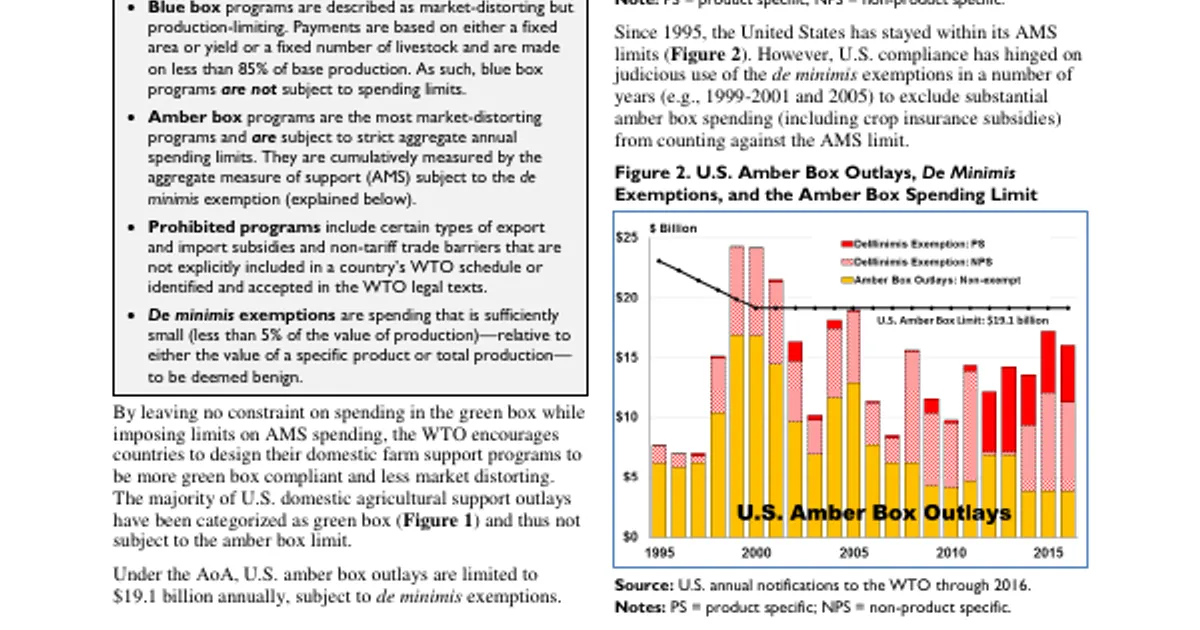
A Congressional Research Service report explains how WTO rules discipline US domestic farm support, using a traffic-light classification of green, amber and blue box programs. It notes that amber-box outlays are limited and that cotton, wheat and soybeans have export shares near or above 50%.
The report was updated in June 2019.
WTO limits on US support shape how much government aid can be given without challenge, which matters for the durability of trade-war payments. Heavily exported crops are most exposed to trade-rule disputes.
 everycrsreport.comSep 19, 2018
After 1,623 past policy events, Corn moved a median +0.1% over 5 sessions (51% higher; middle half -1.4% to +1.5%), and +0.4% over 20.
After 1,905 past policy events, Soybeans moved a median +0.1% over 5 sessions (52% higher; middle half -1.4% to +1.8%), and +0.2% over 20.
After 1,019 past policy events, Wheat (SRW) moved a median -0.1% over 5 sessions (49% higher; middle half -1.7% to +1.5%), and +0.2% over 20.
Moves of each commodity's benchmark from the last close before the event. Historical reads pool past events of the same kind; they describe what happened, not what will. Not investment advice.
