Loading…
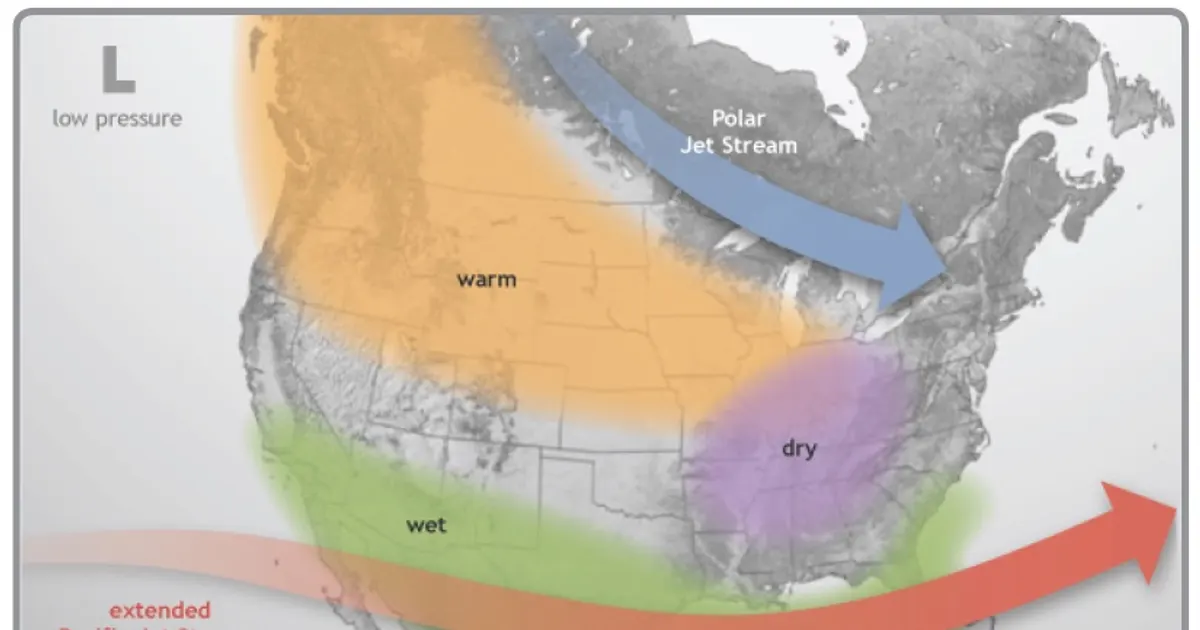
Purdue's Pest&Crop newsletter outlines typical El Niño winter patterns for the Great Lakes, with the polar jet stream farther north and warmer temperatures likely. The October outlook favors below-normal precipitation for the central and western parts of the basin, which could reduce snowpack and spring runoff.
Warmer, drier winter conditions in the Great Lakes could reduce snowpack and spring soil moisture, adding some risk to the 2019 US corn and soybean crop. The effect on prices is modest at this stage given the uncertainty of the forecast.
 extension.entm.purdue.eduTammy LuckNov 7, 2018
After 1,465 past bullish weather events, Corn moved a median +0.2% over 5 sessions (54% higher; middle half -1.4% to +1.9%), and +0.9% over 20.
After 1,079 past bullish weather events, Soybeans moved a median +0.3% over 5 sessions (54% higher; middle half -1.4% to +2.0%), and +0.9% over 20.
Moves of each commodity's benchmark from the last close before the event. Historical reads pool past events of the same kind; they describe what happened, not what will. Not investment advice.
