Loading…
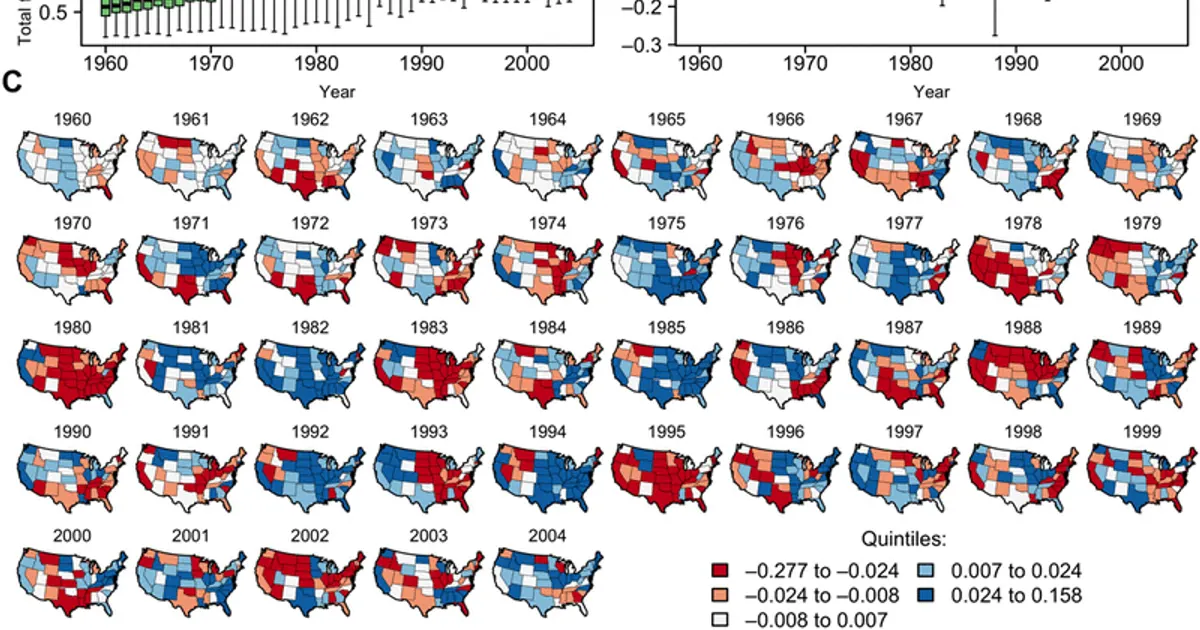
A Science Advances study finds U.S. agriculture is becoming more sensitive to climate in Midwestern states, due to rising climate sensitivity of nonirrigated cereal and oilseed crops and growing crop specialization. The analysis uses state-level productivity data and climate records from 1960 to 2004.
Greater weather sensitivity in Corn Belt production implies larger yield swings from climate shocks, which can add price volatility to corn and soybean supplies over time.
 science.orgAriel Ortiz-Bobea, Erwin Knippenberg, Robert G. ChambersJan 1, 2019
After 445 past neutral weather events, Corn moved a median +0.1% over 5 sessions (52% higher; middle half -1.4% to +1.6%), and +0.7% over 20.
After 324 past neutral weather events, Soybeans moved a median +0.0% over 5 sessions (52% higher; middle half -1.4% to +1.7%), and +0.7% over 20.
Moves of each commodity's benchmark from the last close before the event. Historical reads pool past events of the same kind; they describe what happened, not what will. Not investment advice.
