Loading…
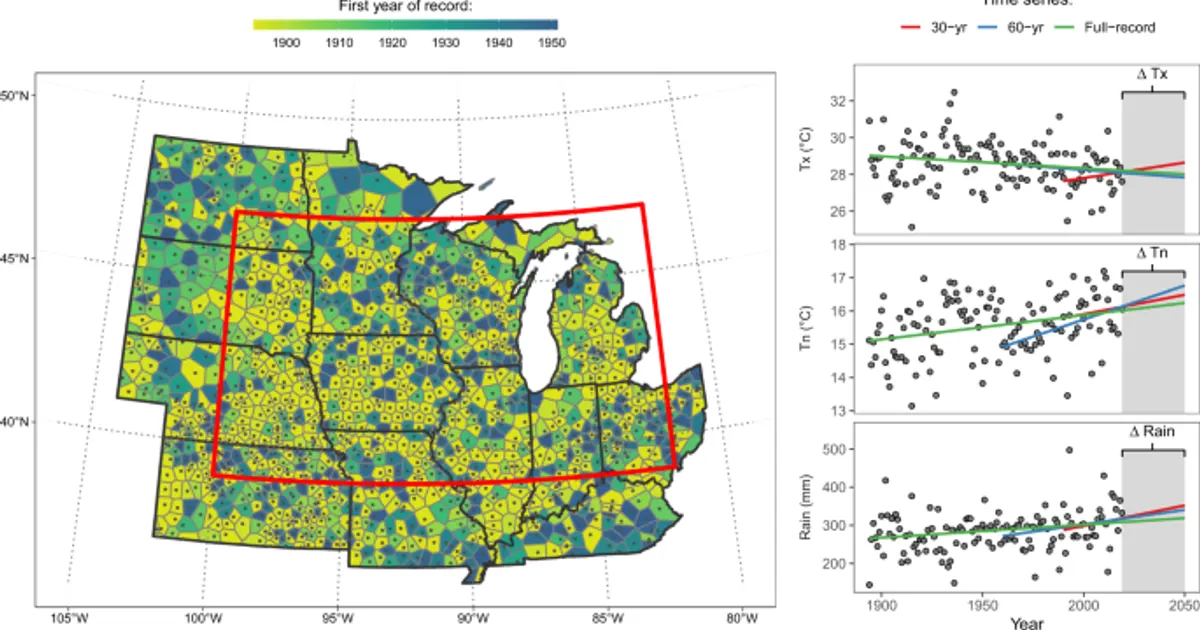
A Nature Communications study published March 5, 2021 analyzed Midwest summer temperature records and found minimum temperatures rising while maximum temperatures have fallen, lowering vapor pressure deficit and potential evapotranspiration. Projections to 2050 suggest minor changes in evaporative demand with corn yield effects under 6%.
Lower projected water stress reduces the case for expensive irrigation expansion and supports stable Midwest corn supply expectations, a mildly bearish influence on long-run corn price risk premiums.
 nature.comBasso, Bruno, Martinez-Feria, Rafael A., Rill, Lydia, Ritchie, Joe T.Apr 1, 2021
After 445 past neutral weather events, Corn moved a median +0.1% over 5 sessions (52% higher; middle half -1.4% to +1.6%), and +0.7% over 20.
Moves of each commodity's benchmark from the last close before the event. Historical reads pool past events of the same kind; they describe what happened, not what will. Not investment advice.
